
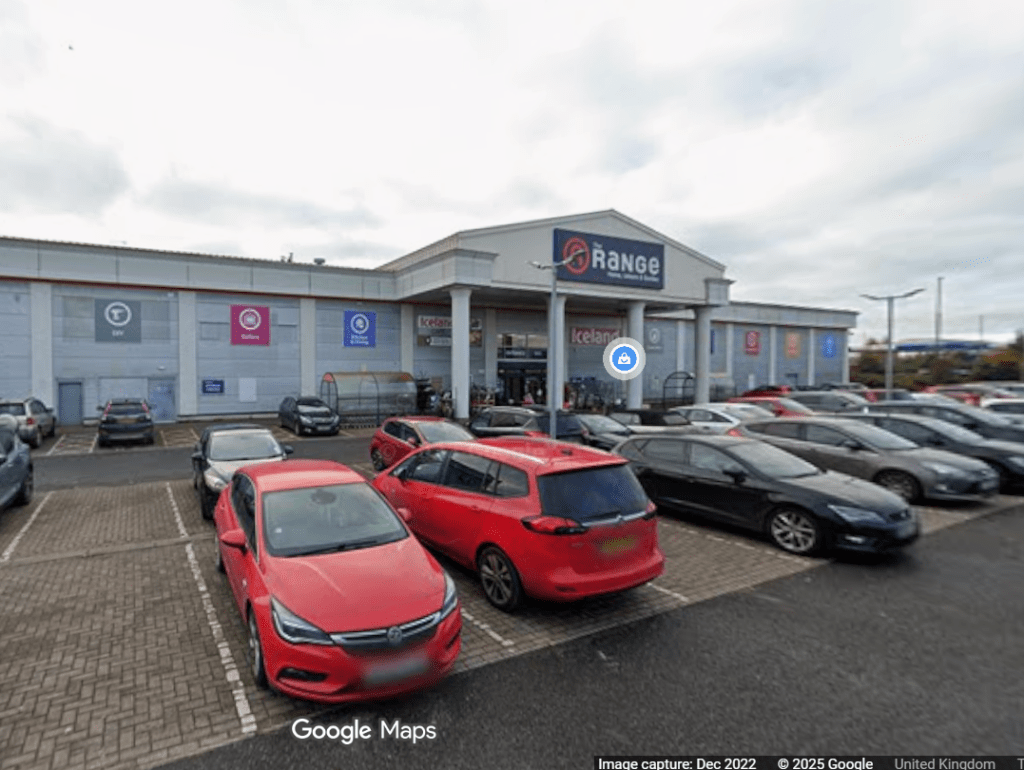
A Case Study in Retail Management Culture, Ethics, and Accountability
By Antony David Davies, FRSA FRAS AFRHistS FIoL MCMI
When I eventually received the documents disclosed under my Subject Access Request, The Range in Shrewsbury described my departure in terms that were brief, convenient, and revealing. According to the leaver form, I left “with immediate effect” on 12 June 2024, communicated only by text, left my keys on the manager’s desk, and walked out, leaving another manager to complete the shift alone. The official reason recorded for my resignation was even shorter, “no job satisfaction”. The same record also marked me as not to be re-employed.[1]
That was the administrative version. It was tidy, economical, and profoundly misleading. On paper, my departure was reduced to a bland statement of dissatisfaction, yet the decision not to re-employ me suggested a far harsher internal judgement than the wording itself implied.
What makes that description harder to sustain is that, after I challenged the incompleteness of the Subject Access Request, the company then “found” my probationary assessment form dated 11 June 2024, the day before I resigned. That document did not describe an employee who was failing, unstable, or on the verge of dismissal. On the contrary, it recorded that I had taken feedback well, had begun to understand the role, had received positive feedback from the Area Manager about the presentation of my department, had maintained 100 per cent attendance, had shown flexibility in changing shifts, had completed required online training, and was continuing to learn. Most significantly of all, it concluded that there was “no doubt” I could become a strong member of the team.[2]
That contradiction sits at the heart of this case study. On the one hand, the company later reduced my departure to a vague absence of “job satisfaction”, while also marking me as someone not to be re-employed. On the other, its own internal assessment, written the day before, assumed competence, improvement, reliability, and managerial potential. The gap between those two accounts is not merely interesting. It goes to the question of organisational honesty, documentary integrity, and how institutions choose to frame uncomfortable departures.
A Different Kind of Retail Experience
I joined The Range as an Assistant Manager after two decades in the third sector, where I had led teams, managed projects, handled competing priorities, and worked in environments where governance, accountability, and trust mattered. The personnel file itself confirms that I was recruited into a substantive management post, Assistant Manager, on a 39.5 hour contract at a salary of £23,500 per annum.[3]
I was also persuaded to join by the way the role was presented at interview. I was given the clear impression that the store had been through difficulties due to mismanagement by the previous Store Manager, but that these had been turned around under the existing Store Manager. I was told that weak staff had been removed, that ambitious plans lay ahead, and that the branch needed experienced managers like me to help steady the ship and build a success story. Public reporting in January 2024 did indeed show approved plans for the Shrewsbury branch at Sundorne Retail Park to add a 444 square metre garden centre.[6] What I encountered in practice, however, was nothing like the operation I believed I had agreed to join.
Instead, I found a management culture that, in my judgement, rewarded loyalty over openness, familiarity over competence, and compliance over candour.
Retail management is demanding, and no serious person imagines otherwise. Stores are pressured environments, standards must be maintained, customers are unpredictable, and teams are often stretched. But pressure, properly handled, can produce discipline and professionalism. What I encountered was something different, a workplace in which fear had become normalised, responsibility blurred, and poor conduct was too easily excused as humour, banter, or simply the way things were done.
Leadership, Control, and the Internal Culture
From an early stage, I formed the impression that the store’s leadership style rested more on control than on example. The Store Manager seemed less interested in what independent judgement I might bring than in whether I would simply follow orders. In practice, much of leadership appeared to operate at a distance from the shop floor, with authority exercised from the office or warehouse rather than through visible and credible presence.
The probationary form is informative in this respect. Although it praised my progress and recognised improvement, it also criticised my communication style, my handovers, and what it called a lack of a sufficiently “global” approach across the store. More tellingly, it stated that at times it felt as though I was trying to get others “into trouble” rather than dealing with issues directly.[2]
That matters, because it suggests that raising concerns was already being interpreted through a defensive managerial lens. In other words, the issue was not simply whether a concern was valid, but whether voicing it disrupted the internal culture.
This impression was reinforced before my resignation by a written complaint I made to the Store Manager about the poor standards of a fellow managerial colleague. In that complaint I raised concerns including significantly outdated pricing, poor Health and Safety standards in merchandising, weak rota management, and poor communication. According to my retained record of the matter, the response was not a serious investigation of the points raised, but pressure on me to apologise because the colleague concerned had been upset.[11]
The response to that complaint was itself revealing. In the meeting that followed, I was not only pressed to apologise, but was also told, as I recall it, not to put such matters in writing again. I was described as a “keyboard warrior”, told to “grow a pair”, and instructed to deal with issues “face to face, peer to peer”. Whether intended as banter or rebuke, the effect was plain enough. The issue was no longer the substance of the standards I had raised, but the fact that I had created a written record of them.[11]
That episode matters because it illustrates the wider pattern I came to recognise. Concerns about standards were too easily recast as interpersonal problems, and the person raising them risked becoming the issue.
Over time, it became clear to me that formal hierarchy was only part of the story. Real authority lay within an inner circle of managers whose influence derived from longevity, informal alliances, and the ability to shape the tone of the store. In that environment, criticism became personal, accountability became selective, and ordinary professional disagreement carried disproportionate consequences.
Operational Improvement and Evidence of Competence
One of the most striking features of this episode is that it was not a story of non-performance. Quite the reverse. I inherited departments with clear potential and worked to improve standards through stock organisation, presentation, and closer management of the team. These were not dramatic interventions, merely the sort of practical improvements that capable managers are expected to make. But they mattered.
Again, the company’s own documentation bore this out. The probationary assessment recorded formal feedback from the Area Manager on the presentation of my department, particularly in areas “that are normally an issue”, and noted that my department had “good standards”.[2]
This is one of the reasons I believe the case deserves to be presented as more than a personal grievance. It demonstrates a broader organisational pattern. Employees can be valued for results, praised when convenient, and still find themselves placed under pressure when their moral judgement becomes inconvenient to those above them.
Ethics and the Limits of Compliance
The decisive issue was not personality. It was ethics.
On 12 June 2024, I began my shift at 6 a.m. Later that morning, an internal Health and Safety inspector arrived. I found myself dealing with the inspection alone. That fact is significant in itself, because the company’s later account implied that I had abandoned colleagues, whereas I had already been left unsupported in the face of a serious safety inspection.
The fact that the inspection was internal matters. As I understood it, the inspector had been told by the Store Manager that this would be the best time to visit, even though the Store Manager himself did not work on Wednesdays and was not present during the inspection. During the inspection, I was also receiving repeated text messages from him asking what was being said and what should be said in response. Read together, those details help explain why the issue ceased, for me, to be merely operational and became a question of honesty and accountability.[12]
Contemporary WhatsApp exchanges from the day of my resignation also support that chronology. They show that I regarded the position at the time as untenable, that management itself referred to there having been an “incident”, and that practical concerns were being raised in real time about fixtures and the safe display of heavy or highly positioned products.[13]
What I encountered during that inspection was, in my view, serious, blocked access, poor storage, unsafe stock positioning, trailing cables, weak housekeeping, congested back-of-house space, stock positioned close to electrical infrastructure, and wider failings inconsistent with the standards a responsible retailer ought to uphold. Contemporary photographs taken by me during the inspection support that account. They show customer-facing display areas with powered items, trailing leads, and heavily positioned products, as well as back-of-house areas marked by obstructed or narrowed access, disorderly storage, stock close to electrical panels, and at least one storage arrangement appearing visibly unstable.[14]
I dealt with the inspection calmly and professionally. In doing so, I was not merely acting as the manager on duty. I was drawing on a wider professional instinct, the ability to observe, assess, document, and understand risk.
The turning point came when I believed I was under pressure to minimise or soften what had been found. That was the moment at which the issue ceased to be merely operational and became moral. I could accept pressure. I could not accept dishonesty. I could work within a flawed environment. I could not knowingly help present a false picture of that environment.
That is why I left.
Documentary Gaps and the Importance of Record Keeping
The subsequent Subject Access Request only deepened my concerns. Relevant material, including the probationary assessment, was not initially disclosed. Its later emergence after complaint raises serious questions about completeness and record management.[2]
More troubling still, no record of the internal Health and Safety audit itself, no report of its findings, and no reference to any follow-up action appeared in the SAR material disclosed to me. Given that the inspection formed the immediate context of my resignation, that omission is difficult to treat as incidental. My subsequent requests to The Range for verification of the audit and its findings went unanswered.[15]
The same pattern applied to the earlier written complaint I had made to the Store Manager about poor managerial standards. Neither that complaint, nor any record of the related discussion or meeting, appeared in the SAR disclosure, despite its obvious relevance to the wider history of concerns I had raised.[11]
For me, these omissions matter greatly. One of the clearest signs of institutional weakness is when the documentary record becomes partial, selective, or oddly convenient. Organisations reveal themselves not only by how they behave in the moment, but by how they later record, preserve, and explain what happened.
The personnel file also complicates one later internal claim, namely that I had been fully included in training from the outset. Several warehouse and operational sign-off forms in the file, including documents relating to warehouse stock process, warehouse lock-down policy, hi-vis rules, clean floor policy, HHT accountability, and PPE issue, are dated 11 June 2024, the day before I resigned. That chronology is striking. It suggests that important operational sign-off was still taking place at a very late stage in my short employment.[4]
The Failure of Formal Redress and Documentary Omissions
The procedural handling of my Subject Access Request (SAR) provides a secondary case study in organisational opacity. On 6 November 2025, the company’s Data Protection Officer initially confirmed that the results of my request had been “collated and sent”, implying that a complete search had already been undertaken. Yet it was only after I submitted a detailed rebuttal the following day, identifying specific meetings, participants, and digital records, that the company subsequently “located” my six-week probationary assessment, online training records, and rota.[21] That sequence raises an obvious question. Either the initial search was inadequate, or the standard applied to what counted as a reasonable search was so limited as to permit the omission of plainly relevant records, including documents that reflected positively on my performance.
Even after this second disclosure, the company maintained that “no other requested documentation was located”.[22] This remains one of the most troubling features of the record. By the company’s own account, there is no surviving trace of the written report I submitted concerning the conduct of managerial colleagues, nor any electronic record of the meeting on 11 June 2024 at which I was instructed to apologise to a colleague for allegedly “overstepping” by documenting those concerns.[23] If that is indeed the full extent of the surviving record, it points either to serious weaknesses in document retention and managerial record-keeping, or to an internal system in which sensitive material could disappear without meaningful auditability.
The apparent absence of the internal health and safety audit conducted on 12 June 2024 is especially significant.[24] I had described this inspection in specific terms, explaining that the inspector walked the store with me, identified particular risks, and recorded my name as the manager on duty. Given the proximity of that audit to my resignation, and given its potential relevance to the operational condition of the branch, its absence from the SAR disclosure raises further questions about the reliability of the company’s safety and compliance trail. At minimum, it suggests a documentary system unable, or unwilling, to produce records of obvious relevance when formally asked to do so.
When I later invited the company to comment on what I described as a wider leadership collapse, and on the gulf between managerial claims of success and the operational reality reflected in safety concerns and internal failures, the response from the Escalations and Disputes team was formulaic and dismissive. Rather than engaging with the substance of the issues raised, the company declined assistance and brought the internal process to a close.[25] In practice, that response did not resolve the concerns. It merely confirmed the limits of formal redress within an organisation seemingly more committed to procedural closure than to genuine accountability.
The Store’s Own Later Response and the Environmental Health Contradiction
No public comment was provided for this study. Yet an internal store response, sent on 2 October 2025 to the corporate IT desk and later disclosed within my Subject Access Request materials, is revealing precisely because it shows how the dispute was framed from within. The response stressed that I had only been employed for a short period, that I had been included in training and management responsibilities, and repeated the claim that I had left with immediate effect, leaving another manager to complete the shift alone.[16]
Taken on its own, that is a familiar corporate defence, procedural, personalising, and reputational. But the same response also contains an implicit concession. It states that “a lot of his issues, from what we can take from that is that he had a problem with the way our old Store Manager ran the store”, and notes that there was a different Area Manager in post at the time. That matters. It does not refute my account. Rather, it narrows responsibility and localises the problem to the previous leadership culture.[16]
However, the most significant feature of this internal email is its reference to a statutory inspection by the local authority. Prompted by my media inquiry regarding safety standards, the store informed Head Office that “we, coincidentally, have had a visit today from environmental health and they have noted that the bullet points he has made, were not shown as concerns within our store”.[16]
That assurance sits in stark tension with the formal written confirmation later obtained from the local authority. According to that written confirmation, the same Environmental Health inspection did indeed take place on 2 October 2025. But rather than indicating that no concerns had been identified, the authority recorded the matter as ongoing, stated that a further revisit was required, and warned that “appropriate action in line with our better regulation and enforcement policy will be taken”.[17]
On any ordinary reading, those two accounts are difficult to reconcile. Environmental Health officers do not describe a case as an ongoing matter, require a further revisit, and refer to possible enforcement action if nothing of concern has arisen. The contradiction is therefore serious. At the very least, it suggests that the picture presented internally to Head Office was incomplete and sanitised. More strongly, it supports the wider pattern identified in this case study, namely that management responses were shaped less by candour than by self-protection.[16][17]
This matters because it extends the documentary pattern beyond my own resignation. The issue is not only that no record of the internal Health and Safety audit of 12 June 2024 appeared in my SAR, despite its immediate relevance to my departure. It is that, when a later statutory inspection took place, the internal account presented upward within the business appears to have downplayed, or at least materially softened, the reality recorded by the inspecting authority itself. Read alongside the missing audit record, the missing complaint record, and the wider culture described above, that contradiction goes to the heart of organisational credibility.
Public Evidence Beyond My Own Experience
In this case, the wider evidence matters. Publicly available employee reviews for The Range in Shrewsbury describe concerns that resembled my own. On Indeed, reviewers in September and October 2024, November 2024, and March 2025 referred to poor atmosphere, little or no training, rota instability, clique behaviour, unrealistic workloads, and a culture in which staff felt excluded if “your face doesn’t fit”. One October 2024 review described managers as staying in “their own little group” and called the store “very cliquey”. Another November 2024 review complained that rotas were changed with little or no notice and that staff were expected to do the work of several people with next to no training. A March 2025 review referred to unrealistic time frames, poor management standards, and exclusionary treatment. These are public reviews, not legal findings, but they do show that concerns comparable to mine were being voiced by others after my departure.[7]
There was also a later public safety incident at the store. On 8 February 2025, firefighters were called to Shrewsbury store after one adult and two children became trapped in a lift and had to be released. I do not claim that this incident, taken on its own, proves every concern I have raised. But it does reinforce the broader point that questions of operational standards and safety culture were neither fanciful nor trivial.[8]
The subsequent staffing picture is also noteworthy. Public job listings in September and October 2025 showed store recruiting across a wide range of roles, not only at management level but across the wider store. Vacancies included Store Manager, Assistant Manager, Store Operations Manager, Warehouse Supervisor, Coffee Shop Unit Manager, Sales Assistants, Café Assistants, and seasonal workers. Taken together, this was not the appearance of a settled and stable operation making one or two ordinary hires. It suggested a branch undergoing substantial recruitment across both management and frontline staffing.[9]
Vacancies alone do not prove dysfunction, and retail does often experience churn. But the scale and spread of recruitment in this case are difficult to dismiss as routine. At the very least, they suggest that the Shrewsbury branch was not a settled environment in the period after my departure. More strongly, they give the impression of a store effectively rebuilding much of its staffing structure.
A further revealing piece of public evidence is the former Store Manager’s farewell LinkedIn statement on leaving the store in August 2025. In that post, he described his time at the store in strongly positive terms, claiming credit for driving store standards, increasing sales, and developing the team. More significantly, he thanked senior figures above store level for their guidance, feedback, and trust in allowing him to run the store in his own way. Read alongside the culture I experienced, this matters because it suggests that the management approach operating within the branch was not merely a local aberration, but one known to and endorsed within a wider chain of authority.[10]
The contrast between local management’s public presentation of the branch and its recorded operational condition is sharply illuminated by internal performance data. A warehouse stock performance chart from May 2024, showing the ‘Performance Summary Part Count’ across the wider regional cohort, ranked the Shrewsbury branch 223rd, at the bottom of the matrix. It was also the only store on the regional list marked with a red ‘X’, signalling overall operational failure. The chart recorded the highest number of failed measures, together with significant replenishment backlogs and repeated stock-control errors. On the company’s own metrics, therefore, the branch was not a store in which standards had been successfully driven upward. It was a store exhibiting serious and measurable operational weakness.[20]
The artificial nature of the store’s compliance culture is further illuminated by the former Store Manager’s own public statements. In a social media post marking an 82 per cent pass rate during an internal inspection in May 2024, he referred to the beginning of “Audit season” and thanked the regional Compliance and Support Officer for their “support and guidance in getting us ready for this”.[26] That formulation is striking. It implies that compliance was treated not primarily as a continuous operational standard, but as an event for which the branch could be readied. It also points to an unusually close relationship between the oversight function and local store management, one that appears to have blurred the line between independent scrutiny and assisted presentation. When set beside the store’s bottom-ranking regional performance data, the audit result becomes difficult to read at face value. It does not necessarily prove that the score was unsound, but it does suggest a compliance culture in which passing inspection and maintaining real operational control were not necessarily the same thing.
Subsequent public reflections by individuals who had held senior operational or compliance roles within the wider regional structure echoed similar concerns about support, priorities, and the pressures placed on those responsible for maintaining standards. Those comments do not, in themselves, prove the specific events described in this case study. They do, however, suggest that the difficulties I encountered may have reflected a broader organisational environment rather than the actions of any one manager or a single isolated moment.[18]
Managerial Transfer: Toxicity Relocated, Not Resolved
The governance breakdown at the Shrewsbury branch was not presented to me, at the time, as an isolated or unforeseeable problem. On the contrary, I was told in no uncertain terms that the previous Store Manager had been a failure and had left the branch in a mess. That explanation mattered, because it was used to frame the disorder I encountered as an inherited legacy rather than a current leadership problem. Yet, on the available evidence, that manager was not removed from the business following those failings, but was instead transferred to a nearby branch. In organisational terms, this resembles what is often described as the “toxic shuffle”, the relocation of a management problem rather than its resolution. The effect of such a practice is not merely administrative. It sends a clear signal that underperformance may be absorbed, redistributed, and quietly re-sited rather than subjected to meaningful accountability.
The consequences of that pattern appear to have been visible at this store. Employee reviews of the store on Indeed during 2023 and 2026 describe a workplace marked by hostility, inadequate training, bullying, and management perceived as rude or unapproachable.[27] Anonymous reviews must, of course, be treated with caution. They are not a substitute for internal records or formal findings. Even so, taken together, they suggest that the difficulties said to have characterised the earlier period at Shrewsbury were not necessarily corrected by transfer. Rather, the same underlying management culture appears to have resurfaced elsewhere.
The wider significance of the transfer becomes sharper still when set against a formal safety finding. In August 2023, the Senior Coroner for Shropshire, Telford and Wrekin issued a Prevention of Future Deaths report to The Range following the death of John Shenton, aged 82, after a fall on a descending escalator at the Telford store when the lift was not in operation. The coroner recorded that Mr Shenton was a vulnerable person with limited mobility, that The Range was apparently unaware at the inquest of an earlier report and the actions required under it, and that those actions remained outstanding. He further warned that future deaths might occur unless action was taken, particularly to protect vulnerable customers who might be forced to use the escalator when the lift was unavailable. This matters because it places questions of managerial follow-through, safety oversight, and organisational learning on a far more serious footing than ordinary branch-level underperformance. It suggests that the problem was not simply one of morale or style, but of whether the organisation was capable of identifying risk, retaining institutional memory, and acting decisively when serious concerns arose.[29]
A final irony lies in the narrative that was later constructed around Shrewsbury. During his tenure, the succeeding Store Manager privately attributed much of the branch’s disorder to the poor leadership that had come before him. Yet in a later public farewell, he praised that same predecessor warmly.[28] The contradiction is telling. It suggests that within the regional management culture, outward solidarity counted for more than candour. Public collegiality and private blame were not opposites, but part of the same organisational habit: a culture in which failure could be acknowledged behind closed doors, while being softened, repackaged, or publicly glossed over when appearances required it.
Why This Matters
This is not merely the story of one resignation. It is a case study in how management culture can corrode accountability. The official company explanation, “no job satisfaction”, was bland enough to sound harmless. Yet when placed alongside the leaver form, the “Do Not Re-employ” designation, the probationary assessment, the missing audit record, the missing complaint record, the later internal response, the Environmental Health contradiction, the public reviews, the safety incident, and the subsequent recruitment pattern, it begins to look less like a neutral summary than a sanitised administrative formula.[1][2][5][7][8][9][11][15][16][17]
For me personally, the central issue was straightforward. I could not remain in a managerial environment where I believed integrity was effectively incompatible with survival. I could not be party to softening, obscuring, or defending failings that ought to have been confronted honestly. To stay would have been easier in the short term, but harder in conscience.
That is why I left.
Conclusion
The simplest account of my departure is also the least accurate. I did not leave because I lacked resilience, because I could not cope with retail pressure, or because I was unsuited to management. The company’s own probationary review undermines those suggestions.[2]
I left because I reached the conclusion that the culture around me was ethically compromised, operationally weak, and progressively hostile to candour. I left because I was unwilling to misrepresent a safety position that I believed should be reported honestly. I left because leadership without integrity is merely control, and management without accountability is merely theatre.
Sometimes resignation is not an act of defeat. Sometimes it is the final act of professional judgement available.
Postscript I
A further public comment by the former Store Manager, made in January 2026 after his departure from the business, is also revealing. In August 2025 he had publicly thanked senior figures for their guidance, feedback, and trust in allowing him to run the store in his own way. Yet by January 2026 his public language had shifted noticeably. In replying to a former regional compliance officer, he referred to the wrong things being focused on until too late, and suggested that Area Managers needed to support the completion of day-to-day activities with integrity, otherwise issues were only found when audit arrived. This does not prove the specific events described in this case study. It does, however, suggest that concerns about priorities, oversight, and operational integrity were not confined to my own account.[19]
Postscript II
Email from the Data Protection Officer, The Range, CDS Superstores International Ltd, to Antony David Davies, 26 May 2026. The company declined to rectify the disputed passage in the internal email of 2 October 2025 concerning the Environmental Health inspection, maintaining that the material related to corporate operational records and regulatory interactions rather than personal data. It further stated that the email represented an accurate historical record of the sender’s understanding at that point in time, and that altering it would create an inaccurate record of the company’s internal correspondence. The company also declined to add Davies’s corrective evidence to the historic personnel file on the grounds that his employment with the business had ended. The response is significant because it preserved the disputed internal account while refusing to attach the author’s counter-evidence to the surviving personnel record.
Footnotes
[1] Leaver Form, The Range, Shrewsbury branch, recording start date 15 April 2024, leave date “with immediate effect” on 12 June 2024, reason for leaving as “no job satisfaction”, and re-employ status as “No”, disclosed in personnel file.
[2] Probationary Assessment Form, Antony Davies, Week 6 Assessment, dated 11 June 2024, author’s copy, disclosed after complaint regarding incomplete Subject Access Request.
[3] The Range, New Employee Starter Form and associated personnel-file documents, recording appointment as Assistant Manager on a 39.5 hour contract at £23,500 per annum.
[4] Personnel-file training and sign-off documents dated 11 June 2024, including warehouse stock process, warehouse lock-down policy, hi-vis rules, clean floor policy, HHT accountability, and PPE issue forms.
[5] Internal store response disclosed within Subject Access Request material, replying to a request for comment and stating that Antony Davies had only been employed for a short period, had been included in training and management responsibilities, had left with immediate effect, and that many of the issues appeared to relate to the way the old Store Manager had run the store, with a different Area Manager in post at the time.
[6] Shropshire Star, “Shrewsbury retail store extending its range to include garden centre”, 2 January 2024.
[7] Indeed, The Range careers and employee reviews for Shrewsbury, including reviews dated 28 September 2024, 11 October 2024, 11 November 2024, and 11 March 2025.
[8] Shropshire Star, “Adult and two children freed from lift by firefighters at Shrewsbury store”, 8 February 2025, together with the corresponding Shropshire Fire and Rescue Service incident record.
[9] Public job listings for The Range in Shrewsbury advertised in September and October 2025, including vacancies for Store Manager, Store Operations Manager, Warehouse Supervisor, Coffee Shop Unit Manager, Sales Assistants, Café Assistants, and seasonal workers.
[10] Public LinkedIn departure statement by the former Store Manager upon leaving The Range, Shrewsbury branch, August 2025, in which he described driving store standards, increasing sales, and developing the team, and thanked senior managers for their guidance, feedback, and trust in allowing him to run the store in his own way.
[11] Written complaint made by the author to the Store Manager regarding the standards of a managerial colleague, including concerns about outdated pricing, poor Health and Safety standards in merchandising, poor rota management, and poor communication, together with the author’s record of the subsequent meeting in which he was pressed to apologise, told not to put such matters in writing again, described as a “keyboard warrior”, told to “grow a pair”, and instructed to deal with issues “face to face, peer to peer”; retained by the author and not included in the SAR disclosure.
[12] Contemporary text messages retained by the author from the Store Manager during the internal Health and Safety inspection of 12 June 2024, concerning what was being said during the inspection and how matters should be answered, together with the author’s account that the inspection had been arranged for that time on the Store Manager’s advice despite his own absence on Wednesdays.
[13] Contemporary WhatsApp exchanges between the author and store management on 12 June 2024, retained by the author, referring to the position as untenable, acknowledging an “incident”, and discussing practical concerns relating to fixtures and the safe display of heavy or highly positioned products.
[14] Contemporary photographs taken by the author during the internal Health and Safety inspection of 12 June 2024, retained by the author, showing customer display areas, back-of-house storage, access routes, electrical-control areas, and stock arrangements relied upon in support of the concerns described in this case study.
[15] Subject Access Request disclosure set received by the author, which contained no record, report, or reference to the internal Health and Safety audit of 12 June 2024, together with subsequent unanswered requests by the author to The Range seeking verification of the audit and its findings.
[16] Internal store email response to corporate IT desk, dated 2 October 2025, disclosed within Subject Access Request material, stating that an Environmental Health visit had taken place that day and that the bullet points raised by the author “were not shown as concerns within our store”.
[17] Formal written confirmation obtained by the author from the local authority regarding the Environmental Health inspection of 2 October 2025, confirming that the inspection took place, that the matter remained ongoing, that a further revisit was required, and that appropriate action in line with the authority’s better regulation and enforcement policy might be taken.
[18] Public reflections by individuals who had held senior operational or compliance roles within the wider regional structure, retained by the author, cited here as contextual evidence of broader concerns about support, priorities, standards, and organisational pressure.
[19] Public social-media comment by the former Shrewsbury Store Manager, January 2026, retained by the author, in which he referred to misplaced priorities, the need for Area Manager support, and issues being found at audit if day-to-day activities were not completed with integrity.
[20] Internal warehouse stock performance chart, ‘Performance Summary Part Count’, May 2024.
[21] Email from Data Protection Officer, 6 November 2025, and subsequent disclosure following rebuttal of 7 November 2025, including six-week probationary assessment, online training records, and rota.
[22] Company correspondence following second SAR disclosure, stating that no other requested documentation was located.
[23] Written report concerning the conduct of fellow managers and meeting of 11 June 2024 in which I was instructed to apologise for “overstepping”.
[24] Internal health and safety inspection, 12 June 2024, as described in SAR follow-up correspondence.
[25] Response from Escalations and Disputes team declining to comment further or provide substantive assistance.
[26] Social media post by former Store Manager referring to the start of “Audit season”, celebrating an 82 per cent inspection pass rate, and thanking the regional Compliance and Support Officer for “support and guidance in getting us ready for this”.
[27] Employee reviews of a Range branch, Indeed, 2023–2026, describing hostility, inadequate training, bullying, and unapproachable management.
[28] Public farewell post by succeeding Store Manager on LinkedIn, praising predecessor despite earlier private criticism of that manager’s leadership.
[29] Senior Coroner for Shropshire, Telford and Wrekin, John Shenton: Prevention of Future Deaths Report, dated 2 August 2023, issued to The Range following the death of John Shenton.
 Antony David Davies FRSA FRAS AFRHistS FIoL MCMI