
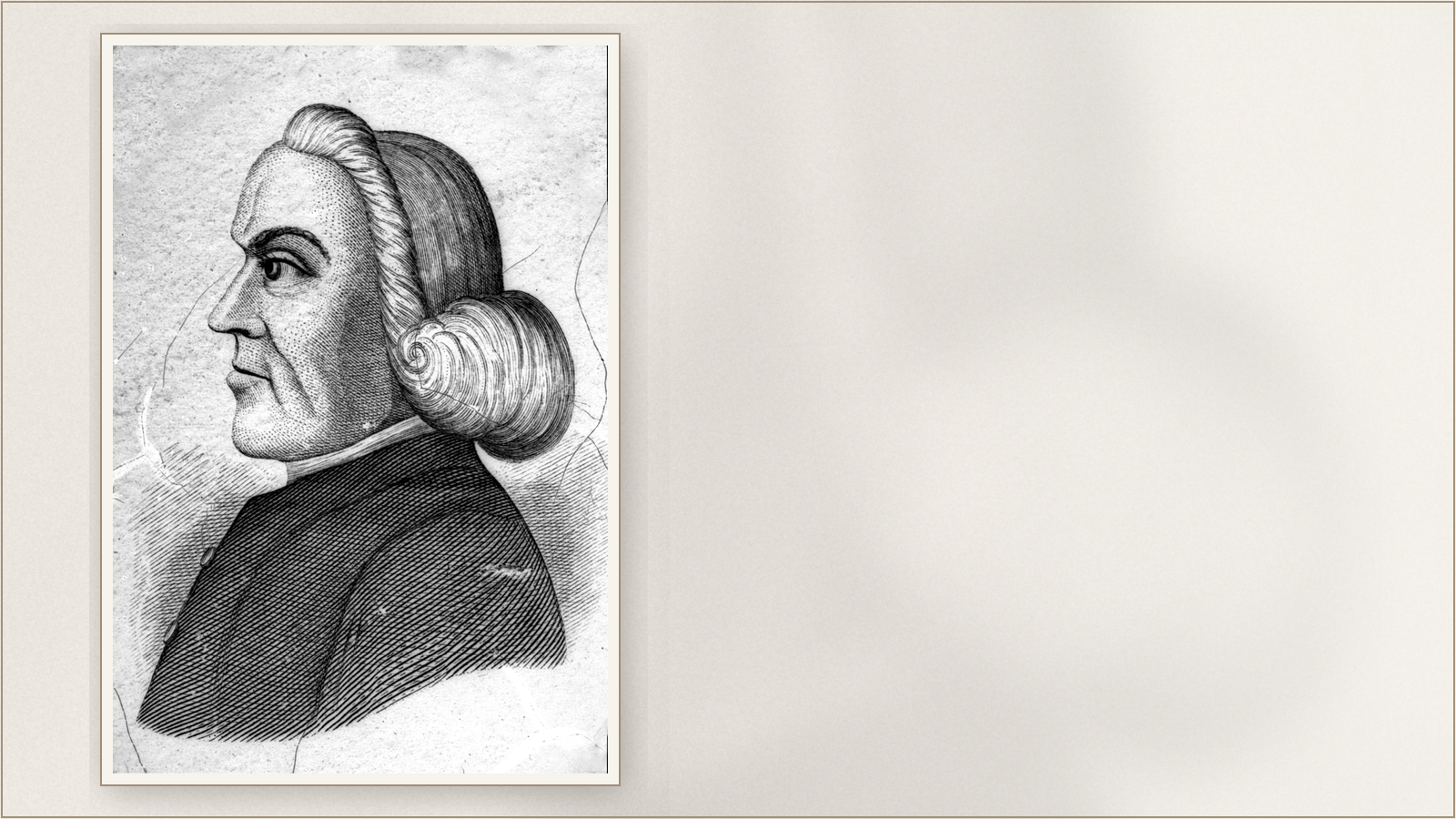
On 21 July 1773, Howell Harris died at Trefeca, the Breconshire home from which, nearly forty years earlier, he had begun carrying religious revival along the roads of Wales.
He left no great body of theology. His surviving hymns never acquired the national place of those written by William Williams Pantycelyn. As a preacher, he did not command the enduring reputation of Daniel Rowland of Llangeitho. He had never been ordained, despite repeatedly seeking admission to holy orders, and his career had been damaged by theological controversy, personal scandal and a bitter separation from his fellow Methodists.
Yet it is difficult to imagine the Welsh Methodist Revival without him.
Harris possessed a rare capacity to turn conviction into movement. He travelled, preached, corresponded, recorded, admonished and organised with an energy that astonished his contemporaries and eventually exhausted him. Converts were gathered into societies. Local societies were joined through Associations. Letters carried news between districts and connected Wales with a wider British and international evangelical world.
The National Library of Wales calls him the organiser of the Methodist Revival in Wales and the creator of its “societies” and “associations.” That judgement is substantially correct, but it is not the whole man.[1]
Harris could gather people because he first overwhelmed them. His organisational authority arose from personal intensity, and the force that helped him construct a movement could also make him overbearing, suspicious and divisive.
His achievement and his failure came from much the same source.
An awakening at Talgarth
Howell Harris was born at Trefeca, near Talgarth, on 23 January 1714. He was the youngest son of Howell Harris and Susanna Powell and was educated at Llwyn-llwyd before working as a schoolmaster at Llangorse and Llangasty between 1732 and 1735.[2]
His early life offered no clear indication that he would become one of the central figures of eighteenth-century Welsh religion. The decisive change came in 1735, after he heard Pryce Davies, the vicar of Talgarth, preach on the necessity of receiving Holy Communion.
Harris became convinced of his own spiritual danger. What followed was not a gentle intellectual adjustment but an experience of judgement, mercy and inward release. Like many early evangelicals, he came to regard the Christian faith not principally as inherited membership of a church, but as a personal encounter with sin and redemption.
Once persuaded that he had received mercy, he felt compelled to speak about it.
That compulsion transformed his life.
At his brother’s urging, Harris matriculated at St Mary Hall, Oxford, intending to prepare for ordination. He remained there for only a few days. Returning to Wales, he began an itinerant lay ministry in houses, fields and other places beyond normal parish control. The bishop of St Davids refused to ordain him, and subsequent applications also failed because Harris would not abandon his irregular preaching.[3]
He remained technically a member of the Church of England throughout his life. Nevertheless, his ministry challenged one of its practical assumptions: that public religious instruction belonged principally to ordained clergy.
Harris did not wait for institutional permission. He believed that divine necessity had already supplied it.
A country ready to hear
The success of the revival cannot be explained by portraying eighteenth-century Wales as irreligious. Parish worship continued, conscientious clergy existed, older Nonconformist traditions survived and Griffith Jones’s circulating schools were already combining literacy with Christian instruction.
The problem was less an absence of religion than its uneven reach.
Large rural parishes, difficult roads and a shortage of Welsh-speaking pastoral provision left many communities only lightly connected to the established Church. Formal worship did not always answer a desire for intimate spiritual experience or sustained communal belonging.
Harris entered this world with a language of startling immediacy. Salvation was not remote. Judgement was not theoretical. The soul’s condition could not be postponed until Sunday or delegated to a clergyman.
His meetings offered ordinary people an active place in religious life. They could testify, pray, examine their conduct and encourage or admonish one another. Christianity became a shared discipline rather than a service received at intervals.
That was the beginning of something larger than a preaching campaign.
Taking the revival onto the road
Harris became an indefatigable traveller. He crossed Wales on horseback, preached repeatedly in a single day and entered communities where Methodist exhorters could expect mockery, intimidation and sometimes physical violence.
His private records reveal the scale and inner pressure of this existence. The National Library of Wales holds 290 volumes of his diaries as part of a much larger Calvinistic Methodist archive containing thousands of letters, accounts of societies and records of Associations.[4]
The diaries are more than a record of mileage and meetings. They show a man continually watching himself. Harris scrutinised his motives, spiritual condition, bodily sensations, relationships and failures with exhausting attention.
That habit of examination passed into the culture he helped create.
Harris wanted his hearers to do more than respond emotionally to a sermon. He gathered converts into local societies where enthusiasm could be tested through continued conduct. Members met for prayer and exhortation, but also for moral oversight. The converted life was to be practised, observed and sustained.
This was the foundation of Harris’s organisational importance. A crowd could disperse. A society met again.
Harris and Daniel Rowland
In 1737 Harris met Daniel Rowland, the curate whose preaching at Llangeitho was already attracting considerable attention. Their alliance brought together two unusually powerful but very different personalities.
Rowland possessed the greater pulpit gift. His sermons combined theological seriousness, imaginative force and an ability to move large congregations. Harris was more restless and expansive. He travelled incessantly, discovered new adherents, maintained correspondence and imposed structure upon what might otherwise have remained a succession of local awakenings.
Among those drawn into their circle were Howell Davies and William Williams Pantycelyn. In 1742 the leaders and their societies were brought together in an Association, giving the emerging Welsh movement a degree of coherence while connecting it with the wider evangelical revival in England.[5]
The movement did not yet understand itself as a separate denomination. Its leaders were attempting to renew Christian life while maintaining an uncertain relationship with the Church of England.
Harris’s own connections crossed national and theological boundaries. He knew George Whitefield and the Wesley brothers and spent considerable periods in England. While Welsh Methodism developed its Calvinistic identity, Harris continued to hope that the divided evangelical parties might be held together.
His efforts made the Welsh revival part of something wider than a national religious episode. Letters, printed works, visiting preachers and personal friendships connected Wales with evangelical networks extending across Britain and the Atlantic world.[6]
Yet the same instinct that made Harris a builder of connections also encouraged him to imagine himself as their indispensable centre.
Authority and its dangers
Harris was not an easy man.
The Dictionary of Welsh Biography describes his temperament as “cross-grained and dictatorial.”[2] The language is severe, but his own records leave little doubt that spiritual certainty could harden into personal command.
He demanded intense commitment from himself and expected it from others. Disagreement was not always treated as honest difference. Because Harris understood the revival as the work of God, resistance to his judgement could appear to him as resistance to the work itself.
His relentless travelling and preaching also brought him close to physical and emotional exhaustion. By the later 1740s, tension within the Methodist leadership had grown around doctrine, discipline and Harris’s claims to authority.
Moravian spirituality exerted a powerful influence upon him. Some of the language he adopted concerning the wounds and blood of Christ, and especially his expressions about God suffering or dying at Calvary, alarmed colleagues who considered them doctrinally dangerous.
There was also his relationship with Sidney Griffith of Cefnamlwch.
Harris had married Anne Williams of Yscir in 1744, and they had two daughters, one of whom died in infancy. During the late 1740s, however, he formed an intense attachment to Sidney Griffith, the estranged wife of a Caernarfonshire landowner. Harris attributed prophetic insight to her and brought her into Methodist gatherings with a prominence that disturbed his colleagues and humiliated his wife.
The surviving evidence does not permit every aspect of the relationship to be reconstructed with certainty. Its consequences are clearer. Harris’s judgement appeared compromised, scandal spread and his colleagues became increasingly unwilling to submit to his leadership.
In 1750 George Whitefield excluded him from the English Calvinistic Methodist organisation. Harris and Rowland then separated, dividing the Welsh movement between their followers. William Williams remained with Rowland, while Harris withdrew with a smaller body of loyal adherents.[7]
It was not merely an argument between two difficult men. The rupture exposed a problem present in many revival movements: authority founded upon personal charisma can mobilise people rapidly, but it can be difficult to restrain when the leader’s judgement fails.
Harris had helped build the movement’s discipline. He had not learned how readily that discipline could become domination.
Teulu Trefeca
After the separation, Harris turned increasingly towards Trefeca. There, from 1752, he developed the religious community known as Teulu Trefeca, the Trefeca Family.
This was more than a refuge for disappointed followers. It was an attempt to embody evangelical religion as a complete social order.
Members worshipped, worked and lived under a common discipline. The settlement included agricultural activity, workshops, a bakery and eventually a printing press. It cared for the sick and sought a degree of economic self-sufficiency. Harris occupied the position of spiritual father, directing both the religious and practical affairs of the household.[8]
The experiment reflected Moravian and other European Pietist influences, but it also grew from Harris’s own instincts. He had spent years organising scattered converts. At Trefeca he attempted to gather religion, labour, education and domestic life into one governed community.
There was imagination in this project. There was also control.
The Family offered security, purpose and companionship, but its order was exacting and Harris’s authority extensive. Trefeca therefore reveals both sides of his religious vision. He understood that belief required social form, yet his preferred form placed the community beneath a commanding personality.
Harris’s interests were not confined to preaching. He helped establish the Brecknockshire Agricultural Society in 1755, an early organisation of its kind in Wales. During fears of French invasion, he formed a company from members of the Trefeca Family and served for a time as a militia captain.[9]
The image complicates the familiar portrait of the revivalist. Harris was simultaneously a religious leader, communal patriarch, agricultural improver and military officer. He was attempting not merely to save souls, but to order a small society.
Reconciliation without restoration
Harris returned to his former Methodist associates in 1762. He again attended Associations, visited societies and preached, but he did not recover the authority he had possessed during the revival’s first years.
The movement had changed.
A new body of lay exhorters had emerged, and they were less willing to accept his direction. Chapels were being erected. The Association was acquiring a more definite governing role. Welsh Methodism was slowly developing the institutions that would eventually carry it beyond the Church of England.
Harris resisted that direction. For all his irregular preaching and practical independence, he remained attached to the established Church and opposed the tendency towards separation. This apparent contradiction was not unique among early Methodists. They could criticise the Church’s failures, organise outside its ordinary structures and still regard formal departure as a step too far.
In 1768 Harris supported the Countess of Huntingdon when she established a training college for evangelical preachers at Trefeca Isaf. Yet his health was failing, and the movement no longer depended upon him as it once had.
He died on 21 July 1773 and was buried near the altar rails in Talgarth church.[2]
The burial was fitting. The layman whom bishops had refused to ordain, and whose ministry had strained the boundaries of Anglican order, remained within the Church to the end.
What Harris changed
Harris did not create Welsh Nonconformity by himself. Its history reaches backwards into Puritanism, Dissent, circulating schools and older traditions of Welsh-language devotion. Nor did he single-handedly convert Wales. Rowland, Williams, Howell Davies and many lesser-known exhorters, society leaders and women supporters were indispensable.
His distinctive achievement was to give early Welsh Methodism movement and memory.
He carried the revival between communities that might otherwise have remained isolated. He organised converts into societies. He connected those societies through Associations. He corresponded across borders and recorded the movement with an intensity that has left historians an extraordinary archive.
The later chapel culture of Wales cannot simply be read backwards into Harris’s societies. Nineteenth-century Nonconformity developed under different political and social conditions. Even so, Harris helped demonstrate that ordinary Welsh people could sustain religious institutions through voluntary association, lay responsibility and mutual discipline.
Those habits would travel beyond religion. Chapel life eventually nurtured speakers, organisers, teachers, reformers and politicians. It provided communities with institutions not controlled by the landed interest or the established Church. Harris did not design that later civic culture, but he helped create some of the practices from which it grew.
His legacy is therefore larger than a list of societies or journeys.
He helped alter where authority could be found.
A founder without a halo
There is a temptation, when writing about religious founders, either to preserve the saint or expose the fraud. Howell Harris permits neither simplification.
His courage was real. So was his vanity. His concern for ordinary people was profound, but so was his appetite for authority. His spiritual discipline helped create durable communities, yet it could become oppressive. He preached a faith centred upon grace while sometimes treating his own judgement as beyond correction.
None of this makes his achievement less important. It makes it human.
Daniel Rowland gave the revival some of its greatest sermons. William Williams gave it the hymns through which generations would remember and inhabit its faith. Howell Harris gave it roads, correspondence, societies and a restless conviction that religious experience must become a form of common life.
He did not merely help awaken evangelical Wales.
He tried to organise what had awakened, and discovered, at considerable cost, that commanding a revival was far easier than governing the human heart.
Sources and Further Reading
- National Library of Wales, Howell Harris Diaries and Manuscripts
- Dictionary of Welsh Biography, “Harris, Howell (1714–1773), religious reformer”
- E. Wyn James, “Harris, Howel(l) (1714–73),” Oxford Dictionary of the Christian Church
- National Library of Wales, Calvinistic Methodist Archive
- Dictionary of Welsh Biography, Howell Harris
- Aberystwyth University, David Ceri Jones, A Glorious Work in the World: Welsh Methodism and the International Evangelical Revival, 1735–1750
- Geraint Tudur, Howell Harris: From Conversion to Separation, 1735–1750, bibliographical record and review
- Methodist Heritage, Howell Harris Museum and the Trefeca Family
- National Library of Wales, Harris biographical and archival record