
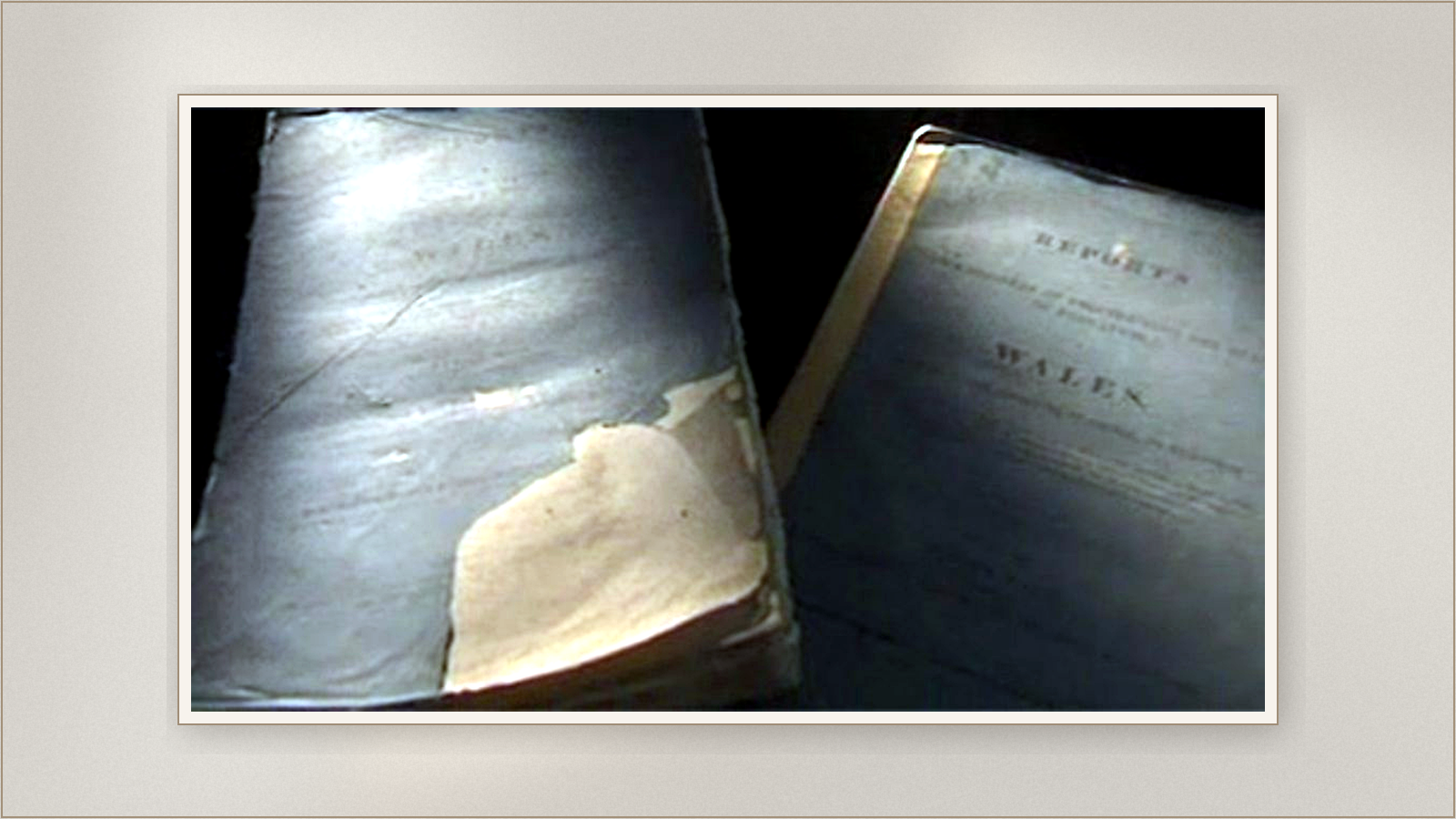
In 1847, three substantial reports on education in Wales were presented to Parliament. Bound in the blue covers commonly used for official publications, they soon acquired a place in Welsh history out of all proportion to their unremarkable title: Reports of the Commissioners of Inquiry into the State of Education in Wales.
The inquiry had been established to examine the condition of Welsh schooling, particularly the opportunities available to working people to acquire English. It uncovered genuine deficiencies. Many schools were poorly housed, teachers were frequently untrained, attendance was irregular and provision varied considerably from one district to another. Yet the reports went far beyond education. They offered judgements on the Welsh language, Nonconformity, family life and the sexual morality of Welsh women.
That is why the Blue Books have never been remembered simply as an administrative investigation. They became a national grievance, known eventually as Brad y Llyfrau Gleision, the Treachery of the Blue Books.
Their importance lies not in any single recommendation. The reports did not abolish Welsh-language education, nor did they alone cause the subsequent decline of Welsh. Their deeper significance was cultural. They placed the authority of the British state behind an already familiar idea, that the Welsh language belonged to backwardness, while English represented education, respectability and advancement.
For generations of Welsh families, that was not an abstract argument. It shaped the choices they made for their children.
Wales in the 1840s
The inquiry emerged from a troubled decade. The industrial districts of south Wales had experienced rapid and often disorderly growth. Rural communities were burdened by poverty, rents, tithes and tolls. The Rebecca disturbances of 1839–43 had exposed deep resentment in the countryside, while the Newport Rising of 1839 had demonstrated the strength of working-class political agitation.
To many in government, unrest suggested ignorance. Education was therefore seen not only as a means of individual improvement, but as an instrument of social order.
Wales, however, could not be understood solely through the categories familiar to London officials. Much of the population spoke Welsh as its ordinary language. Religious life was increasingly shaped by Nonconformity rather than the established Anglican Church. Sunday schools, chapels, circulating schools and denominational ventures had created a substantial culture of popular literacy, particularly in Welsh.
This did not mean that Wales possessed an adequate system of education. It did not. School provision was fragmented, largely dependent upon religious bodies, charities and private enterprise. Poverty kept many children away from lessons, while teachers could be badly paid and poorly prepared. Welsh reformers were already conscious of these weaknesses.
The problem was not that the commissioners found deficiencies. It was the manner in which those deficiencies were explained.
A Welshman’s Motion
The inquiry was not simply imposed upon Wales by hostile English politicians. Its immediate parliamentary origin was a motion made on 10 March 1846 by William Williams, the Welsh-born Radical MP for Coventry.
Williams asked that an inquiry be made into education in Wales, especially the means available to the labouring classes for acquiring knowledge of English. His intervention reflected a concern shared by many ambitious Welsh people. English was the language of administration, commerce and professional advancement. A working-class child unable to speak it faced an obvious disadvantage.
That desire to learn English must not be confused with a universal wish to abandon Welsh. The distinction is essential. Many Welsh parents wanted their children to possess both languages. They recognised English as a practical necessity, but that did not necessarily mean they regarded Welsh as worthless.
The inquiry was entrusted to three commissioners, Ralph Robert Wheeler Lingen, Jellynger Cookson Symons and Henry Robert Vaughan Johnson. They were young English barristers, none of whom spoke Welsh. They therefore depended heavily upon assistants, translators and local witnesses.
The structure of the investigation created an immediate imbalance. The commissioners were attempting to assess communities whose language they could not understand and whose religious culture was largely unfamiliar to them. Much of their evidence came from Anglican clergymen at a time when a considerable proportion of the Welsh population worshipped in Nonconformist chapels.
The result was not invented from nothing, but it was filtered through a narrow and often unsympathetic social world.
What the Reports Found
The three volumes contain a mass of evidence about nineteenth-century Wales. They remain valuable historical sources, recording schools, teachers, attendance, language, poverty and local conditions in considerable detail.
The commissioners encountered school buildings that were cold, cramped and unsanitary. Some teachers possessed little more education than their pupils. Children arrived exhausted after domestic or agricultural labour, while others attended only when their families could spare them. In Welsh-speaking districts, pupils were sometimes taught by teachers who knew no Welsh, using English books they could barely comprehend.
The reports also recognised the remarkable appetite for learning found among ordinary Welsh people. Sunday schools attracted large numbers and had extended literacy well beyond the reach of the day-school system. Parents frequently made real sacrifices to secure education for their children.
These findings ought to have led to a concentrated discussion of poverty, teacher training, public investment and the absence of a coherent educational system. Instead, parts of the reports shifted responsibility from institutions to culture. The Welsh language was repeatedly presented as an obstacle. Nonconformity was treated with suspicion. Social deprivation was too readily explained as a product of Welsh character rather than material circumstance.
A failure of educational provision became, in places, an indictment of the people who had been failed.
Language and the Meaning of Progress
The commissioners did not create the association between English and advancement. It was already deeply rooted in Welsh society. English opened doors to employment, law, government and commerce. Welsh parents understood this perfectly well.
What the Blue Books did was lend official authority to the belief that Welsh was not simply economically disadvantaged, but intrinsically limiting. The language was treated less as a medium through which education might be delivered than as a barrier that education must overcome.
This distinction mattered. A bilingual educational policy could have enabled Welsh children to learn English while receiving instruction through the language they understood. Instead, the prestige of officialdom rested overwhelmingly with English. Welsh became associated with home, chapel and locality, while English belonged to examinations, employment and public power.
The Blue Books did not order teachers to use the Welsh Not, the notorious device intended to shame children caught speaking Welsh. Versions of that practice existed before 1847, and its use was neither uniform nor directly mandated by the reports. Nevertheless, the reports strengthened the assumptions from which such treatment arose. If Welsh was regarded as an impediment, suppressing it could be presented as educational discipline rather than cultural punishment.
The pressure operated through aspiration as much as compulsion. Parents could love their language and still conclude that their children would fare better without it. Cultural retreat could therefore appear not as surrender, but as responsibility.
The Attack on Welsh Women
The most notorious passages concerned the morality of Welsh women. Although these remarks occupied only a small part of the enormous report, their effect was explosive.
Victorian society treated female respectability as a measure of domestic and national character. Allegations of sexual impropriety were therefore not incidental observations. They struck at the reputation of Welsh homes and communities.
The evidence used to support these judgements was uneven and often deeply prejudiced. Customs associated with courtship, including bundling or caru yn y gwely, were presented as evidence of widespread immorality. Poverty, overcrowding and the domestic arrangements of rural households were interpreted through the moral expectations of outside observers. Welsh women were discussed as though they were specimens from a defective society rather than individuals living within particular economic conditions.
This was especially offensive because the inquiry had been established to investigate education. The conduct of women who had never entered a schoolroom had no legitimate place in an official assessment of teachers, buildings and curricula.
The response was not merely defensive. It influenced Welsh public culture. Ieuan Gwynedd, the name used by the journalist and minister Evan Jones, became one of the most prominent critics of the reports. In 1850 he founded Y Gymraes, a Welsh-language periodical intended partly to defend and cultivate the moral and intellectual standing of Welsh women.
Yet even this response revealed the reach of the original insult. Welsh women were defended by being required to embody an exacting ideal of piety, domestic competence and respectability. The reports had framed the accusation, and their opponents sometimes answered within the same moral framework.
Why It Became a “Treachery”
The familiar description Brad y Llyfrau Gleision was not the report’s original title. It was popularised by the poet and writer Robert Jones Derfel, whose satirical play of that name appeared in 1854.
Derfel directed much of his anger not only at the commissioners, but at those Welsh witnesses whose testimony had helped to construct the indictment. In his interpretation, the treachery lay within Wales as well as outside it. Anglican clergymen and other local informants had supplied evidence that appeared to condemn their own countrymen, sometimes reflecting the bitter religious divisions of the period.
That helps explain why the episode became so deeply rooted in national memory. It could not be reduced to a simple conflict between England and Wales. Welsh reformers had requested the inquiry. Welsh parents wanted access to English. Welsh witnesses contributed to the reports, and Welsh religious rivalries shaped some of the evidence.
The Blue Books were produced within an unequal union, but they also exposed divisions within Wales itself, between Anglican and Nonconformist, official and local, English-speaking and Welsh-speaking, respectable and supposedly disreputable.
“Treachery” captured the sense that official authority had been invited to diagnose a problem and had instead passed judgement upon a nation.
Resistance, Reform and Accommodation
Welsh responses were varied. Ministers, journalists and writers attacked the reports’ methods and conclusions. Jane Williams, known as Ysgafell, published Artegall, or Remarks on the Reports of the Commissioners of Inquiry into the State of Education in Wales in 1848. Ieuan Gwynedd assembled evidence intended to refute the allegations about Nonconformity and Welsh morality. Public meetings transformed indignation into political consciousness.
The controversy also forced Welsh Nonconformists to engage more directly with education and public affairs. In later decades, the movement for improved schools, university education and national institutions drew strength from the determination to demonstrate that Wales was neither ignorant nor incapable.
Resistance did not, however, remove the practical power of English. Welsh communities could condemn the reports while accepting that English remained necessary. Chapels could defend Welsh culture while promoting Victorian ideals of self-discipline and improvement. Families could maintain Welsh in worship yet choose English for their children’s education.
Accommodation and resistance often existed together. That is one reason the linguistic history of modern Wales cannot be told simply as a story of persecution. Welsh people exercised agency, but they did so within a system in which the social and economic rewards were distributed unequally between the two languages.
Did the Blue Books Cause the Decline of Welsh?
It would be misleading to draw a straight line from 1847 to the modern position of the language.
Industrialisation brought large-scale movements of population. Railways and expanding towns weakened the isolation of Welsh-speaking districts. Migration into and out of Wales altered the linguistic composition of communities. State education, overwhelmingly administered through English during the later nineteenth century, increased the reach of the dominant language. Military service, broadcasting, employment patterns and the growing centralisation of government all contributed.
When language ability was first recorded in the census of 1891, a majority of the population of Wales could still speak Welsh. By the 2021 census, the recorded proportion among people aged three and over was 17.8 per cent. Such a profound change cannot be attributed to a single publication.
The importance of the Blue Books was therefore less mechanical than psychological. They helped to establish a hierarchy of value. English was associated with knowledge, mobility and public life. Welsh was too often confined to memory, sentiment and private affection.
A language does not decline only because people are forbidden to speak it. It can also decline when families come to believe that transmitting it will burden their children.
The Afterlife of 1847
The legacy of the Blue Books should not be exaggerated, but neither should it be reduced to a historical grievance.
The reports demonstrate how official investigations can turn structural failure into cultural blame. Wales lacked adequate schools because governments, landowners, churches and communities had failed to construct a sufficient system. Yet the language and character of Welsh people were made to carry much of the responsibility.
They also reveal how prejudice acquires authority. Once recorded in a parliamentary report, assumptions that had circulated through travel writing, religious rivalry and social stereotype appeared to possess the status of measured fact.
Something similar can occur whenever the language of reform conceals a demand for conformity. “Efficiency”, “standards” and “modernisation” may describe legitimate objectives, but they are not culturally neutral when one community is repeatedly expected to surrender its language or institutions in order to satisfy them.
Modern Wales is not the Wales of 1847. Welsh now possesses legal recognition, a public presence and a place within education that the commissioners could scarcely have imagined. Yet the old hierarchy has not disappeared entirely. Welsh-language provision is still sometimes treated as an optional expense, while English-language provision is accepted as the natural foundation of public life.
That assumption is part of the inheritance of 1847.
A Nation Judged from Outside
The Blue Books deserve to be read critically, not ritually. They exposed serious educational failings and preserved evidence of considerable historical value. They also displayed profound limitations of language, sympathy and perspective.
Their greatest offence was not that English commissioners criticised Wales. Nations are not entitled to immunity from criticism. It was that poverty, inadequate provision and institutional neglect were repeatedly translated into defects of national character. The people most poorly served by the existing system were made responsible for its failures.
Yet the history that followed was not one of passive victimhood. Welsh writers challenged the evidence. Communities expanded educational provision. Nonconformists entered public and political life with increasing confidence. Campaigners eventually secured national institutions, greater recognition for Welsh and a measure of political self-government.
The Blue Books attempted to define Wales through the eyes of authority. Their unintended consequence was to encourage Welsh people to argue, with growing force, for the right to define themselves.
Sources and Further Reading
- National Library of Wales, The Blue Books of 1847.
- National Library of Wales, digitised Reports of the Commissioners of Inquiry into the State of Education in Wales.
- Dictionary of Welsh Biography, “William Williams, 1788–1865”.
- Matthew Jones, “On Nineteenth-Century Welsh Literacies and the Blue Book Education Reports of 1847”, BRANCH: Britain, Representation and Nineteenth-Century History.
- Gwyneth Tyson Roberts, The Language of the Blue Books: The Perfect Instrument of Empire (University of Wales Press, 1998).
- Prys Morgan, “From a Death to a View: The Hunt for the Welsh Past in the Romantic Period”, in Eric Hobsbawm and Terence Ranger, eds, The Invention of Tradition (Cambridge University Press, 1983).
- Geraint H. Jenkins, A Concise History of Wales (Cambridge University Press, 2007).
- Welsh Government, Welsh Language in Wales, Census 2021.
- Commission for Welsh-speaking Communities, position paper