
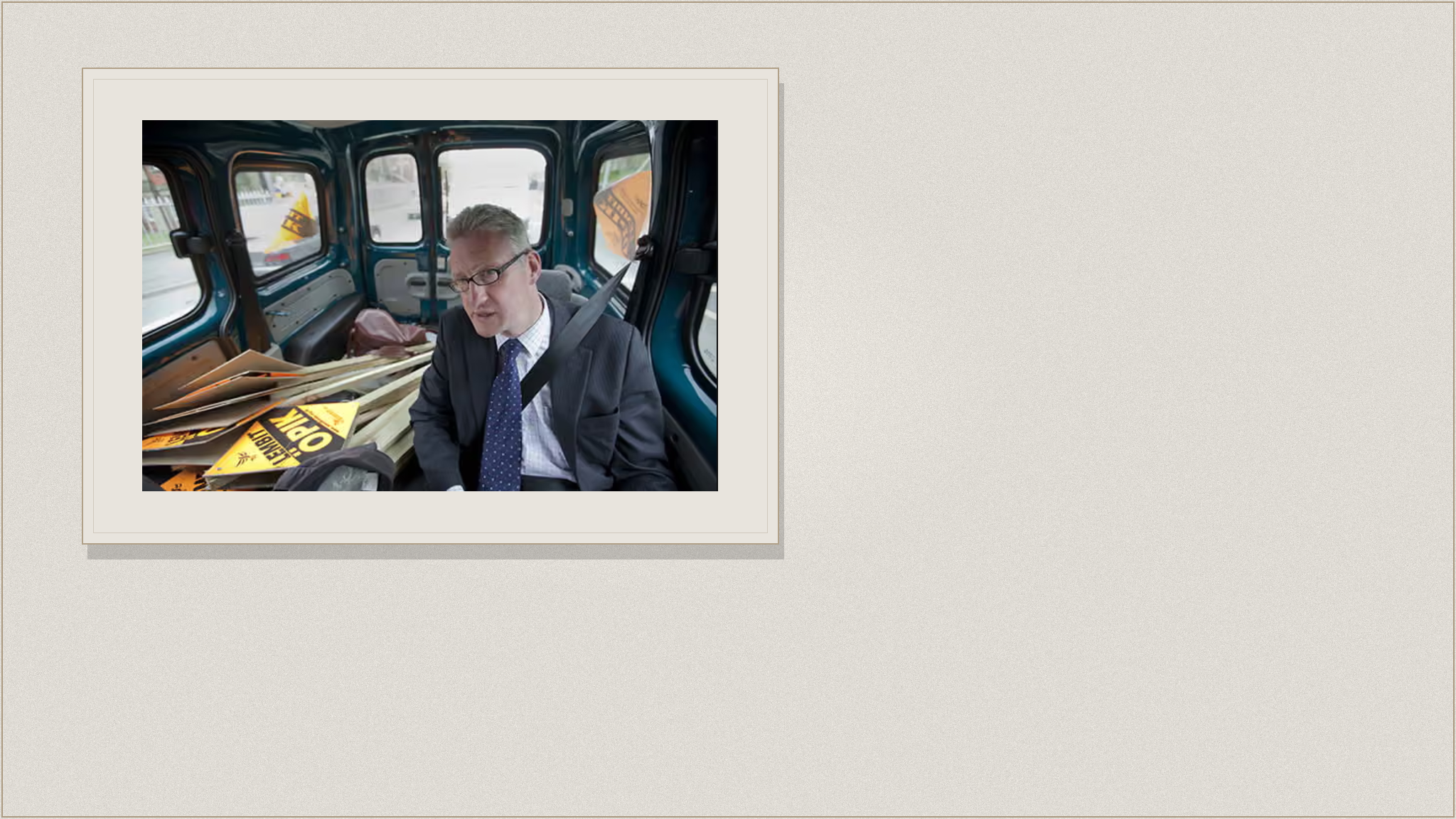
For much of the twentieth century, Montgomeryshire provided one of the clearest surviving connections between modern party politics and the older culture of Liberal Wales. Its representatives changed, its boundaries evolved and its allegiance was not entirely unbroken, but the constituency continued to sustain a recognisable political tradition rooted in Nonconformity, local service and rural independence.
That is why the general election of 2010 mattered. The defeat of Lembit Öpik by the Conservative candidate Glyn Davies did not, by itself, cause the decline of Welsh Liberalism. Nor can one constituency result explain the wider collapse of the Liberal Democrats in Wales. The forces behind that decline were national, organisational and social.
Yet some election results possess significance beyond the number of votes counted. Montgomeryshire in 2010 was one of them. It ended the assumption that this historic Liberal territory would continue to return a Liberal Democrat almost by inheritance.
A constituency that had appeared secure changed hands after a swing of 13.2 per cent. What followed demonstrated that the result was not a temporary protest. The Conservatives consolidated their position, while the Liberal Democrats were unable to rebuild the authority they had once taken for granted.
The election did not destroy Liberal Wales, but it revealed how much of its old foundation had already been lost.
The Meaning of Montgomeryshire
Montgomeryshire’s Liberal identity had deep historical roots. The politics of the county were shaped by tenant farming, Nonconformity, the Welsh language and resistance to excessive landed influence. Liberalism offered a political home to communities whose social and religious lives often stood apart from the Anglican establishment.
The county’s Liberal history was not perfectly continuous. Personal loyalties, electoral circumstances and divisions within Liberalism all mattered. Nevertheless, the sequence of prominent twentieth-century representatives gave the constituency unusual symbolic importance.
David Davies of Llandinam represented Montgomeryshire from 1906 until 1929. He combined Liberal politics with philanthropy and internationalism, later becoming closely associated with campaigns for collective security and international peace.
Clement Davies succeeded him in 1929 and remained MP until his death in 1962. Between 1945 and 1956 he led the Liberal Party at Westminster, sustaining it through one of the weakest periods in its parliamentary history.
Emlyn Hooson won the subsequent by-election and represented Montgomeryshire until 1979. A Welsh-speaking barrister and advocate of greater recognition for Wales, Hooson belonged to a generation for whom Liberalism and Welsh national consciousness remained compatible.
The Conservative Delwyn Williams captured the seat in 1979, interrupting the Liberal succession. Alex Carlile recovered it for the Liberals in 1983 and held it until his retirement in 1997. Lembit Öpik then succeeded him.
Montgomeryshire was therefore not an impregnable Liberal possession. It had been lost before. What distinguished 2010 was the scale of the reversal, the character of the contest and the failure of the Liberal Democrats to recover afterwards.
The Arrival of Lembit Öpik
Öpik entered Parliament at the 1997 general election, receiving 14,647 votes and defeating the Conservative candidate by 6,303. He increased his vote to 14,319 in 2001 despite a fall in turnout, then reached 15,419 in 2005. His majority over the Conservatives that year stood at 7,173.
He was not simply a quiet constituency Member. Öpik served as Liberal Democrat spokesperson on education, Northern Ireland, Wales, business and housing. He sat on parliamentary committees concerned with agriculture and rural affairs, subjects directly relevant to Montgomeryshire.
Between 2001 and 2007, he led the Welsh Liberal Democrats. His position gave Montgomeryshire a prominence within the party beyond that normally enjoyed by a small rural constituency.
His early reputation locally was generally favourable. He appeared energetic, approachable and conspicuous in the constituency. Unlike a remote Westminster figure who appeared only at election time, he cultivated personal recognition.
In April 1998, less than a year after entering Parliament, Öpik was seriously injured in a paragliding accident in Montgomeryshire. He fell approximately 80 feet, breaking his back in 12 places as well as suffering injuries to his ribs, sternum, knees and jaw. His survival, recovery and return to parliamentary work became part of his public story.
For a time, the accident reinforced the impression of resilience. It tied a dramatic episode in his life directly to the landscape he represented and gave personal substance to an otherwise unconventional political figure.
Yet the qualities that initially made Öpik distinctive eventually became more difficult to control.
When Recognition Became Celebrity
Öpik possessed an instinct for publicity. He was articulate, humorous and willing to appear in settings that most constituency MPs would have avoided. He became widely recognisable beyond Wales, but much of that recognition was increasingly detached from his parliamentary work.
His relationships with television weather presenter Siân Lloyd and later Gabriela Irimia of the Cheeky Girls generated extensive tabloid coverage. Television appearances, public eccentricity and his interest in unusual causes contributed to a persona that was more familiar to the national public than the work he performed as an MP.
There is no reason to make a moral judgement about his private life. The political question is different. Did his public celebrity remain compatible with the expectations of the constituency?
Montgomeryshire possessed its own moral economy of representation. Its politics were not humourless, nor were its voters immune to personality. Yet legitimacy was traditionally associated with accessibility, understatement and sustained presence in community life. The respected local representative was expected to be visible at agricultural shows, council meetings, commemorations and community events without appearing to regard the constituency as a stage.
In that environment, celebrity could become a liability if it appeared to displace seriousness.
I remember the change from my own years in Mid Wales. At about the time of the 2010 election, Öpik was expected to visit the charity where I worked. The conversation among staff beforehand was not about his parliamentary influence, policies or possible assistance to the organisation. It centred on whether he might arrive accompanied by one of the Cheeky Girls.
The exchange was light-hearted rather than hostile, but it revealed something about how his public identity had changed. He was no longer being discussed instinctively as a senior Welsh politician or influential constituency MP. He had become a personality.
One workplace conversation cannot explain an election. It does, however, preserve something that polling and official results cannot easily capture. The loss of authority often begins in casual remarks. A representative may retain recognition while the nature of that recognition has altered completely.
Öpik remained famous. The difficulty was that fame and political stature were no longer the same thing.
The Strength of Glyn Davies
The result cannot be understood solely through Öpik’s changing image. Glyn Davies was not an anonymous beneficiary of protest.
Born on a family farm near Castle Caereinion, Davies had worked as a farmer and built a substantial record in Welsh rural public life. He had chaired Montgomeryshire District Council and the Development Board for Rural Wales, served on the Welsh Development Agency and Wales Tourist Board, and represented Mid and West Wales in the National Assembly between 1999 and 2007.
He possessed local recognition, political experience and strong rural credentials. He had also challenged Öpik in 1997, giving him a long familiarity with the constituency and its electoral terrain.
Davies was selected again as the Conservative parliamentary candidate in 2007. That gave him something unusually valuable in a large rural constituency: time. He had more than two years to rebuild networks, attend events, cultivate local visibility and present himself not as a transient challenger but as a permanent presence in Montgomeryshire political life.
The Conservative campaign slogan, “Because Montgomeryshire Deserves Better”, was therefore more than a national party message adapted for local use. It was a direct challenge to the incumbent’s claim to represent the county adequately, and it rested on a long campaign rather than a six-week election effort.
Davies offered a markedly different style of representation. Where Öpik’s public identity had become national and personality-driven, Davies could present himself as a product of the county’s institutional life. He was associated with farming, local government, rural development and the voluntary organisations of Montgomeryshire.
The contrast was powerful because Davies occupied a familiar local archetype. He did not need to manufacture an image of rootedness. His biography supplied it.
It would be misleading to say that Montgomeryshire simply rejected flamboyance in favour of sobriety. Elections are rarely so tidy. Party preference, national politics, individual casework and local campaigning all contributed. Nevertheless, the contrast between the candidates made the contest unusually personal.
The Conservatives were not merely asking voters to change party. They were asking them to reconsider which candidate most convincingly represented the established public character of Montgomeryshire.
A Conservative Advance Already Under Way
The importance of 2010 becomes clearer when it is placed within the political developments of the preceding years. The Conservative breakthrough did not begin on polling day. By then, a deeper local realignment was already visible.
At the 2008 local elections, Montgomeryshire Conservatives went from having no county councillors to securing six. In the 2009 European election, the Conservatives then topped the poll locally. These were not Westminster results, but they demonstrated that Conservative support was expanding in territory long associated with Liberalism.
The sequence matters. Davies had been selected in 2007, Conservative representation advanced sharply in local government in 2008, the party performed strongly in 2009, and Westminster fell in 2010. The following year the movement extended into the National Assembly. Seen in this chronology, Öpik’s defeat appears less as an isolated upset and more as the most visible stage of a political shift already in progress.
That does not remove Öpik’s personality from the explanation. It does, however, prevent the result from being reduced to a referendum on one man. The Conservatives had created organisational depth, electoral momentum and a credible local alternative before the general election campaign formally began.
Local Issues and the Politics of Place
The 2010 contest was also shaped by specifically Montgomeryshire concerns. One of the most important was the expanding debate over wind farms, the Mid Wales landscape and the infrastructure required to serve large-scale energy development.
Öpik himself was active on the issue. In January 2010 he raised concerns in Parliament about the movement of turbine components through Mid Wales, warning of the cumulative effects of large numbers of slow-moving vehicles on communities including Welshpool and Cefn Coch. In March, only weeks before the general election, he presented a petition concerning the impact of wind-farm traffic on Welshpool, Newtown, Guilsfield and Montgomery and called for a public inquiry.
This matters because it demonstrates that Öpik had not simply abandoned local concerns in favour of celebrity. He remained capable of serious constituency intervention. The political difficulty was that such work increasingly competed with a national public image over which he had far less control.
Davies, meanwhile, approached the election through an explicitly local frame. In contemporary commentary he invoked the old political maxim that “all politics is local”, arguing that even devolved questions such as schools and wind farms belonged in his Westminster campaign because they mattered directly to the people he sought to represent.
That approach was well suited to Montgomeryshire. In a dispersed rural constituency, arguments about landscape, transport, farming, public services and community survival could cut across conventional party labels. Davies was able to present himself as a candidate concerned first with the county and only second with the national Conservative message.
The National Paradox
The timing of the defeat made it particularly striking.
The 2010 general election produced the first televised debates between the leaders of Britain’s principal political parties. Nick Clegg’s performance in the opening debate generated an immediate rise in Liberal Democrat support, widely described as “Cleggmania” or the “Clegg effect”.
For a brief period, the party appeared to have escaped the limitations of third-party politics. Clegg was presented as the fresh alternative to Labour and the Conservatives, while Liberal Democrat candidates entered the final weeks of the campaign with unprecedented national attention.
The eventual result was less dramatic. The party increased its share of the British vote only slightly and lost five seats. Even so, Montgomeryshire appeared among the least likely Liberal Democrat defeats. Öpik had won more than half the constituency vote in 2005 and possessed a majority of 7,173.
Yet contemporary evidence suggests that the national Liberal Democrat surge may have made the Montgomeryshire defeat smaller rather than larger. Writing two days before polling, Davies recalled that when he had been selected in 2007 overturning the Liberal Democrat majority had seemed remote, but that after more than thirty months of campaigning he had come to regard himself as the favourite. The first televised leaders’ debate, and the sudden national enthusiasm for Clegg, injected uncertainty back into a contest that Davies believed had already moved in his direction.
This changes the interpretation in an important way. Montgomeryshire did not simply fall in spite of Cleggmania. It is possible that Cleggmania temporarily checked a Conservative advance that was already well established locally.
On 6 May 2010, Glyn Davies received 13,976 votes, against Öpik’s 12,792. The Liberal Democrat share fell from 50.5 to 37.8 per cent, while the Conservative share rose from 27 to 41.3 per cent.
The majority was only 1,184, but the movement behind it was substantial. A swing of approximately 13.2 per cent transformed what had appeared to be a strong Liberal Democrat seat into one of the most notable Conservative gains of the election.
The raw figures are even more revealing. Between 2005 and 2010, Öpik lost 2,627 votes, while the Conservatives gained 5,730. Turnout rose from 64.4 to 69.4 per cent, and the total number of votes cast increased. The Liberal Democrat decline therefore cannot easily be dismissed as electoral apathy or a generally depressed contest. More people voted, but fewer voted for Öpik, while the Conservative vote rose dramatically.
The contrast with Wales as a whole is equally striking. Liberal Democrat support across Wales did not collapse in 2010. Their Welsh vote share actually rose slightly, while Conservative support increased more modestly than it did in Montgomeryshire. The scale of the swing in the constituency was therefore unusually local, even though it occurred within a wider Conservative revival.
Montgomeryshire fell at the precise moment when the national Liberal Democrat brand seemed to be enjoying its greatest exposure. That contradiction made it more than a routine constituency loss.
Öpik as a Working Constituency MP
The later image of Öpik as a politician overwhelmed by celebrity risks obscuring the fact that he continued to perform serious constituency work close to the election.
In February 2010, he thanked ministers for assistance in securing Regal Fayre in Montgomery and in helping safeguard 180 jobs at the Shop Direct call centre in Newtown. The Secretary of State for Wales, Peter Hain, responded by saying that Öpik had worked tirelessly for his constituents and had represented them properly to government.
That evidence deserves weight. Öpik did not lose simply because he had ceased to work for Montgomeryshire. The more subtle problem was that the meaning of his public identity had changed. Genuine casework, parliamentary intervention and constituency advocacy increasingly struggled to compete with the celebrity persona attached to his name.
The wider atmosphere of 2009 and 2010 also mattered. The parliamentary expenses scandal damaged confidence in MPs across Britain and placed incumbents under unusual scrutiny. Details of Öpik’s own claims received press attention. There is little evidence that this alone determined the result in Montgomeryshire, but it formed part of a national climate in which established representatives could no longer assume the authority once conferred by office.
What the Result Actually Proved
the election might easily be described as the moment when a political inheritance was destroyed. The evidence supports a more measured conclusion.
The result proved that inherited loyalty was no longer sufficient to secure Montgomeryshire for the Liberal Democrats. It showed that a large majority could conceal a serious erosion of trust. It demonstrated the political importance of candidate character in a rural constituency. Above all, it transferred the mantle of dependable local representation from one party to another.
What it did not prove was that Montgomeryshire alone determined the subsequent fate of Welsh Liberalism. The Liberal Democrats still held three Welsh seats after the election. They entered coalition government at Westminster and retained five Members in the National Assembly election of 2011.
The greater national collapse came later. Coalition with the Conservatives, the reversal over university tuition fees and the loss of anti-establishment credibility caused damage on a scale far beyond Montgomeryshire.
Yet the timing of the local defeat mattered. The party entered coalition without one of its most recognisable Welsh rural strongholds. At precisely the point when it needed secure regional foundations, it had lost a seat that once appeared to demonstrate its organic connection with Mid Wales. Montgomeryshire was therefore less the cause of the wider decline than an early warning of it.
From Defeat to Realignment
In the immediate aftermath, there were reasons to believe that 2010 might prove temporary. The Conservative majority was comparatively small, and the Liberal Democrats retained councillors, activists and an established local identity.
That interpretation became much harder to sustain only a year later. At the 2011 National Assembly election, Russell George won Montgomeryshire for the Conservatives with 10,026 votes, 43.7 per cent of those cast, against 7,702 for the Liberal Democrats. The swing from Liberal Democrat to Conservative was 9.5 per cent.
This was decisive evidence that the movement of 2010 could not be explained solely as an anti-Öpik vote. Öpik was no longer the candidate, yet the shift continued. The chronology from 2008 through 2011, local government gains, a strong European result, Westminster victory and then an Assembly victory, points to a broader local realignment rather than a single personal repudiation.
Jane Dodds was selected well before the 2015 general election, giving her time to establish herself as the party’s prospective successor. She offered a different political style and attempted to reconnect the Liberal Democrats with the constituency’s tradition of serious local representation.
The recovery did not occur. In 2015, Davies increased his vote to 15,204 and his majority to 5,325. Dodds received 9,879 votes.
She stood again in 2017, when the Conservative vote rose to 18,075 and the majority reached 9,285. The Liberal Democrat vote fell to 8,790.
By then, it was clear that 2010 had not been a passing reaction to one candidate. The Conservatives had converted a narrow victory into a durable local realignment.
When Glyn Davies retired before the 2019 election, the change of candidate did not restore the old order. His Conservative successor, Craig Williams, received 20,020 votes, while the Liberal Democrat candidate Kishan Devani secured 7,882.
The seat itself disappeared in the boundary changes before the 2024 general election. Within the new Montgomeryshire and Glyndŵr constituency, the Liberal Democrats finished fourth. Labour won, defeating the Conservatives, while Plaid Cymru took third place. The political map had changed again, but the former Liberal certainty had not returned.
The Loss of a Political Archetype
The deeper importance of 2010 lies in the transfer of political identity. For much of the modern period, the Liberal representative had occupied a particular place in Montgomeryshire life. He was expected to be independent-minded, attentive to local interests and rooted in the institutions of the county. Party allegiance was important, but it was strengthened by a personal style of representation.
By 2010, Glyn Davies had become a more convincing embodiment of that model than the Liberal Democrat incumbent. The Conservatives succeeded not simply by imposing an alien political identity upon the constituency, but by adopting part of the local representative tradition that Liberalism had once dominated.
This helps explain why the result endured. Voters were not necessarily abandoning the political character of Montgomeryshire. Many may have believed they were preserving it through a different representative. The party changed, but the demand for rootedness remained.
Was Celebrity Responsible?
Öpik’s public image plainly formed part of the electoral context. Contemporary coverage of the result concentrated heavily on his relationships and media persona, while the scale of the swing suggests that his personal standing had declined. Nevertheless, celebrity cannot bear the whole explanatory burden.
Glyn Davies was a strong opponent with decades of relevant experience. The Conservatives were advancing across Wales in 2010, gaining Cardiff North, the Vale of Glamorgan, Aberconwy and Carmarthen West and South Pembrokeshire as well as Montgomeryshire. David Cameron had moderated the party’s image, while Labour’s national unpopularity created opportunities throughout Britain.
Local campaigning also mattered. So did the danger of complacency after a seemingly secure majority. A seat can be neglected organisationally when its incumbent’s prominence creates the illusion of safety.
The fairest conclusion is that Öpik’s celebrity did not single-handedly lose Montgomeryshire, but it weakened the political seriousness on which his incumbency depended. It created a vulnerability that a capable, locally rooted opponent was well placed to exploit.
There is one further piece of evidence that helps prevent a retrospective caricature. In his maiden speech after the election, Davies paid tribute to Öpik and acknowledged that he had served his constituents well. The victor did not need to portray his predecessor as useless or absent. The deeper explanation is subtler: a capable constituency MP had allowed the symbolic relationship between himself and his seat to weaken, while his challenger had spent years building an alternative claim to local trust. The election was decided by the interaction of personality, organisation, national movement and local culture.
The Election That Broke an Inheritance
The Liberal inheritance of Montgomeryshire did not disappear on the morning after the 2010 election. It remained in local government, family loyalties, political memory and the habits of community representation. Jane Dodds later became leader of the Welsh Liberal Democrats and eventually returned to the Senedd, although not through a Westminster recovery in Montgomeryshire.
Nor did the Conservative victory erase the county’s radical past. Political traditions do not vanish when a returning officer announces a result.
What broke in 2010 was the assumption of continuity. Before the election, Montgomeryshire could still be regarded as a naturally Liberal Democrat constituency temporarily entrusted to successive individual representatives. After it, the party had to prove that the old allegiance remained alive. The elections of 2015, 2017 and 2019 demonstrated that it could not do so.
Seen in the fuller chronology, however, 2010 was not quite the beginning of the realignment. It was the election at which a realignment already several years old became impossible to ignore. Conservative organisation had strengthened, local electoral gains had already been made, Davies had spent years cultivating the constituency, and issues rooted in landscape, infrastructure and rural identity had opened political space that the Liberal Democrats no longer monopolised.
The result therefore deserves to be remembered not as the single event that destroyed Liberal Wales, but as the election that ended one of its most reassuring modern certainties.
A majority of 7,173 disappeared. A former Welsh party leader was defeated. A locally embedded Conservative opponent inherited the role of dependable county representative. What had looked like a fortress was revealed to be a relationship, and that relationship had been allowed to weaken.
Montgomeryshire did not abandon its expectation of serious, rooted public service. It decided that the Liberal Democrats no longer possessed an exclusive claim to provide it. That was the inheritance broken in 2010.
Related Essays
- David Davies, 1st Baron Davies of Llandinam (1880–1944): Wealth, Duty and the Search for an Enforceable Peace
- Arthur Charles Humphreys-Owen (1836–1905): Land, Liberalism and Public Duty in Victorian Montgomeryshire
- Clement Davies (1884–1962): Liberal Leader and MP for Montgomeryshire
- Robert Owen of Newtown (1771–1858): Industry, Character and the New Moral World
Explore more Welsh history
Browse more research in Essays and Notable People of Mid Wales.
Sources and Further Reading
- UK Parliament, Montgomeryshire general election result, 1997.
- UK Parliament, Montgomeryshire general election result, 2001.
- UK Parliament, Montgomeryshire general election result, 2005.
- UK Parliament, Montgomeryshire general election result, 2010.
- UK Parliament, Montgomeryshire general election result, 2017.
- UK Parliament, Montgomeryshire general election result, 2019.
- UK Parliament, Hansard, Welsh Affairs, 25 February 2010.
- UK Parliament, Hansard, Wind Farms (Mid Wales), 23 March 2010.
- UK Parliament, Hansard, Wales, 6 January 2010.
- Glyn Davies, contemporary election commentary, Institute of Welsh Affairs, 4 May 2010.
- Glyn Davies, commentary on devolved issues and local campaigning, The Guardian, 7 April 2010.
- Montgomeryshire Conservatives, retrospective account of Conservative local-government and European-election advances before 2010.
- The Guardian, Welsh Assembly election results, Montgomeryshire, 2011.
- The Independent, “Öpik Defeat Heads Conservative Revival”, 7 May 2010.
- The Independent, “Jacqui Smith Heads List of Big-Name Casualties”, 7 May 2010.
- London Evening Standard, Öpik’s account of his 1998 paragliding accident.
- Russell Deacon, The Welsh Liberals: The History of the Liberal and Liberal Democratic Parties in Wales (Welsh Academic Press, 2014).