
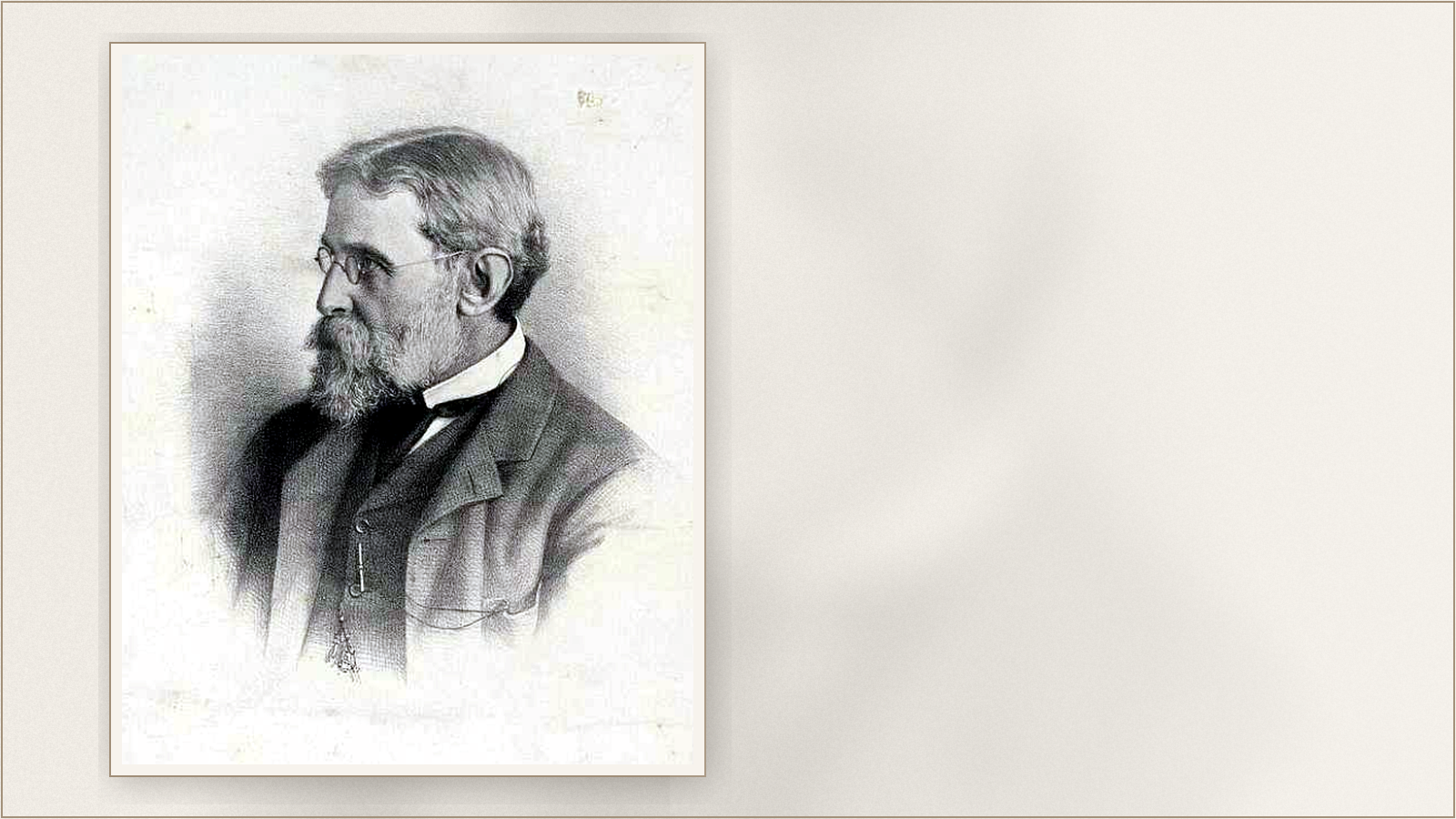
Arthur Charles Humphreys-Owen belonged to a generation of Welsh public men who stood between two political worlds. His authority rested partly upon land, family connection and social position, yet his public career unfolded through institutions that were steadily reducing the old monopoly of the landed classes. Elected county councils, intermediate schools, a national university, railway companies and an increasingly organised Liberal electorate were remaking the public life of Wales.
Humphreys-Owen adapted successfully to this changing landscape. He was a country gentleman, barrister, educational reformer, railway chairman and Member of Parliament. He was also a committed Liberal, although not one formed in the popular politics of the chapel, the public meeting or the radical press. His was a quieter and more patrician Liberalism, grounded in administration, institutional development and the belief that wealth and position carried obligations beyond the estate boundary.
Yet the surviving evidence shows that his politics were not merely paternalistic. On questions of land tenure, Welsh language, education and rural development he was prepared, at times, to challenge assumptions from which men of his own class had traditionally benefited. His importance lies in the way he used the authority of the landed gentleman not simply to preserve influence, but to assist in building the institutions of modern Wales.
From Garthmyl to Glansevern
Arthur Charles Humphreys was born at Garthmyl, near Montgomery, on 9 November 1836. He was the son of Erskine Humphreys, a barrister, and belonged to a family rooted in the educated professional world of nineteenth-century Montgomeryshire. His maternal uncle was Arthur James Johnes of Garthmyl, the judge, antiquary and translator whose own career combined law, scholarship and public affairs.
Humphreys was educated at Harrow before proceeding to Trinity College, Cambridge, where he graduated in 1860. He was called to the Bar in the early 1860s, although surviving biographical sources differ slightly on the precise year. The Dictionary of Welsh Biography gives 1863, while later legal biographical material gives 30 April 1864. The discrepancy is small, but it is worth noting rather than silently choosing between the two without reference to the original Lincoln’s Inn register.
His legal career was more substantial than the bare fact of qualification suggests. He served as an examiner in civil law at Cambridge in 1869–70 and again from 1871 to 1873, and later examined for the Law Tripos between 1878 and 1881. This sustained academic involvement helps to explain the cast of mind visible throughout his later career. Humphreys-Owen was comfortable with statutes, committees, institutional machinery and the careful translation of principle into workable administration.
The decisive transformation in his circumstances came in 1876, when the Glansevern estate passed to him following the death of Anne Warburton Owen. The inheritance was not a straightforward descent through his father, as is sometimes suggested. The surviving estate history traces it through the interconnected Owen, Jones and Humphreys families. Arthur was the great-grandson of Mary Owen and Thomas Jones, and the great-grand-nephew of Anne’s husband. Upon succeeding to Glansevern, he settled there and added Owen to his surname, becoming Arthur Charles Humphreys-Owen. The National Library of Wales catalogue of the Glansevern Estate Records preserves the clearest account of this descent.
The economic scale of the inheritance can be described more precisely than the later shorthand of an 8,000-acre estate sometimes suggests. In the 1873 Return of Owners of Land, Anne Warburton Owen was recorded with 4,482 acres in Montgomeryshire and an estimated annual rental of £4,368. Later biographical accounts associate Humphreys-Owen with holdings approaching 8,000 acres, which may reflect subsequent acquisitions, a broader aggregation of property or land beyond the scope of the earlier return. What is certain is that Glansevern placed him among the principal landholders of Montgomeryshire.
The estate connected the prosperous Severn valley with less fertile upland communities elsewhere in the county. It brought rents, influence and social precedence, but also a complex network of obligations involving tenants, labourers, agents, buildings, roads, drainage, agriculture and local institutions. In a rural county, the estate was not sealed off from the surrounding community. It was one of the structures through which economic and political power operated.
Humphreys-Owen inherited more than property. He inherited a public position.
A Different Kind of Landowner
The political character of rural Wales was changing rapidly by the time Humphreys-Owen established himself at Glansevern. The extension of the franchise, the growth of Nonconformity and the increasing confidence of tenant farmers weakened the assumption that political authority naturally belonged to the great estates.
Montgomeryshire remained a county of landed influence, but it was also becoming a county of Liberal associations, chapel politics and organised popular opinion. Questions of land, tithe, education and the privileged position of the Established Church carried particular force among Welsh-speaking and Nonconformist electors. A landowner seeking public support could no longer rely solely upon inherited deference.
Humphreys-Owen was unusually well placed to accommodate himself to this change. He possessed the status of a country gentleman but had been formed professionally as a lawyer. He did not appear to regard public institutions as threats to landed authority. Instead, he entered them and attempted to shape their development.
He served as a Justice of the Peace and Deputy Lieutenant, offices inherited from the older structure of county government. More significantly, when the Local Government Act of 1888 created elected county councils, Humphreys-Owen became the first chairman of Montgomeryshire County Council.
This appointment captures the transitional quality of his career. County administration had previously rested heavily upon magistrates drawn from the gentry. The new council introduced an elected element and a wider measure of public accountability. Yet its first chairman was still a substantial landowner. The change from one system to another was therefore evolutionary rather than abrupt.
Humphreys-Owen provided continuity, but he did so within a body whose authority came from election rather than inherited standing. His nomination and election for the Berriew division are documented among the Glansevern papers, while the National Library’s estate history identifies him explicitly as the county council’s first chairman.
He represented, in effect, the point at which traditional county leadership began to turn itself into modern local government.
Land, Tenants and Rural Reform
The clearest evidence that Humphreys-Owen’s Liberalism went beyond paternal administration came in the debate on the Land Tenure (Wales and Monmouthshire) Bill in May 1897. Speaking in the Commons as a resident Welsh landlord, he supported legislative reform intended to improve the position of tenant farmers. He drew particular attention to the sense of social subordination experienced by tenants, describing the problem in terms of their feeling of subjection and inferiority.
This was a significant admission from a substantial landowner. Humphreys-Owen did not reject private property or the institution of landlordism, and he remained cautious about excessive interference with freedom of contract. Yet he accepted that contractual freedom by itself did not guarantee justice where social and economic power were unevenly distributed. He was prepared to concede that the landlord and tenant relationship in Wales required legislative correction.
The intervention complicates any attempt to describe him simply as a paternalist defending the existing order. He was no agrarian revolutionary, but neither was he unwilling to criticise the structure from which his own position derived. His Liberalism rested upon reform from within, not the destruction of the landed system, but that reform could still involve curbing elements of landlord power.
His concern for small farmers appeared again in March 1899 during discussion of the London Water (Welsh Reservoirs and Works) Bill. Humphreys-Owen drew attention to the position of Welsh farmers whose holdings might be submerged by reservoirs. Many were small family farmers, dependent upon household labour and deeply rooted in Welsh-speaking districts where demand for available farms was intense. Ordinary compensation or rehousing provisions, he argued, could not fully address the loss suffered by a family forced from a holding when there might be no comparable farm available nearby.
This was an unusually perceptive recognition of rural displacement. The problem was not simply the market value of a farmhouse or acreage. It involved access to livelihood, continuity of family farming and attachment to a Welsh-speaking locality. Humphreys-Owen understood that the social cost of displacement could exceed the sum recorded in a compensation schedule.
His later advocacy of smallholdings fitted the same pattern. In May 1902 he urged that forestry development should be combined with small farms of roughly ten to thirty acres for forestry workers, with sheltered valley land retained for cultivation while upland slopes were planted. He also linked rural improvement to scientific agricultural education, arguing that progress depended upon instruction beginning in schools and colleges and pointing to work already being undertaken by the Welsh university colleges.
For Humphreys-Owen, therefore, land, education and rural development were not separate questions. Better agricultural knowledge, access to modest holdings and protection for vulnerable tenants formed part of the same attempt to strengthen Welsh rural society without overturning its foundations.
Education and the Making of Modern Wales
Education was the central work of Humphreys-Owen’s public life. It was here that his legal training, administrative ability and Welsh Liberal convictions found their clearest expression.
Late nineteenth-century Wales possessed a strong popular appetite for education. Elementary schools, denominational foundations, mechanics’ institutes and private academies had widened access to learning, but provision remained uneven. For many children, particularly those from farming, artisan and lower-middle-class families, there was no coherent path between elementary schooling and university.
The Welsh Intermediate Education Act of 1889 began to change this. It enabled county-based schemes for intermediate and technical education, financed through public funds and charitable endowments. The resulting schools became one of the most important achievements of Victorian Wales. They educated boys and girls beyond elementary level, trained future teachers and opened routes into the professions and the new university colleges.
Humphreys-Owen became a leading figure in this movement. In 1896 he was chosen as the first chairman of the Central Welsh Board for Intermediate Education, an office he retained until his death. The Board supervised and inspected the developing network of intermediate schools, helping to establish common standards across Wales.
This work possessed a significance extending far beyond school administration. Before political devolution, education became one of the principal fields in which Wales developed institutions that were recognisably national. The Central Welsh Board operated across county boundaries and treated Wales as an educational unit. Its existence reflected the growing conviction that Welsh needs could not always be adequately addressed through structures designed principally for England.
Humphreys-Owen was also an active supporter of the University College of Wales at Aberystwyth and of the movement that created the University of Wales. The Dictionary of Welsh Biography credits him with doing much to bring the University into being.
His involvement in a proposed Welsh, or “Cymric”, Institute in London in 1896 places him within a still broader movement of national institution-building. Correspondence preserved at the National Library of Wales shows him among prominent Welsh figures discussing the creation of a meeting place for Welsh people in the capital, alongside Lewis Morris, Isambard Owen, John Bryn Roberts, Sir John Williams and W. Llewelyn Williams. The surviving catalogue does not by itself establish precisely what position Humphreys-Owen took, but his participation is revealing. He belonged to the generation that increasingly imagined Welsh national life through institutions, whether educational, cultural or political.
His educational politics were more progressive than a description of him simply as a moderate Anglican landowner might suggest. He was concerned that Nonconformists should enjoy proper access to intermediate education and opposed further public endowment of sectarian schools. He nevertheless feared that the creation of separate Welsh educational bodies might produce rivalry between the University and the Central Welsh Board. His preference was for coordination, practical administration and eventual cooperation.
This was characteristic of Humphreys-Owen. He was not indifferent to principle, but he habitually approached principle through machinery. He wanted to know how institutions would be financed, governed and made to work.
Welsh Language and National Distinctiveness
Humphreys-Owen’s parliamentary record also reveals a stronger defence of Welsh cultural distinctiveness than his social background might lead one to expect. In August 1894 he challenged the official interpretation of the Welsh-language returns in the 1891 Census. He objected to suggestions that the returns of Welsh-speaking householders were unreliable and argued that the statistics understated the continuing strength of the language.
His argument was subtle. The ability to speak English, he maintained, did not prove that Welsh had ceased to be the ordinary language of a person’s life. Bilingualism could coexist with a continuing Welsh linguistic identity. He also rejected the assumption that Welsh was simply disappearing under the pressure of English.
This intervention matters because Humphreys-Owen belonged socially to the more Anglicised landed and professional world of Wales. Yet he was prepared to contest an official British statistical interpretation when he believed it misrepresented Welsh linguistic reality.
By 1898 he was making the wider case that English opinion failed to understand the distinctiveness of Welsh social and cultural life. He pointed to the hundreds of thousands who still spoke Welsh, the strength of Welsh-language newspapers and periodicals and the growing place of Welsh within education. He was not advocating political nationalism in the later constitutional sense, but he clearly accepted that Wales possessed cultural and institutional needs that could not simply be treated as provincial variations of English life.
This conviction connects naturally with his educational work. The Central Welsh Board, the University of Wales and his interest in a Welsh institute in London all reflected a broader belief that Welsh society was sufficiently distinct to require institutions of its own.
Liberal Politics in Montgomeryshire
Humphreys-Owen entered Parliament comparatively late. In 1894 Stuart Rendel, the Liberal Member for Montgomeryshire, was elevated to the peerage. Humphreys-Owen was chosen to defend the seat against the Conservative candidate, Watkin Williams-Wynn.
His succession should not, however, be understood simply as the selection of a respectable local landowner when Rendel left the Commons. Archival material shows Humphreys-Owen within Rendel’s political circle, and Liberal archival scholarship has described him as a close confidant of the former member. The Glansevern papers preserve political correspondence between the two men, while other National Library manuscripts contain letters from both Rendel and Humphreys-Owen to F. E. Hamer concerning Montgomeryshire politics, education and Welsh disestablishment. His candidacy therefore represented continuity within an established Liberal network.
The contest itself was much closer than the Liberals might have wished. Humphreys-Owen received 3,440 votes against Williams-Wynn’s 3,215, a majority of 225. The turnout exceeded 82 per cent. Far from being a comfortable inheritance, the result demonstrated how finely balanced the county could become when the Conservative interest mounted an effective challenge.
The general election of 1895 was closer still. Humphreys-Owen retained the seat by only twenty-seven votes, receiving 3,442 against Williams-Wynn’s 3,415. In 1900 he increased his majority to 264. These results matter because they correct any impression that he occupied a safe seat by virtue of his estate or social position. He had to maintain the support of a diverse and demanding Liberal electorate.
Hansard records almost three hundred parliamentary contributions by Humphreys-Owen between 1894 and 1904. That does not make him a great Commons orator, but it does correct any suggestion that he was politically inactive. His record ranged across education, the Welsh language, land tenure, agriculture, reservoirs, local administration and railway legislation. He was procedural rather than passive.
His Liberalism rested upon education, Welsh institutional development and opposition to the privileged position of the Established Church. Yet he belonged to an older political culture than David Lloyd George, who entered Parliament in 1890 and rapidly emerged as the voice of a more combative generation.
The difference was partly one of temperament and partly one of social origin. Lloyd George’s authority came from the language of the chapel, the solicitor’s office and the mass political meeting. Humphreys-Owen’s came from the county committee, the boardroom and the estate. Lloyd George was an agitator who understood the power of conflict. Humphreys-Owen was an administrator who instinctively looked for workable structures.
The two represented different strands of Welsh Liberalism. Humphreys-Owen’s presence also reminds us that Liberal Wales was never composed solely of Nonconformist ministers, tenant farmers and radical solicitors. It included landowners who accepted reform, supported national institutions and recognised that the political culture of Wales had permanently changed.
The Education Act of 1902
The Education Act of 1902 placed Humphreys-Owen at the centre of one of the most bitter political disputes of Edwardian Wales.
The Act abolished elected school boards and transferred responsibility for education to local authorities. It also permitted money raised through local rates to support voluntary schools, most of which were Anglican or Roman Catholic. To Welsh Nonconformists, this appeared to compel chapel-going ratepayers to finance denominational schools over which they possessed inadequate control.
Resistance became particularly intense in Wales. County councils faced pressure to obstruct or minimise implementation, while the campaign against the education rate became entangled with the wider demand for Welsh disestablishment.
Humphreys-Owen opposed the legislation, but his interventions in Parliament reveal the mind of an experienced administrator rather than that of a platform orator. He was concerned with the relationship between county councils, boroughs, urban districts and existing educational bodies. He argued for flexibility, objected to useful local machinery being swept aside and warned that poorly drafted provisions could produce overlapping schools, rival authorities and administrative confusion.
During debate on 1 July 1902, he proposed replacing the word “concurrently” with “in conjunction with” when defining the powers of different educational authorities. His amendment was technical, but the principle behind it was important. He feared that independent bodies operating over the same ground would create rivalry and disorder.
His defence of elected school boards was equally significant. In July 1902 he argued that parents and local communities had a legitimate interest in electing those responsible for the management of their schools, and he cited the Welsh intermediate system as evidence that local committees could work effectively beneath larger educational authorities.
His position on religious education was more nuanced than simple secularism. Humphreys-Owen strongly opposed sectarian control and argued in November 1902 that the Welsh intermediate system had largely escaped religious conflict because denominational influence had been excluded from its administration. Yet he did not advocate the removal of religion from education. In October he proposed that publicly provided elementary schools should open and close with worship and that Bible-based religious instruction should form part of ordinary teaching. His position was essentially Protestant but non-sectarian, religious education without denominational privilege.
This episode brings his political method into sharp focus. Humphreys-Owen was not balancing privately between Anglican sympathies and a Nonconformist electorate, as an older interpretation might suggest. The evidence points more clearly towards a Liberal educationalist opposed to sectarian advantage, but deeply conscious that resistance had practical consequences for teachers, schools and county administration.
Montgomeryshire County Council eventually adopted a policy of refusing the disputed rate. By 1904 the consequences had become serious enough to be raised in Parliament. Managers of voluntary schools complained that they could not obtain money to pay teachers. The controversy demonstrated the uncomfortable meeting point between political protest and the daily responsibility of keeping schools open.
For Humphreys-Owen, education was too important to be reduced entirely to denominational conflict. He shared the Welsh Liberal objection to the Act, but his speeches repeatedly returned to administration, local initiative and the preservation of institutions that were already doing useful work.
The Cambrian Railways
In 1900 Humphreys-Owen succeeded James Frederic Buckley as chairman of the Cambrian Railways. He remained in office until his death five years later. Contemporary company histories list him among the chairmen of the consolidated system. The Story of the Cambrian, published in 1922, confirms his chairmanship from 1900 to 1905.
The appointment was a natural extension of his public position. Railways were private companies, but in rural mid Wales they performed something approaching a public service. They connected isolated agricultural districts with market towns, linked the coast and the interior, carried livestock and produce, enabled the movement of post and newspapers and brought visitors into the developing resorts of Cardigan Bay.
The Cambrian system also bound together places whose economic circumstances differed considerably. Oswestry served as its administrative centre, while the lines extended through Newtown, Welshpool, Machynlleth and Aberystwyth and into the rural west. For farmers, merchants, quarrymen, hotelkeepers and seasonal visitors, the railway had become part of the ordinary machinery of life.
His chairmanship also left a direct parliamentary trace. On 1 March 1901 the Commons ordered a Cambrian Railways Bill to be introduced by Humphreys-Owen and John Bryn Roberts. This provides at least one documented instance in which he personally carried railway business into Parliament, showing that the chairmanship was not purely ceremonial.
Humphreys-Owen did not create the Cambrian network, nor was his five-year chairmanship long enough to justify portraying him as the architect of its success. His significance lay instead in the convergence of interests represented by the office. As landowner, county councillor and MP, he understood the dependence of rural communities upon reliable communications. The railway boardroom was another place in which landed influence, private capital and public necessity met.
Maria Humphreys-Owen and the Glansevern Household
On 27 January 1874 Arthur married Maria Russell, the daughter of a Queen’s Counsel. Their son, Arthur Erskine Owen Humphreys-Owen, was born in 1876 and later succeeded to Glansevern.
Maria should not be treated merely as an appendage to her husband’s career. Research published in Montgomeryshire Collections has described her as a Montgomeryshire champion of women’s rights, indicating a public identity and reforming outlook of her own. Her presence helps to place the Glansevern household within a broader culture of late Victorian Liberal reform.
This was a period in which upper and middle-class women were extending their influence through school management, charitable organisation, local government campaigns and the movement for women’s suffrage. They remained excluded from Parliament, but they were increasingly visible in the civic associations surrounding it.
The public life of Glansevern was therefore not exclusively Arthur’s creation. Husband and wife belonged to a world in which the country house could still act as a local centre of influence, but where that influence increasingly expressed itself through education, political organisation and social reform rather than ceremonial patronage alone.
His London club memberships suggest how comfortably he inhabited several overlapping worlds. He was associated with the Athenaeum and the Oxford and Cambridge Club, both rooted in metropolitan educational and establishment culture, while membership of the National Liberal Club placed him firmly within organised Liberal politics. His life moved with relative ease between Glansevern, Westminster, educational administration and the metropolitan networks of public men.
Death and Assessment
Arthur Charles Humphreys-Owen died on 9 December 1905, exactly one month after his sixty-ninth birthday. He remained Member of Parliament for Montgomeryshire and chairman of the Central Welsh Board until his death. He was succeeded at Glansevern by his son, while the parliamentary seat passed in 1906 to David Davies of Llandinam.
The scale of his personal and public network is hinted at in the Glansevern archive, which includes three volumes of letters of sympathy addressed to Maria Humphreys-Owen after his death, in addition to hundreds of other family letters. Without examining those volumes it would be unsafe to draw detailed conclusions from their contents, but their survival alone suggests the breadth of the circles in which he had moved.
His death came at a moment when the political culture he had represented was entering another phase. The Liberal landslide of 1906 carried into Parliament a stronger reforming mandate, while Lloyd George was moving rapidly towards national prominence. Welsh Liberalism was becoming more democratic in tone, more confrontational in method and less dependent upon the leadership of sympathetic landowners.
Humphreys-Owen nevertheless deserves more than the faint praise of having been a moderate man in a changing age. He helped to establish the first elected system of county government in Montgomeryshire. He contributed to the creation of a genuinely national structure of intermediate education. He supported the institutions from which the University of Wales emerged. He defended the vitality of the Welsh language against official misunderstanding, represented his county through three closely fought parliamentary elections and ended his life presiding over the railway system upon which much of mid Wales depended.
There were clear limits to his politics. He never rejected landownership, class hierarchy or the social assumptions of the governing elite to which he belonged. Yet the evidence from the land-tenure debates shows that it is too simple to say that he did not challenge the economic structure from which his own position derived. He was prepared to acknowledge the social inferiority experienced by tenant farmers and to support legislation that would curb aspects of landlord power. His politics were reformist rather than revolutionary, but they were not devoid of self-criticism.
His career is therefore best understood as part of the transition from landed county leadership to elected and institutional public life. Property and social position opened doors, but much of his later authority was exercised through bodies whose legitimacy depended increasingly upon elections, committees and statute. His great skill lay in adapting the habits of the old governing class to the institutional needs of a new Wales.
Humphreys-Owen was not the loudest Welsh Liberal of his generation, nor the most radical. He did something quieter and, in its way, equally important. He helped turn reform into institutions.
Related Essays
- David Davies, 1st Baron Davies of Llandinam (1880–1944): Wealth, Duty and the Search for an Enforceable Peace
- Clement Davies (1884–1962): Liberal Leader and MP for Montgomeryshire
- Robert Owen of Newtown (1771–1858): Industry, Character and the New Moral World
- David Gibson-Watt (1918–2002) of Doldowlod: War, Politics and Welsh Unionism
Explore more Welsh history
Browse more research in Essays and Notable People of Mid Wales.
Sources and Further Reading
- Dictionary of Welsh Biography, “Humphreys-Owen, Arthur Charles (1836–1905)”.
- National Library of Wales, Glansevern Estate Records.
- National Library of Wales, correspondence concerning the proposed Welsh or “Cymric” Institute in London, 1896, NLW MS 16297D.
- National Library of Wales, political correspondence of Stuart Rendel, Arthur Charles Humphreys-Owen and F. E. Hamer.
- F. E. Hamer, “Arthur Charles Humphreys-Owen”, in Vyrnwy Morgan, ed., Welsh Political and Educational Leaders in the Victorian Era (1908).
- T. Marchant Williams, Welsh Members of Parliament, 1894 (Cardiff, 1894).
- Biographical Sketch: A. C. Humphreys-Owen, Esq., MP for Montgomeryshire (Oswestry, 1894).
- J. Graham Jones, “Arthur Charles Humphreys-Owen MP, Glansevern (1836–1905)”, Montgomeryshire Collections, vol. 99 (2011).
- Rachael Jones, “Maria Humphreys-Owen: A Montgomeryshire Champion of Women’s Rights”, Montgomeryshire Collections, vol. 99 (2011), pp. 109–121.
- Kenneth O. Morgan, “Montgomeryshire’s Liberal Century: Rendel to Hooson, 1880–1979”, Welsh History Review, vol. 16, no. 1 (1992).
- Kenneth O. Morgan, Wales in British Politics, 1868–1922 (Cardiff: University of Wales Press, 1963).
- Hansard, debate on the Welsh-language returns in the 1891 Census, 20 August 1894.
- Hansard, Land Tenure (Wales and Monmouthshire) Bill, 19 May 1897.
- Hansard, debate on Welsh national and cultural distinctiveness, 11 February 1898.
- Hansard, London Water (Welsh Reservoirs and Works) Bill, 21 March 1899.
- Hansard, Cambrian Railways Bill, 1 March 1901.
- Hansard, Education (England and Wales) Bill debates, 1 July, 16 July, 21 October and 7 November 1902.
- Hansard, debate on forestry, smallholdings and agricultural education, 27 May 1902.
- Hansard, Education (Local Authority Default) Bill, 1904.
- W. J. Line, The Story of the Cambrian: A Biography of a Railway (1922).
- F. W. S. Craig, British Parliamentary Election Results, 1885–1918.
- Central Welsh Board for Intermediate Education, annual reports, 1896–1905.