
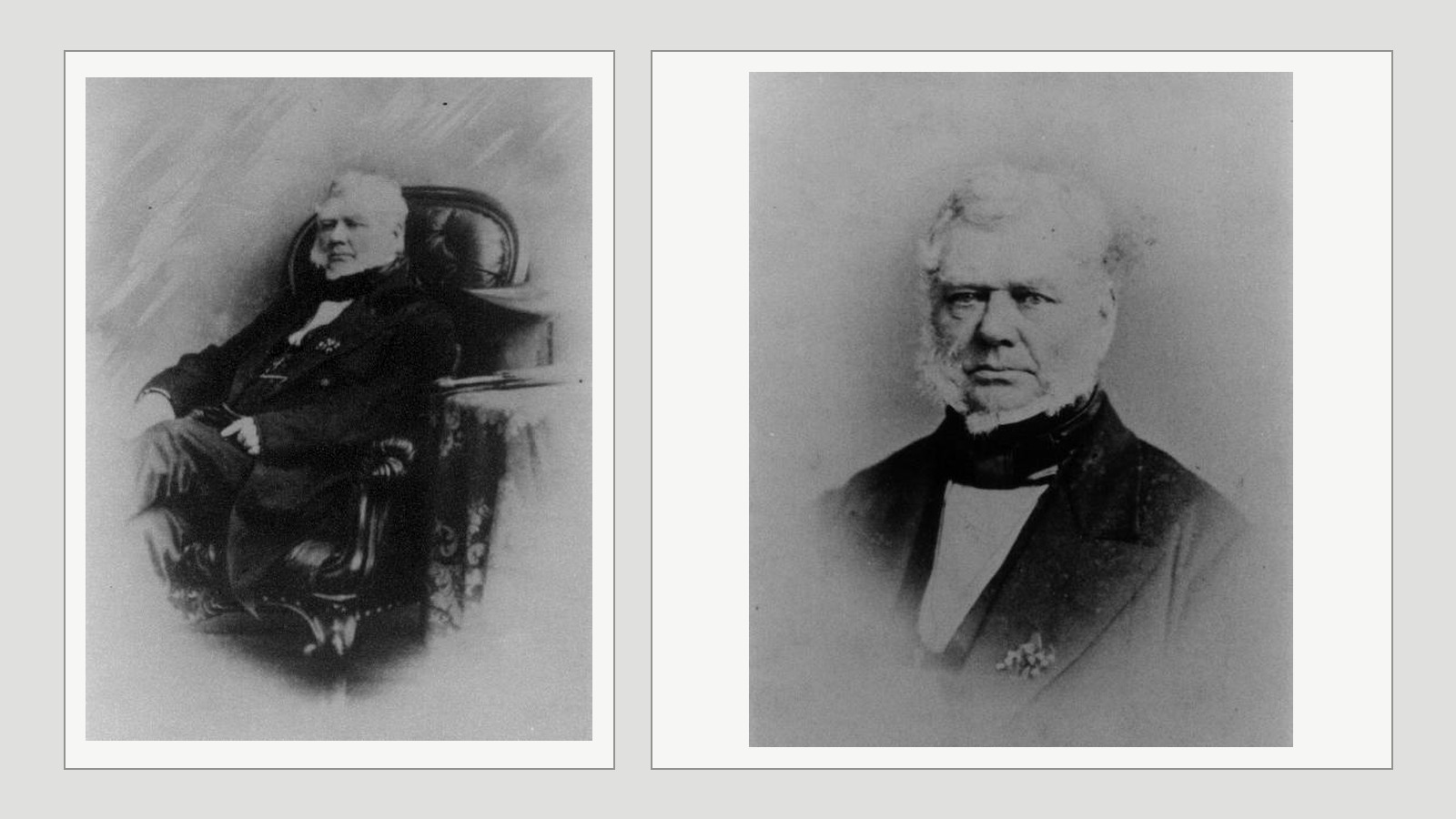
The nineteenth century created many different forms of success. Some were spectacular and immediately visible, expressed through political office, industrial wealth or military distinction. Others were quieter, built gradually through professional reputation, civic responsibility, property and the careful cultivation of useful connections. William Jones of Glandwr Hall belonged firmly to this second category.
Born at Dolgellau in 1792, he left Merionethshire as a young man and established himself within the legal and civic world of the City of London. By the middle decades of the century he had become a successful solicitor, a member of the Court of Common Council, an experienced parish official and a man trusted with important institutional and landed business. His metropolitan career eventually allowed him to return to Wales on very different terms from those upon which he had departed. Near Barmouth, he created Glandwr Hall and assembled an estate of approximately 1,000 acres.
William was not a nationally celebrated statesman or great Victorian reformer. His importance lies elsewhere. He belonged to the professional and administrative class upon which nineteenth-century Britain increasingly depended. His was a world of deeds, mortgages, trusts, parish government, committees and landed transactions. Through these activities, conducted over more than half a century, professional authority was gradually converted into wealth, social standing and a lasting position within Welsh landed society.
Dolgellau and the woollen economy
William Jones was born at Dolgellau on 20 September 1792, the eldest son of John Howel. His family belonged to the commercial rather than the traditional landed world. There was money, enterprise and a measure of local standing, but no inherited country estate and no automatic place among the county gentry. The position William occupied later in life had therefore to be created rather than merely inherited.
Dolgellau at the end of the eighteenth century was more than a remote Welsh market town. It stood at the centre of a rural economy shaped by agriculture, livestock, droving and the manufacture of woollen cloth. The surrounding farms supplied wool, while spinning and weaving remained embedded within households and small workshops. Fulling mills, known locally as pandai, washed and finished the cloth before it was sold into wider markets.
John Howel prospered within this economy. His success coincided with a period in which war, population growth and expanding trade created new demand for Welsh flannel. The gradual weakening of the old dominance exercised by the Shrewsbury drapers also allowed Welsh manufacturers and merchants to deal more directly with buyers and retain a greater share of the profits.
This did not make the Howels landed gentlemen. Their wealth remained rooted in trade, movement and personal reputation. Yet it gave William something almost as valuable as inherited land: the means to obtain an education and enter a profession. He grew up in a household that understood accounts, credit, written agreements and the importance of trust. These were precisely the qualities upon which a legal career could later be built.
Some nineteenth-century biographical accounts claimed that William attended Shrewsbury School. A search of the school registers has found no evidence that he was ever a pupil there, while contemporary reports stated that he was educated in Dolgellau. The distinction matters. William’s rise did not depend upon the social networks of an elite public school. It began with local education, family resources and a willingness to pursue opportunities beyond his native town.
Apprenticeship in London
In 1812, at the age of nineteen, William was apprenticed for five years to William Price, a London solicitor based at Lincoln’s Inn. Price practised as an attorney of the Court of Common Pleas and a solicitor in the High Court of Chancery. For a young man from Dolgellau, this represented entry into one of the most complicated areas of English legal life.
The journey itself was formidable. Long before the arrival of the railway, William would have travelled by coach through Shrewsbury and then south towards London. The roads were improving but remained slow, uncomfortable and occasionally dangerous. What can now be completed in a few hours required several days and considerable expense.
William later recalled that his father had initially hoped to find him a suitable legal master in Wales. When this proved difficult, London became the alternative. William apparently had fewer reservations, having entertained the youthful belief that the streets of the capital might indeed be paved with gold.
If that belief survived the journey, it cannot have lasted long. Legal apprenticeship demanded discipline, patience and close attention to detail. Chancery work dealt extensively with inheritance, trusts, marriage settlements, debts, property and disputed estates. Much of the solicitor’s task consisted of assembling documentary evidence, drafting papers and ensuring that legal formalities had been followed precisely.
William completed his apprenticeship in 1817 and entered practice on his own account. He initially worked from Staple Inn, the last surviving Inn of Chancery and a natural base for solicitors practising in the Court of Chancery. Qualification did not guarantee prosperity, however. London contained a large and competitive legal profession, and a young provincial solicitor without an inherited metropolitan practice had to build his reputation slowly.
Trust was central to this kind of work. A badly drafted settlement, mishandled will or overlooked condition could damage a family or estate for generations. Clients returned to solicitors who demonstrated accuracy, discretion and reliability. These qualities, rather than flamboyance or self-promotion, appear to have formed the foundation of William’s career.
Crosby Square
At about 1825, William took the lease of 7 Crosby Square in Bishopsgate. This became far more than a professional address. The ground floor housed his legal offices, while the upper floors provided accommodation for the family. Servants worked and slept in the basement and attic areas, and the property also possessed a secluded garden.
To modern eyes, the close relationship between home and work may appear unusual. In early nineteenth-century professional life it was far less so. Clients, clerks, children and domestic servants could occupy different parts of the same building, while the boundary between professional and private life remained remarkably thin.
Crosby Square represented William’s arrival as an established City solicitor. Its position placed him within the commercial and administrative world of Bishopsgate, close to the institutions upon which his career increasingly depended. It also became the metropolitan centre of an extended family network.
William’s younger brother Griffith was apprenticed to him and may have worked in partnership with him before his premature death in 1832. In 1839 William entered partnership with George Blaxland, creating the firm of Jones and Blaxland. Five years later, professional and family interests were joined when Blaxland married William’s eldest daughter, Rebecca Cartwright Jones, at Llanaber.
William’s eldest son, William Halse Gatty Jones, also entered the family legal business. For a time, Crosby Square was not simply the office of a successful solicitor, but the centre of an intergenerational professional enterprise. This interweaving of family, marriage and business was thoroughly characteristic of Victorian middle-class life. Kinship provided trust, while professional success created opportunities for the next generation.
The house remained associated with the family until 1893, more than a decade after William’s death. By then Crosby Square had served as the family’s London home and professional headquarters for nearly seventy years.
Marriage and family
On 21 April 1821, William married Hannah Cartwright. Born in 1799, Hannah was the daughter of Thomas Cartwright, a successful London builder who had originally come from Denbighshire. After relocating to London during the 1780s, Cartwright established himself within the building trade and served for many years on the City of London’s Court of Common Council.
The marriage joined William to a respectable metropolitan family already familiar with the civic world he was entering. It undoubtedly strengthened his social position, but Hannah should not be reduced to the role of an advantageous connection. For more than fifty years she helped to maintain the domestic household upon which William’s public and professional life depended.
Between 1822 and 1835, William and Hannah had six children: Rebecca Cartwright Jones, William Halse Gatty Jones, Sarah Ann Jones, John Cartwright Jones, Harriet Catherine Jones and Howel Locke Jones. Their lives reflected the opportunities available to a family established within the Victorian professional classes. Law, medicine, the Church and the military all appeared among their occupations and marriages.
The household itself depended upon an extensive body of largely unrecorded work. Servants cooked, cleaned and maintained the property, while female relatives also occupied important positions within William’s domestic arrangements. His sister Elizabeth Jones lived at Glandwr for many years and acted as housekeeper. Elizabeth’s daughters, Sarah Griffith and Catherine Harriet Griffith, later worked within the households at Crosby Square and Glandwr.
Their contribution complicates any simple picture of one self-made Victorian man. William’s success was real, but it was sustained by the work of women whose labour rarely entered the formal historical record. Professional authority was publicly attributed to him, while the domestic organisation that made it possible remained largely invisible.
Becoming a citizen of London
William’s position in London was not secured through legal practice alone. On 10 April 1827, he was admitted to the Worshipful Company of Woolmen, one of the City’s ancient livery companies. Three weeks later, on 1 May, he became a Freeman of the City of London, paying twenty-six shillings and eight pence for the privilege.
The livery companies no longer regulated their original trades as closely as they once had, but they remained central to the constitutional life of the City. Membership provided access to civic office and marked acceptance within an old, highly organised and closely observed community. Participation required attendance, financial contribution and respect for institutional custom.
In 1830 William was elected to the Court of Common Council as a representative of Bishopsgate Ward. Elections took place annually, and he was returned fifty-one times before retiring in 1881. His service therefore extended across more than half a century, through a period in which London and Britain were transformed beyond recognition.
The Common Council dealt with finance, streets, markets, policing, public order and the many other responsibilities attached to the government of the City. Much of this work was administrative rather than dramatic. It required knowledge of procedure, close reading of reports and a willingness to sit through committees and debates. A solicitor trained in the management of documents and obligations was particularly suited to such an environment.
From 1859 until his retirement, William served as Deputy of Bishopsgate Ward. This placed him immediately below the ward’s alderman and confirmed the extent to which he had become part of the City establishment. He also sat on ceremonial committees, including the Lord Mayor’s Banquet Committee in 1870 and 1871. During the mayoralty of Sir Thomas Owden, he chaired the Lord Mayor and Sheriffs Committee responsible for organising the annual procession.
These appointments were not national offices, but within the City they carried considerable standing. William had entered London as a young Welsh apprentice without an inherited practice. By the end of his career he had become one of Bishopsgate’s longest-serving civic representatives.
Parish government and St Helen’s
Between approximately 1825 and 1870, William served as vestry clerk of St Helen’s, Bishopsgate. Before the growth of modern local government, the parish vestry performed numerous administrative functions. It managed church property, accounts and rates, recorded meetings and participated in the organisation of poor relief and other local responsibilities.
As vestry clerk, William acted as the parish’s principal administrative officer. The position required continuity, accurate record keeping and knowledge of the law. He took minutes, maintained accounts and ensured that decisions were properly recorded and implemented. It was the kind of work through which institutions functioned, although it rarely attracted public attention.
William’s Anglican faith formed an important part of his identity. In 1859 he provided funds for a new window at St Helen’s. The window was destroyed during the IRA bombing of Bishopsgate in 1993, but the plaque recording his generosity survived.
When William retired as vestry clerk in 1870, the parish held a banquet in his honour at Crosby Hall. He was presented with a costly silver tea service purchased through subscriptions from parishioners. After his death, a brass memorial was installed inside the church. These acts of commemoration demonstrate that his service was recognised by the community in which he had spent so much of his working life.
In January 1854, the Lord Chancellor also appointed him a commissioner authorised to administer oaths in the High Court of Chancery. Later that decade, he became a deputy lieutenant of the City of London. Although largely ceremonial, this appointment again reflected the position he had attained within the City’s governing class.
A Welshman in London
William’s success in London did not require him to abandon his Welsh identity. He participated in several organisations associated with the London Welsh, including the Honourable and Loyal Society of Antient Britons, the Honourable Society of Cymmrodorion and the Cambrian Society.
These societies combined fellowship with charitable and cultural purposes. They supported Welsh people in London, raised money for education and relief, encouraged the study of Welsh history and literature, and provided opportunities for prominent Welshmen to meet within the capital. They were expressions of cultural attachment rather than political nationalism.
William also played an important role in the creation of a Welsh Anglican church in London. On 5 June 1841, he joined a meeting of influential Welshmen at the London home of the second Earl of Powis. Their purpose was to establish a church where Anglican services could be conducted in the Welsh language.
The resulting Metropolitan Welsh Church opened at Ely Chapel in 1843. William served as its treasurer for many years and helped to secure the subscriptions required to maintain it. The initiative reveals a Welsh identity shaped by language, religion and institutional loyalty. William believed that Welsh culture could be preserved within the structures of the established Church rather than through opposition to them.
He was also associated with the Honourable the Irish Society, one of the City’s historic corporate bodies, and acted as its solicitor for many years. The society administered estates in Ulster on behalf of the City’s livery companies, making its business both legally complicated and politically sensitive. William was eventually presented with a formal token of appreciation for his service.
The creation of Glandwr
William’s return to Wales was not a retreat from London. It was an extension of a career already made. At about 1832, he purchased land near the Mawddach estuary, between Dolgellau and Barmouth, upon which Glandwr would be created. The hall had been built by 1837, when William and his sister Elizabeth furnished the property.
Initially known as Glandwr Villa, the house soon acquired the more imposing name of Glandwr Hall. It occupied a striking position overlooking the Mawddach and the surrounding mountains. The setting placed William within reach of both Barmouth and his native Dolgellau, reconnecting him with the landscape from which he had departed as a young man.
Glandwr was the physical expression of his advancement. Professional income had been converted into land, and metropolitan authority had acquired a permanent Welsh address. Yet William did not abandon Crosby Square or cease practising law. For decades he remained “William Jones of Crosby Square and Glandwr”, a description that captured the dual identity he had created.
The estate also provided William with a place within the public life of Merionethshire. He became a justice of the peace and deputy lieutenant for the county. These offices placed him among the men responsible for local order, licensing, criminal justice and ceremonial representation.
His relationship with local society was not always without dispute. On one occasion he became involved in a disagreement concerning public access to a wharf on the Glandwr estate. William argued that the wharf had fallen out of use and that the route to it was therefore no longer a public right of way. His fellow magistrates disagreed, and he was required to reopen the route. The incident is valuable because it prevents his authority from being presented as effortless or unchallenged. Landownership brought influence, but it also brought obligations and limits.
Building an estate
Over the following decades William acquired additional property around Glandwr and elsewhere in Merionethshire. The 1876 return of landowners recorded him as possessing approximately 1,000 acres. He had become one of the larger proprietors in the locality, although his estate remained modest beside the great historic estates of Wales.
The surviving buildings provide physical evidence of his investment. A substantial cowhouse and hay barn at Glandwr bears the date 1859. These agricultural structures are as important to understanding the estate as the hall itself. They represented capital invested in production, storage and the organisation of farm work.
A country estate depended upon far more people than its owner. Tenants, farm labourers, gardeners, domestic servants, builders and craftsmen all contributed to the life of Glandwr. Their names appear less frequently in the records, but the estate could not have operated without them. The country house was never merely a private residence. It stood at the centre of a local economic and social network.
William also owned property in Dolgellau. In 1881, during the final year of his active life, work began on Crosby Buildings in the centre of the town. The development consisted of shops with accommodation above them and took its name from his long-established London address.
There was something fitting about this final project. William had left Dolgellau because his native town could not provide the legal training he required. Near the end of his life, wealth accumulated through his London career was being returned to the streets from which he had begun.
Hannah and the domestic world of Glandwr
Hannah Jones died at Glandwr Hall on 23 August 1873, aged seventy-three. The recorded causes were gout and heart disease. Her funeral became a significant local event, and contemporary accounts reported that Barmouth effectively closed as the cortege travelled from Glandwr to Llanaber Church.
Such a response demonstrates the standing the family had acquired, but it also suggests that Hannah possessed a local visibility of her own. For more than fifty years she had sustained the household that accompanied William’s professional and civic advancement. Her work remained largely private, but its effects were visible in the stability of the family and the maintenance of its social position.
Her death represented more than a personal bereavement. It disrupted the domestic order upon which William had depended throughout his adult life. He was already an elderly man, and the practical and emotional structure created by a marriage of more than half a century could not easily be replaced.
Death and memory
In August 1881, William suffered a paralytic stroke that left him partially paralysed. He had only recently retired from the Court of Common Council after fifty-one annual elections. His public career, begun during the reign of George IV, had continued into the final decades of Queen Victoria’s reign.
William died from bronchitis at Glandwr Hall on 7 May 1882. Contemporary reports stated that he was seventy-nine, a figure repeated in some later family histories. This was incorrect. His recorded date of birth, 20 September 1792, establishes that he was eighty-nine, only a few months short of his ninetieth birthday.
His funeral took place on 13 May. Although described as private, the procession from Glandwr to Llanaber was substantial and carefully arranged. His sons Gatty and Howel were among the chief mourners, together with several grandsons. Tenants and workmen from the estate acted as bearers, while representatives of prominent local families attended or sent expressions of respect.
William was buried in the family plot at Llanaber. His estate was valued for probate at £31,525, confirming the considerable wealth he had accumulated through law, public office and property. Much of this fortune was divided among his children and grandchildren, while Glandwr passed into the next generation.
The estate remained associated with the family for more than seventy years after William’s death, although the economic foundations of Victorian landownership were already beginning to weaken. Agricultural depression, taxation and the increasing cost of maintaining country houses made estates such as Glandwr progressively more difficult to sustain.
By 1905 the hall was being offered for rent. The Higgins family occupied it until 1911, followed by the family of Alfred Rowe, whose name became associated with the Titanic disaster in 1912. Members of the Jones family continued to retain the estate, but Glandwr itself was no longer their permanent home. The hall and most of the remaining land were finally sold in January 1955.
What William had created nevertheless survived him by more than seven decades.
What William Jones represents
William Jones should not be made more important than the evidence permits. He was not a national political leader, a great jurist or a major Victorian reformer. His name does not belong beside the famous statesmen and industrialists through whom the nineteenth century is usually narrated.
That is precisely why his life is so revealing. Victorian Britain depended upon thousands of people who drafted documents, administered estates, governed parishes, supervised trusts, sat on committees and maintained the institutional machinery upon which society increasingly relied. William belonged to that world.
His authority was accumulated gradually, through clients, offices, property and years of participation in institutional life. He was repeatedly trusted because he understood how institutions worked and because he had demonstrated that he could be relied upon within them.
There was also something distinctly Welsh about his trajectory. William left Dolgellau without abandoning it. London provided professional opportunities that rural Merionethshire could not, but success in London allowed him to return to Wales on very different terms. The young man who had travelled south to learn the law returned as the proprietor of Glandwr Hall.
His life crossed several of the divisions through which nineteenth-century society is often understood: Wales and London, commerce and profession, the middle classes and landed society, local identity and British institutions. He belonged wholly to none of these worlds because he moved successfully between all of them.
Glandwr was the physical result. Standing above the Mawddach, the house represented wealth, certainly, but something more than wealth. It represented arrival. William had turned a professional career into something intended to survive for generations.
Like many Victorian attempts at permanence, it proved less permanent than its creator imagined. The eventual decline of the estate does not diminish what William achieved. It places that achievement within history.
A family connection
There is inevitably a personal dimension to my research into William Jones. He was my three-times great-uncle rather than a direct ancestor, but family history is rarely a simple line from parent to child. It is a web of siblings, cousins, households, marriages, friendships and obligations. An uncle or cousin may exert as much influence upon the circumstances inherited by later generations as a direct ancestor.
William belongs to that wider family history. My research began as an attempt to understand a forgotten branch associated with Glandwr Hall. Over time it became something larger. The surviving evidence opened a window onto the Welsh woollen economy, Victorian law, City government, Anglicanism, landed society and the changing meaning of authority during the nineteenth century.
That is why William deserves to be remembered. It is not because ownership of a country house made him inherently important, nor because a descendant should polish an ancestor into something grander than he was. His value as a historical subject lies in the way one carefully reconstructed life allows us to see the society around it more clearly.
William began in Dolgellau in 1792, within a family whose security had been created through commerce. He died at Glandwr almost ninety years later as a solicitor, civic officer, magistrate, landowner and patriarch of a family dispersed across law, medicine, the Church, the military and the wider British world.
Between those two points lies a remarkable example of nineteenth-century Welsh social mobility. His real achievement was not simply that he owned Glandwr Hall. It was that he had made the position which Glandwr represented.
Related Books
William Jones of Glandwr Hall: Law, Authority, and the Making of a Victorian Life
This fuller biographical study explores William Jones’s legal career, public service, family, Glandwr estate and place within nineteenth-century Welsh society.
Kindle · Paperback
Old Llyfnant Valley Farming Families
For the wider Jones of Glandwr family story and the rural communities around the Llyfnant Valley.
Kindle · Paperback
Explore more: See Notable People of Mid Wales for related biographies, and Family History & Genealogy for the wider methods and family-history context behind this research.
Sources and Further Reading
- Davies, Antony David, William Jones of Glandwr Hall: Law, Authority, and the Making of a Victorian Life.
- Davies, Antony David, Old Llyfnant Valley Farming Families.
- Gwynedd Archives, legal and estate papers relating to William Jones, Jones and Blaxland, Glandwr, Cefn Rug and other Merionethshire estates.
- City of London civic and livery records relating to the Court of Common Council, Bishopsgate Ward and the Worshipful Company of Woolmen.
- Records of St Helen’s, Bishopsgate, including material relating to William Jones’s service as vestry clerk.
- Contemporary reports in the Cambrian News and other Welsh and London newspapers.
- Probate records and family wills relating to William Jones and the Glandwr family.
- Cadw historic-building records for Glandwr and its surviving estate buildings.