
Notable People of Mid Wales
Mid Wales is often described through landscape, agriculture and distance, yet the region has produced people whose influence reached far beyond its market towns, valleys and upland communities. Entrepreneurs built businesses of national and international significance, industrialists reshaped transport and commerce, reformers challenged established ideas, politicians carried local concerns into public life, and others made their mark through religion, sport, philanthropy and community service.
These essays approach biography as part of the wider history of place. The people gathered here were shaped by Montgomeryshire, Radnorshire, Merionethshire and the neighbouring districts, but many of their lives crossed the boundaries between rural Wales and the wider British world. Taken together, they show that mid Wales was never simply remote from the great changes of the nineteenth and twentieth centuries. It helped to create them.
Where to begin

These five lives provide the strongest introduction to the range of mid-Wales biography, spanning enterprise, infrastructure, medicine, religion and sport.
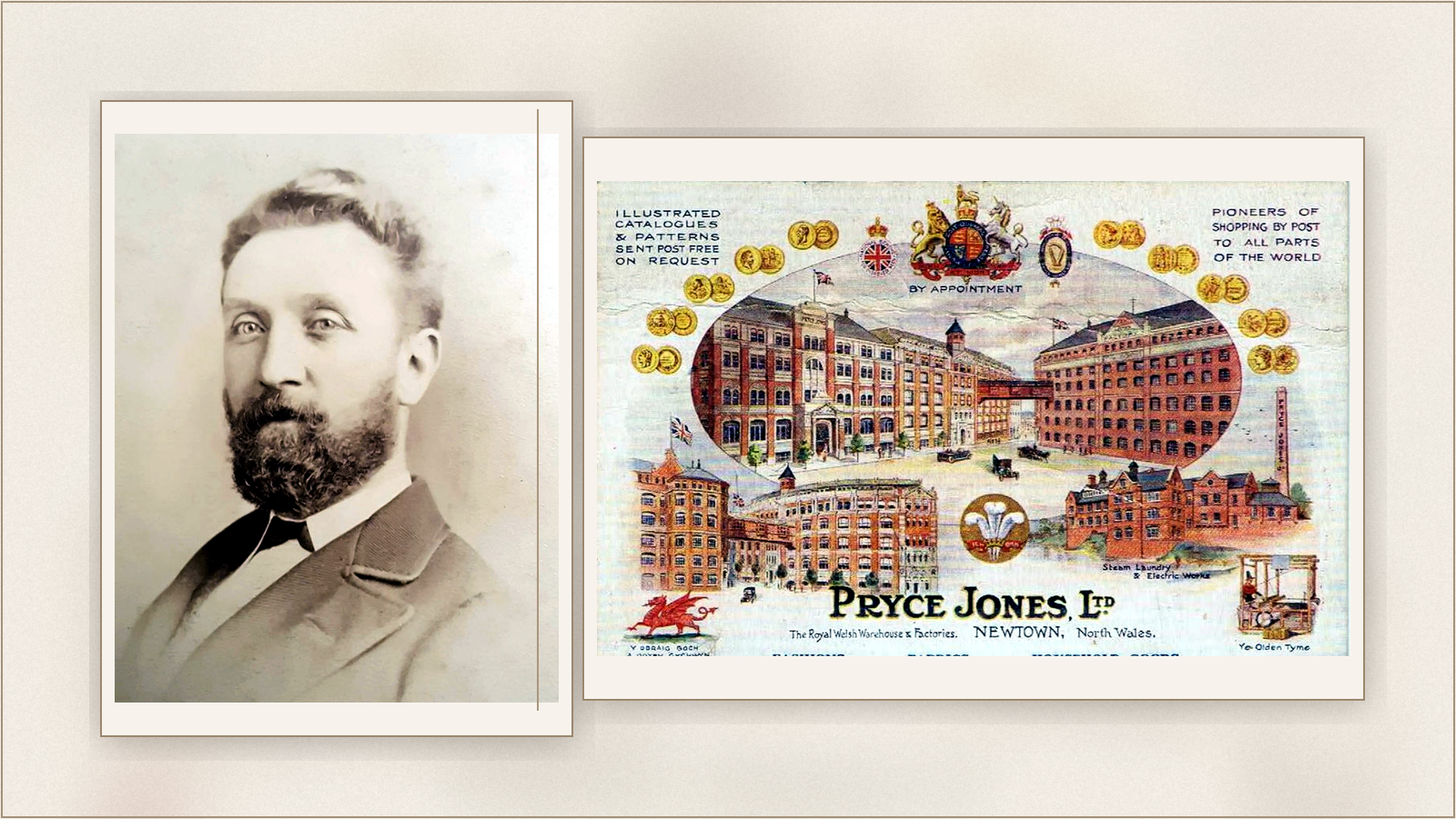
- Sir Pryce Pryce-Jones, the Newtown draper whose use of catalogues, railways and postal distribution helped pioneer modern mail-order retailing.
- David Davies of Llandinam, the sawyer who became a railway contractor, coal owner and dock promoter, linking rural Montgomeryshire with industrial South Wales.
- Dr William Bowen Davies, whose work in medicine, public health and local government helped shape Victorian Llandrindod Wells.
- Ann Griffiths of Dolwar Fach, whose short life produced one of the enduring literary and spiritual legacies of Welsh Methodism.
- Arthur Owen Jones, connecting a mid-Wales family background with elite Edwardian sport, leadership and international cricket.
Industry, Commerce and Enterprise

- Sir Pryce Pryce-Jones (1834–1920): The Newtown Draper Who Transformed the Geography of Shopping, examining mail order, manufacturing, railway distribution and the remarkable afterlife of the Royal Welsh Warehouse.
- David Davies (1818–1890) of Llandinam: The Sawyer Who Redrew the Map of Wales, tracing a career from timber and railway contracting to Ocean Coal and Barry Docks.
- Owen Owen (1847–1910): The Montgomeryshire Draper Who Built a Retail Empire, following a rural Welsh childhood into Liverpool retail, property, philanthropy and a business which survived for generations.
- Tom Norton of Llandrindod Wells: The Man Behind the Automobile Palace, exploring motoring, tourism, agriculture and enterprise in the changing world of early twentieth-century mid Wales.
- John Howel (c.1765–1835), a Dolgellau woollen manufacturer whose career helps explain the commercial foundations behind the later Glandwr family.
Politics and Public Life

- Dr William Bowen Davies (1847–1908), physician, public-health officer, magistrate and civic leader, whose career helped shape the institutions of Victorian Llandrindod Wells.
- David Davies, 1st Baron Davies of Llandinam (1880–1944), examining wealth, public duty, tuberculosis reform, international politics and the search for an enforceable peace.
- Arthur Charles Humphreys-Owen (1836–1905), a study of land, Liberalism and public duty in Victorian Montgomeryshire.
- David Davies of Llandinam, whose industrial career was accompanied by service in Parliament and on the first Montgomeryshire County Council.
- Charles Dillwyn-Venables-Llewelyn (1870–1951), tracing an Edwardian Radnorshire election contest into a much longer life of county government, military service, estate society and public duty at Llysdinam.
- Clement Davies (1884–1962), following a long Montgomeryshire parliamentary career into the leadership of the Liberal Party and the national politics of war and reconstruction.
- David Gibson-Watt (1918–2002) of Doldowlod, linking Radnorshire landownership, military service, Conservative politics and public duty across the mid and late twentieth century.
- Sir Powlett Milbank (1852–1918): Norton Manor and Public Life in Radnorshire, landowner, Conservative MP and Lord-Lieutenant of Radnorshire, whose career combined Norton Manor, farming and county administration.
- Arthur Henry John Walsh (1859–1937): Radnorshire, the Royal Court and the Decline of the Ormathwaite Estates, MP for Radnorshire, Master of the Ceremonies to two monarchs, and a witness to the decline of landed aristocratic wealth.
- Sir Francis Edwards (1852–1927): Knighton, Welsh Liberalism and the Politics of Radnorshire, Liberal MP for Radnorshire, Welsh Church reformer and a leading figure in the close elections of 1892–1910.
Religion, Education and Reform

- Thomas Charles of Bala (1755–1814): The Man Who Gave the Welsh Revival Permanence, exploring scripture, education, Methodism and the institutional development of the Welsh religious revival.
- Robert Owen of Newtown (1771–1858): Industry, Character and the New Moral World, examining the Newtown-born industrialist and social reformer whose ideas became internationally influential.
- Trevor Owen Davies (1895–1966): A Farm Boy at Christ Church, Oxford, a life connecting rural Montgomeryshire, education, ministry and the social world of twentieth-century Wales.
- John Davies of Erglodd (1821–1887): The Quiet Power of Faithful Service, recovering the life of a Cardiganshire farmer, chapel elder, Sunday School teacher, temperance speaker and Poor Law guardian whose influence rested upon sustained service rather than public fame.
Land, Empire, Sport and Society

- Thomas Davies of Penlan and Gwernstablau (1864–1930), a substantial Montgomeryshire sheep farmer who served on Llanwrin Parish Council, managed local school affairs and acted as an Overseer of the Poor.
- John Pugh of Glyncaerig (1834–1912), whose rise from the son of a farm labourer to a Montgomeryshire landowner illustrates social mobility, agricultural enterprise and the changing rural hierarchy of Victorian Wales.
- Arthur Owen Jones: The Welsh Cricketer Who Captained England, recovering the Welsh roots and family world of one of the outstanding cricketers of the Edwardian period.
- William Jones of Glandwr Hall (1792–1882), tracing a Dolgellau-born solicitor from the City of London back into Merionethshire landed society.
- Major-General Howel Locke Jones (1835–1907), whose career in the Bengal Artillery carried a Merionethshire family into the military world of British India and the upheaval of 1857.
- William Wilding Jones (1855–1942), solicitor, playwright and estate owner, whose management of Glandwr illustrates how landed families adapted to the economic pressures of the late Victorian and Edwardian periods.
- Athelstan Jasper Blaxland (1880–1963), a Glandwr descendant whose surgical career and service through two world wars connect a mid-Wales family with the wider history of medicine and public service.
- William Halse Gatty Jones (1825–1897), migration to gold-rush Melbourne, return to Wales and the international networks of a Merionethshire family.
- John Cartwright Jones (1831–1875), clerical life, family ambition and the expectations surrounding Glandwr.
- Hugh Wynn Wilding-Jones (1896–1918), the heir to Glandwr whose death in the First World War transformed the family’s future.
- Eric Vaughan Wilding-Jones (1899–1942), the last male heir and the end of the Jones family’s direct association with Glandwr.
- Gatty Wynne Jones (1859–1913), a transnational life connecting Melbourne, Glandwr and the popular entertainment world.
- Gattison Jones (1895–1955), a Glandwr-descended performer whose career reached Broadway and the world of vaudeville.
- Owen Jones Davies (1875–1958): From Caeadda to Wood River, Alberta, my Montgomeryshire-born great-uncle, whose farming career and choral leadership helped sustain a Welsh community in Alberta.
For the wider family story behind these lives, including Gatty Jones, John Cartwright Jones, Hugh and Eric Wilding-Jones, and the American branch through Gatty Wynne and Gattison Jones, see The Jones Family of Glandwr Hall, Barmouth.
Women of Mid Wales

The surviving biographical record of mid Wales is still disproportionately dominated by men, particularly where business, politics and landed society are concerned. One purpose of this developing series is to recover women whose work was often recorded less fully but whose influence upon families, institutions and communities was no less real.
- Mary Anne Wilkins Lucas, Later Middleton Evans, reconstructing the life of the woman whose fundraising and organisational work helped establish Llandrindod Wells Cottage Hospital.
- Diana Hambro, Lady Gibson-Watt (1922–2000), a life shaped by wartime nursing, Doldowlod, horticulture, political engagement and the encouragement of younger people.
- Gwen Jones, later Davies (1841–1926), of Caeadda, my great-grandmother, whose life reveals the often hidden authority of women in nineteenth-century Welsh farming. Widowed in 1891, she remained at the centre of Caeadda, entered Welsh Mountain rams in her own name at the Machynlleth Agricultural Show, raised twelve children and became a matriarch still remembered and respected among her descendants.
- The Tragedy of Maescelyn: The Jenkins Family, 1906–1913, the life and death of Elizabeth Ann Catherine Jenkins, née Pugh (1871–1906), and the consequences of her early death for her husband and four surviving children.
- Ann Griffiths (1776–1805) of Dolwar Fach, recovering the short life and remarkable spiritual legacy of the Montgomeryshire hymn writer whose seventy-three surviving stanzas became one of the enduring achievements of Welsh religious culture.
- The Women of Glandwr, a collective study of women, kinship, household influence and inheritance within a Victorian Welsh family.
A Growing Archive of Mid Wales Biography

These biographies are not intended as a pantheon of famous names. Some subjects became nationally prominent, while others mattered primarily within their own counties or communities. What connects them is the way an individual life can illuminate a larger historical world: migration, enterprise, religion, education, politics, landownership, transport, philanthropy, family and social mobility.
The guide will continue to grow as further biographies are researched and added. Together they form a developing map of the people who connected mid Wales with the wider changes of modern Britain. For a county-based route through many of the Montgomeryshire figures represented here, see Montgomeryshire History.
Further Reading in Book Form
William Jones of Glandwr Hall develops one of these mid-Wales lives into a full Victorian biography, following a Dolgellau-born solicitor through London civic life, professional authority and the creation of a Merionethshire estate. Paperback · Kindle
Arthur Owen Jones explores the Welsh family roots, leadership, class, illness and Edwardian sporting world of the Nottinghamshire cricketer who captained England. Paperback · Kindle
For historical enquiries, written contributions or possible collaboration relating to the people and communities of mid Wales, please use the Contact page.