
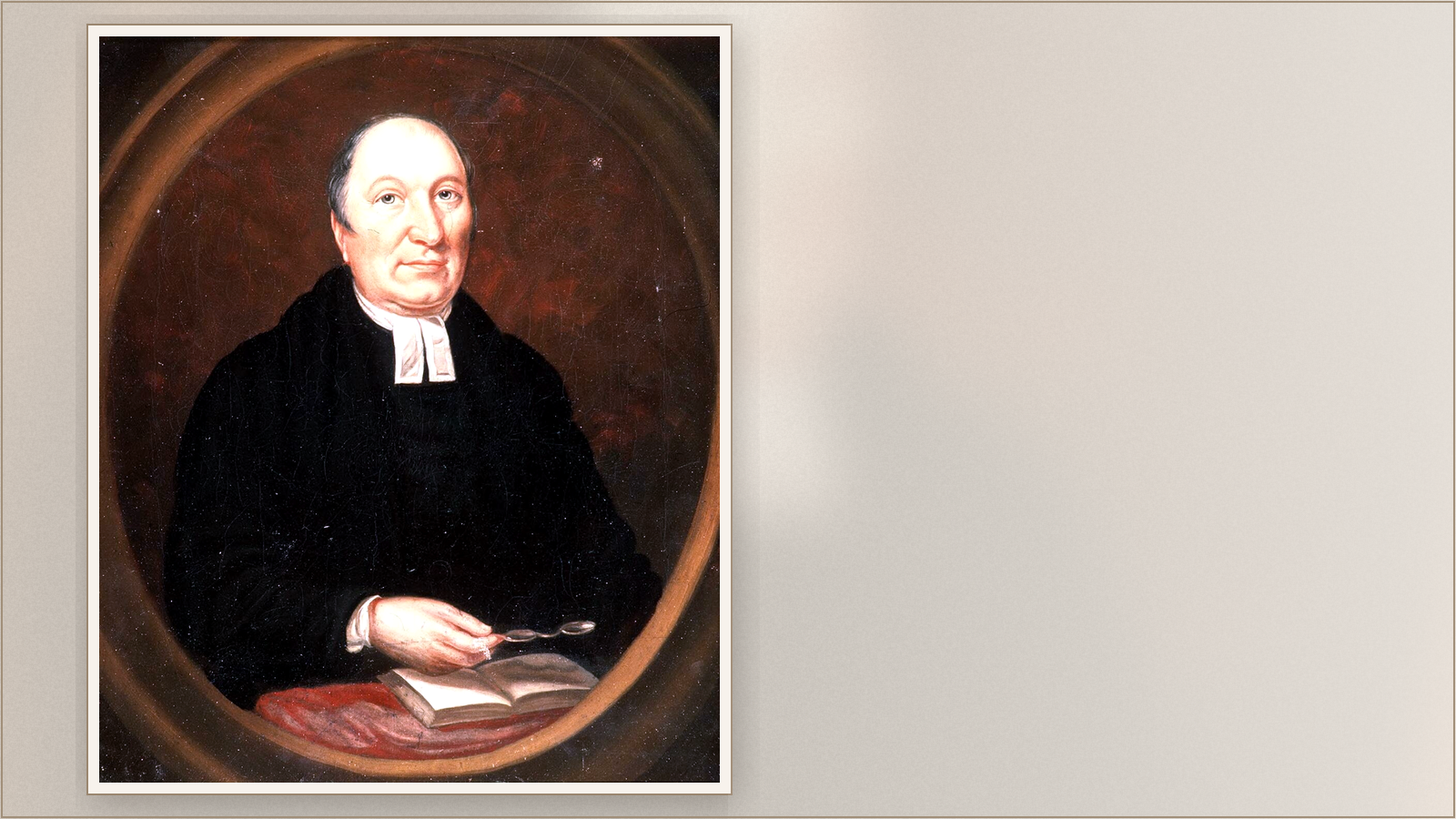
Religious revivals are often remembered through their most dramatic moments. Crowds gather, preachers acquire an almost legendary reputation, and familiar communities appear briefly transformed by an intensity that seems capable of remaking society. Yet enthusiasm alone seldom creates institutions. If a revival is to outlive its founding generation, it must be organised, taught, printed and passed from one community to another. This was the particular achievement of Thomas Charles of Bala.
Howell Harris supplied much of the early Welsh Methodist movement’s organising energy. Daniel Rowland gave it an extraordinary preaching ministry, while William Williams Pantycelyn placed its theology and emotional life into hymns that could be carried into farmhouses, chapels and fields. Charles belonged to a later phase. He inherited a movement already rich in preaching and spiritual experience, but still uncertain in its structures, its educational provision and its relationship with the Established Church. His importance lay in giving that movement permanence.
From Bala, Charles developed schools, trained teachers, prepared catechisms, edited religious literature, helped establish a printing operation and worked for decades to secure an adequate supply of Welsh Bibles. He also helped to guide Calvinistic Methodism through the difficult transition from an evangelical movement within Anglicanism to a separate Welsh denomination. His influence rested less upon one great public act than upon the patient construction of a religious culture.
The Wales that emerged from his work was a country in which ordinary people were encouraged to read, discuss, memorise and interpret Scripture in their own language. This was devotional work, but it was also cultural work. Charles helped to make the Welsh chapel not merely a place of worship, but a school, debating chamber, library and centre of communal discipline.
From Carmarthenshire to Oxford
Thomas Charles was born on 14 October 1755, probably at Longmoor in the parish of Llanfihangel Abercywyn, near St Clears in Carmarthenshire. The traditional association with Pant Dwfn reflects his family background, for his father, Rees Charles, held that substantial farm, but the evidence suggests that Longmoor was the more likely place of birth. Charles was therefore a son of rural Wales, though not of its very poorest stratum. His mother, Jael Bowen, came from a family of some local standing, and her father, David Bowen of Pibwr Lwyd, served as High Sheriff of Carmarthenshire in 1763.
The landscape of Charles’s childhood was equally important. He was raised close to Llanddowror, the parish associated with Griffith Jones, whose circulating schools had carried Welsh-language literacy into communities poorly served by conventional education. At Llanddowror Charles knew Rees Hugh, an elderly adherent of Griffith Jones. That connection mattered. Charles did not encounter Griffith Jones’s educational experiment merely as a historical example discovered later in life, but as something still present in living memory. After Oxford, when Charles preached in his native district, the old Rees Hugh was among those who heard him. The continuity between the earlier circulating schools and Charles’s later educational work was therefore personal as well as institutional.
From the village school at Llanddowror, Charles proceeded in 1769 to Carmarthen Academy, where he studied for six years under Jenkin Jenkins. During these formative years he came increasingly under the influence of Welsh Methodism. He later associated his decisive spiritual awakening with a sermon preached by Daniel Rowland at Llangeitho on 20 January 1773, when he was seventeen. The precision with which he remembered the occasion is significant. It was not a vague recollection of evangelical influence, but a moment to which he himself assigned lasting spiritual importance.
This did not initially turn Charles away from the Church of England. Welsh Methodism had not yet become a separate denomination, and its leading clergy continued to regard themselves as reformers working within the Established Church. In 1775 Charles entered Jesus College, Oxford, an institution with long-standing Welsh associations, and graduated in 1779.
His time in England brought him into contact with the wider evangelical movement. During a stay at Olney in 1777 he became closely associated with John Newton, the former slave-ship captain who had become an Anglican clergyman, hymn writer and one of the most influential evangelical correspondents of his age. Charles appears to have assisted Newton in preparing material connected with the first volume of Cardiphonia, Newton’s celebrated collection of letters. This was more than an incidental acquaintance. It placed the young Welshman within an English evangelical network in which correspondence, publishing, philanthropy and religious organisation were already being used to bind scattered believers together.
Charles was ordained deacon in 1778 on the title of Shepton Beauchamp and Sparkford, and priest in 1780. His early ministry took him through Sparkford, Lovington, South Barrow and North Barrow in Somerset. In 1782 he was presented to the perpetual curacy of South Barrow, though he continued for a time to work from Sparkford. By June 1783 he had resigned his English curacies and returned to Wales.
What followed was not a dramatic renunciation of Anglicanism, but a succession of frustrations. Charles sought work at Llangynog, Llandegla, Bryneglwys and Llan-ym-Mawddwy. At the last of these he obtained a charge in 1784, but local opposition brought the arrangement to an end after only a few months. His evangelical preaching and his Methodist associations repeatedly proved obstacles to a secure parish career.
The break was therefore gradual rather than theatrical. Charles did not suddenly reject the Church in which he had been ordained. Instead, its structures ceased to offer him a workable ministry.
Sally Charles and the Making of Bala
Charles’s settlement in Bala cannot be understood without Sally Jones. He had met her during an earlier visit to the town and, after a prolonged courtship, they married at Llanycil on 20 August 1783. Sally was the daughter of a prosperous Bala shopkeeper. After her father’s death, her mother remarried Thomas Foulkes, and Sally remained closely tied to the family business. She was determined to remain in Bala, and Charles accordingly made his life there.
This domestic arrangement had consequences far beyond the marriage. Sally’s shop provided the household’s principal financial support and gave her husband a degree of freedom that few poorly paid itinerant preachers could have enjoyed. While Charles travelled, preached, taught, wrote and corresponded, Sally maintained the commercial foundation upon which much of that activity depended.
Her contribution belongs within a wider history of women and Welsh Methodism. Religious movements were publicly represented by male preachers, but their work was frequently sustained by women’s property, trade, hospitality and domestic labour. Sally Charles was not simply the wife waiting at home while history happened elsewhere. Her decision to remain in Bala determined the geographical centre of her husband’s ministry, while her financial independence made much of his wider work possible.
Thomas and Sally had two sons, Thomas Rice Charles and David James Charles. The family connection would continue to matter long after Thomas Charles’s death. Thomas Rice’s children included David Charles, later an important Calvinistic Methodist minister and educationalist, and Jane Charles, who married Lewis Edwards, one of the commanding figures of nineteenth-century Welsh Calvinistic Methodism. The educational culture Charles helped create therefore became, in part, a family inheritance. His grandson David Charles and grandson-in-law Lewis Edwards were later central to the development of ministerial education at Bala.
Bala itself proved an ideal base. It was a small market town, but its position made it accessible to Methodist communities across a wide area of north and mid Wales. Charles formally joined the Methodist society there in July 1784. During the following decades, his presence turned the town into one of the principal centres of Welsh Calvinistic Methodism.
For a substantial period he was also the only Anglican priest ministering regularly among the Methodists of north Wales. This gave his communion services particular importance. People travelled considerable distances to Bala because only an ordained clergyman could lawfully administer the sacraments. The monthly communion became both a religious observance and a gathering point for a dispersed movement.
The Bala Revival of 1791
By the early 1790s Bala had become more than Charles’s home and administrative base. It also became a place of revival in its own right. In 1791 a powerful religious awakening affected the town and surrounding district, especially among young people. Charles’s surviving correspondence presents it as something widespread rather than episodic, a movement that touched households and social groups across the locality.
The revival is important because it complicates any picture of Charles as merely the sober organiser who came after the great age of spiritual excitement. He knew revival from the inside. His gift lay in taking moments of religious intensity and finding ways to preserve their effects after the emotional crisis had passed.
There was also a wider echo. Accounts of the Bala revival circulated through evangelical correspondence and helped stimulate interest beyond Wales, including in Scotland. Bala was therefore becoming connected to a British evangelical communications network in which reports of conversion, revival and educational experiment moved rapidly between regions.
The same year also reveals how ambitious Charles’s educational thinking had become. When the Countess of Huntingdon’s College moved from Trevecca to Cheshunt in 1791, Charles explored the possibility of retaining the Trevecca educational work in Wales. The plan came to nothing, but it is significant. Long before the later Calvinistic Methodist college at Bala, Charles had already considered the need for a more permanent institution for religious education and ministerial formation.
A Revival in Need of Readers
Charles was deeply troubled by the limited knowledge of Scripture he encountered in north Wales. This was not necessarily evidence of indifference. Many people lacked schools, books and the leisure in which to acquire formal education. Rural communities were scattered, incomes were low, and instruction beyond the household or parish church remained uneven.
The problem, as Charles understood it, was therefore both spiritual and practical. People could not study a Bible they could not read, and they could not read a Bible they could not obtain.
His first response was to revive the circulating-school model associated with Griffith Jones and Bridget Bevan. Teachers trained by Charles moved between communities, usually remaining for six or nine months before passing to another district. Children, young people and adults were taught to read Welsh, with the Bible serving as both textbook and object of instruction.
This was a more organised system than the phrase “circulating school” can suggest. Charles recruited teachers, arranged their placement, raised funds, inspected schools and publicly examined pupils. Adults might be taught at night or on Sundays, and writing was eventually added to reading. The teacher was expected not merely to deliver lessons but to live among the people as an example of disciplined Christian conduct.
The scale expanded steadily. In 1786 Charles had seven teachers at work. By 1787 there were twelve, by 1789 fifteen, and by 1794 twenty. Early salaries were around £10 a year, later rising to £12 and then to about £14 by the opening years of the nineteenth century. The sums were modest, but they reveal a real educational network with wages, recruitment, supervision and continuity.
These schools were instruments of evangelism, but they also carried literacy into communities in which educational opportunities were scarce. They showed that instruction need not depend upon an endowed grammar school or a resident clergyman. A teacher could arrive in a rural district, gather pupils from several social groups and leave behind people capable of reading Welsh for themselves.
Charles’s commitment to Welsh as the language of instruction was deliberate rather than accidental. His correspondence makes clear that he believed Welsh children should learn to read Scripture through Welsh, not by being forced first through English. He even saw the principle as one with wider missionary relevance, people understood religion most effectively when it was taught through their own language.
This was not linguistic nationalism in the later political sense. Charles’s argument was evangelical and practical. Yet its cultural effect was profound. By insisting that religious literacy should be created through Welsh, he helped strengthen Welsh as a language of reading, teaching and serious intellectual life at a time when many formal institutions operated overwhelmingly through English.
The weakness of the circulating system was continuity. Once the teacher departed, the community needed some means of preserving what had been learned.
The Sunday School as a Welsh Institution
Charles found that continuity in the Sunday school.
He did not invent the Sunday school, either in Britain or in Wales. Robert Raikes had promoted such schools in England, while other Welsh pioneers were already experimenting with Sunday instruction. Charles’s contribution was different. Through sustained organisation, regular visitation and the production of suitable reading material, he placed the Welsh Sunday-school movement upon a durable foundation.
The institution that developed in Wales was not simply a children’s class attached to worship. Adults attended alongside children. Servants, agricultural labourers and other working people who could not enter a weekday school were able to learn on the one day ordinarily free from work. Sunday schooling therefore reflected the rhythms of eighteenth-century labour as much as religious convenience. For many young people in service, it offered an educational opportunity that did not otherwise exist.
At first, the innovation met resistance. Some regarded teaching on a Sunday as a form of labour and therefore as a possible violation of the Sabbath. Others doubted whether one day’s instruction could compensate for six days without it. Charles nevertheless persisted, and Sunday schools gradually followed the circulating teachers into village after village.
By 1798 his work had attracted the attention of the Sunday School Society, which extended its activity into Wales and made Charles its agent. His educational programme was also supported by prominent English evangelicals including William Wilberforce, Charles Grant, John Thornton and Henry Thornton. This financial and personal backing reveals how thoroughly Bala had become linked to the wider evangelical philanthropic world.
The consequences extended beyond the immediate purpose of Bible reading. The schools fostered habits of concentration, public speaking and collective study. They gave ordinary men and women experience of teaching and organisation. They also created a body of lay leadership from which the chapels could draw teachers, elders, deacons and preachers.
In this respect, the Sunday school helped to democratise certain forms of knowledge without overturning the religious discipline in which that knowledge was contained. Charles was not attempting to produce political radicals or freethinkers. His educational programme was explicitly Christian and doctrinal. Yet by teaching people to read, question and explain, it inevitably enlarged the intellectual resources available within Welsh-speaking society.
Creating a Welsh Religious Reading Public
Literacy required books. Charles therefore became a writer, editor and publisher as well as a preacher and educational organiser.
His publishing career began earlier than is sometimes supposed. An early form of his catechism, Crynodeb o Egwyddorion Crefydd, appeared in 1789, with another edition in 1791. There is also evidence linking him with a Welsh tract published as early as 1775, though that attribution is less secure. What is clear is that Charles recognised very early that revival required printed instruction if it was to become durable.
On 16 April 1799, working with Thomas Jones of Denbigh, he issued the first number of Trysorfa Ysprydol, or The Spiritual Treasury. Further numbers followed through 1801, before publication was interrupted and later revived in 1809. It was the first Welsh denominational religious magazine, supplying Methodist preachers, teachers and readers with theological and devotional material and marking an important stage in the growth of the Welsh periodical press.
Charles subsequently produced a Welsh spelling book, rules for the conduct of Sunday schools, catechisms and other instructional works. His Hyfforddwr yn Egwyddorion y Grefydd Gristionogol, published in 1807, became one of the most influential Welsh religious manuals of the nineteenth century and passed through more than eighty editions.
His Geiriadur Ysgrythyrol, or Scriptural Dictionary, was more ambitious still. Published in parts from 1805, it offered Welsh readers an extensive guide to the people, places, doctrines and natural world of the Bible. It was not merely a reference book. It attempted to furnish readers with the intellectual equipment required to understand Scripture without abandoning their own language.
Charles also recognised the importance of controlling the means of production. In 1803 he and Thomas Jones arranged for Robert Saunderson, a printer trained in Liverpool and Chester, to establish himself in Bala. Jones withdrew from the venture the following year, after which Charles effectively continued the business. Because Charles remained an ordained clergyman, the commercial arrangement appears to have been conducted in Sally’s maiden name. Saunderson managed the works and possessed the type needed for Welsh religious publishing, including Hebrew and Greek characters.
This was more than the arrival of a printer. Charles had helped create a religious publishing infrastructure in a small market town. Printing, education and denominational organisation were now concentrated in Bala, allowing books, magazines, catechisms and teaching material to be produced near the movement’s northern centre rather than depending entirely on presses elsewhere.
The effect was cumulative. The school created the reader. The magazine, catechism and dictionary developed that reader’s knowledge. The chapel provided a community in which reading could be practised and discussed. The printed Welsh word bound scattered societies into a shared religious culture.
Mary Jones and the Long Scarcity of Welsh Bibles
Yet one essential book remained difficult to obtain. The demand for Welsh Bibles repeatedly exceeded the available supply, and Charles had been concerned about the problem long before Mary Jones came to his door. As early as 1787 he was corresponding with the evangelical biblical commentator Thomas Scott about the scarcity of Welsh Scriptures. Scott and the philanthropist John Thornton tried to obtain copies for him. Charles described a market in which Bibles were so difficult to acquire that second-hand copies often appeared only when poverty forced an owner to sell.
Attempts to solve the problem repeatedly foundered. In 1791 Thomas Jones of Creaton pressed the Society for Promoting Christian Knowledge for a large, inexpensive Welsh edition, with support from evangelical allies including William Wilberforce. The proposal failed. When the SPCK eventually issued 10,000 Welsh Bibles in 1799, distribution did not match the geography of demand. Evangelical strongholds in parts of Montgomeryshire, Cardiganshire and Carmarthenshire still experienced acute shortages, and Charles appears to have secured only a comparatively small share of the print run for his own network. It was against this long background that Mary Jones came to Bala in 1800.
Mary was the fifteen-year-old daughter of a poor widowed weaver from Llanfihangel-y-Pennant, beneath Cadair Idris. Having learned to read at one of the schools associated with Charles’s movement, she saved for years to purchase a Bible of her own. She then walked more than twenty miles to Bala to obtain it from Charles.
The surviving copy, now held among the Bible Society archives at Cambridge University Library, confirms the substance of the story. Mary’s journey was not merely a sentimental Victorian legend. It arose from the real poverty of rural households, the scarcity of Welsh books and the intense value that newly literate readers could place upon a volume of their own.
Later retellings made Mary’s walk the decisive inspiration for the British and Foreign Bible Society. The history is more complicated. There is no contemporary evidence that Charles recounted her story at the London committee meeting of December 1802 where the need for Welsh Bibles was discussed. He had been campaigning on the issue for at least thirteen years before Mary arrived at Bala.
Her importance should not therefore be exaggerated into a single moment of institutional creation. Nevertheless, one particular young woman had clearly made a strong impression upon Charles, and Mary remained connected to his educational movement. Her experience embodied the structural problem he had been trying to solve. It demonstrated what the shortage of Welsh Bibles meant in the life of an actual person.
The final stage before the creation of the Bible Society came in 1802. Thomas Jones attempted to organise an independent, interdenominational scheme to print Welsh Bibles outside the SPCK structure. Legal doubts were raised over the possibility of issuing a Welsh Bible without episcopal sanction, and the plan stalled. Charles then carried the problem to London.
On 7 December 1802 he laid the need for an assured supply of inexpensive Welsh Bibles before a committee of the Religious Tract Society. The discussion widened beyond Wales. If a new organisation were to provide Scriptures, why should it not serve other countries and languages as well?
The British and Foreign Bible Society was formally established at the London Tavern on 7 March 1804. Charles was not its sole founder, but his Welsh campaign was one of the principal circumstances from which it emerged. The interdenominational nature of the new organisation was itself significant. A crisis in the supply of Welsh-language Scripture helped generate an institution deliberately designed to work across Anglican and Nonconformist boundaries.
Charles’s role did not end with advocacy. In September 1804 he was chosen to prepare the Welsh text for the press. The Society’s early work included a Welsh New Testament in 1806 and a complete Welsh Bible in 1807, both produced under his supervision. Surviving material also shows discussion over Welsh orthography, including notes by Walter Davies connected with the 1807 edition. Charles was therefore involved not merely in securing funds and print runs, but in the linguistic and textual work required to put an authoritative Welsh Bible into readers’ hands.
A shortage encountered in rural Wales had contributed to the creation of an international institution.
Authority, Orthodoxy and Organisation
Charles was an educational innovator, but he was not a theological liberal. His Calvinism was orthodox, disciplined and cautious. He believed that knowledge required boundaries and that a religious movement needed recognised doctrine as well as spiritual enthusiasm.
This conservatism could make him severe. In 1791 he played a leading part in the expulsion of the biblical commentator Peter Williams. The dispute centred on concerns that material associated with John Canne’s Bible and Williams’s notes might encourage views tending towards Sabellianism or anti-Trinitarianism. To modern readers, the action can appear narrow and punitive. To Charles, however, doctrinal uncertainty threatened the integrity of a movement whose cohesion depended upon shared belief, particularly at a time when anti-Trinitarian ideas were gaining ground in parts of west Wales.
His organisational reforms were similarly practical rather than democratic in any modern political sense. Around 1800 he encouraged Methodist societies to choose their own local leaders, later known as elders, rather than having them imposed from above. At the Bala Association in 1801 he helped frame a more elaborate body of rules for Methodist life. The revival was slowly acquiring something that increasingly resembled a constitution.
This institutional development took place within an ambiguous legal and ecclesiastical position. For years the Calvinistic Methodists insisted that they were not Dissenters. They continued to use Anglican forms, depended upon episcopally ordained clergy for Communion and often attended parish churches for the sacraments. Yet the practical need to register meeting houses and obtain legal protection increasingly pushed them into the world of tolerated Nonconformity. The separation that became explicit in 1811 had therefore been forming gradually for decades.
Charles also defended the Methodists against accusations of political subversion. In The Welsh Methodists Vindicated, published in 1802, he answered claims that the movement encouraged Jacobinism. The pamphlet belongs firmly in the political atmosphere created by the French Revolution and the wars with revolutionary France. Popular gatherings, itinerant speakers and organisations outside established institutions could easily arouse suspicion. Charles’s defence was therefore political in a conservative sense. He wanted to prove that Methodism disciplined the population rather than destabilised it. He was building a disciplined religious society, not a revolutionary one.
The Reluctant Separation of 1811
The question that most tested Charles’s conservatism was ordination. For decades the Calvinistic Methodists had occupied an uncertain position. Their societies, preaching meetings and associations increasingly resembled a separate church, yet the sacraments could still be administered only by clergy ordained within the Church of England. As the movement grew, the limited number of sympathetic Anglican clergymen became an increasingly serious problem.
Pressure mounted for the Methodists to ordain ministers of their own. Charles initially opposed the proposal. His Anglican ordination mattered to him, and he retained an attachment to the Established Church long after any realistic prospect of advancement within it had disappeared.
His resistance also reflected temperament. Charles mistrusted precipitate change. He feared both disorder and an irrevocable division within Welsh Methodism. For around two years he stood against the demand for ordination.
Eventually, practical necessity overcame his reluctance. In 1811 the Calvinistic Methodist connexion ordained its first ministers at meetings in Bala and Llandeilo. Charles was commissioned to prepare the form of ordination. Once the decision had been made, he supported the new ministers and insisted that reluctant societies recognise their sacramental authority.
The ordinations marked the effective separation of Welsh Calvinistic Methodism from the Church of England, although the denomination’s later institutional identity took time to develop. Charles did not enter that new future eagerly, but he helped to make it workable.
That hesitation is important. It reveals him not as a simple denominational founder, but as a man standing between two religious worlds. He had been formed within Anglicanism, transformed by revival and finally compelled by circumstances to accept that the movement he served had become a church in its own right.
The Last Years
Charles continued working on Welsh Scripture almost to the end of his life. A surviving letter of 29 May 1813 to Joseph Tregelles Price of Neath Abbey discusses his preparation of another Welsh Bible for the British and Foreign Bible Society, the edition that appeared in 1814. By then his health was declining, but the work remained central to him.
The same correspondence also reveals that Charles did not imagine his educational programme had spread evenly across Wales. He complained of the comparative weakness of Sunday schools in parts of Glamorgan, Monmouthshire and Breconshire. This is a useful corrective to any impression of immediate national uniformity. His greatest educational transformation had been especially powerful in north Wales, while the religious culture of south Wales developed through somewhat different local patterns.
Later accounts suggest that Charles was determined to live long enough to complete the Bible edition. Once that work was finished, he turned to a Welsh Scriptural concordance, but death prevented him from completing it. The detail is characteristic. Even in declining health, he was still engaged in the same task that had defined so much of his career, giving Welsh readers better tools with which to understand Scripture.
Thomas Charles died at Bala on 5 October 1814, nine days before his fifty-ninth birthday. He was buried in the churchyard at Llanycil, the parish church where he and Sally had married thirty-one years earlier. Sally died on 24 October, only nineteen days after him.
Death and Achievement
By the time of Charles’s death, the revival he had joined as a young man had changed profoundly. It possessed schools, publications, elected local leaders, ordained ministers and a far more secure denominational structure. Bala had become a centre of Welsh religious life, while the demand for Welsh Bibles had helped to produce an organisation of international reach.
His surviving correspondence shows how wide his own network had become. He dealt not only with Welsh Methodist societies but with the Religious Tract Society, the Church Missionary Society, evangelical Anglican clergy, Bible Society organisers and printers. Questions of missionary recruitment, Bible supply, Welsh orthography, education and publishing all crossed his desk. Bala was geographically peripheral, yet through Charles it became intellectually and organisationally connected to London, Chester, Cambridge and the wider Protestant world.
Charles’s influence cannot be reduced to the familiar image of a kindly clergyman giving a Bible to a poor girl. That encounter was significant, but his greater achievement was systemic. He connected preaching with teaching, literacy with publishing, individual conversion with local government, and Welsh religious life with wider British and international evangelical networks.
There were limitations to his vision. His theology allowed little room for dissent, and his educational work was intended to produce disciplined Christian readers rather than independent critics. Nor did he create Welsh literacy from nothing. He built upon the work of Griffith Jones, Bridget Bevan and others whose schools had already transformed substantial parts of eighteenth-century Wales.
What Charles supplied was continuity. He took methods that had proved effective, adapted them to the needs of north Wales and placed them within a network capable of surviving him.
What Charles Left Behind
Charles’s influence is easiest to see in the institutions that survived him. The schools, Sunday-school network, Welsh-language publications and campaign for affordable Bibles gave Methodist communities practical means to teach, read and organise. By the time of his death, the revival no longer depended on the presence of a celebrated preacher. It had teachers, readers, printed material, local leaders and its own ministers.
His family carried part of that inheritance forward. David Charles and Lewis Edwards helped make Bala an important centre of Calvinistic Methodist education in the nineteenth century. The town in which Sally’s business had once enabled Thomas Charles to work became, within a generation, home to a more formal culture of ministerial training.
The nineteenth-century Welsh chapel developed far beyond anything Charles personally controlled, but much of its educational and organisational culture grew from work undertaken at Bala. The Sunday school created habits of reading and discussion. The press created a Welsh religious reading public. Local elections created structures of lay responsibility. The Bible campaign linked a rural Welsh problem to an international institution.
In that sense, Charles’s greatest achievement was not simply that he preserved the revival. He changed its form. What had begun as a movement dependent upon itinerant preaching and exceptional personalities became, through his work, a culture of schools, books, teachers, elders, printers and readers. Revival became institution, and institution became inheritance.
Related Essays
- Ann Griffiths (1776–1805) of Dolwar Fach: The Mystic Voice of Welsh Methodism
- William Williams Pantycelyn (1717–1791): The Voice of the Welsh Methodist Revival
- Howell Harris (1714–1773): The Making of Evangelical Wales
- Daniel Rowland (1713–1790) of Llangeitho: Preaching, Revival and Religious Authority in Wales
Explore more Welsh religious history
Continue with the Welsh Nonconformity guide, or browse the related essays above.
Sources and Further Reading
John Aaron, Thomas Charles of Bala, Banner of Truth, 2022.
D. E. Jenkins, The Life of the Rev. Thomas Charles, B.A. of Bala, three volumes, 1908.
D. Densil Morgan, ed., Thomas Charles o’r Bala, University of Wales Press, 2014. E. Wyn James, “Bala and the Bible: Thomas Charles, Ann Griffiths and Mary Jones”, Cardiff University.
John Roberts, “Thomas Charles (1755–1814), Methodist Cleric”, Dictionary of Welsh Biography. Geraint H. Jenkins, The Foundations of Modern Wales, 1642–1780, Oxford University Press, 1987.
National Library of Wales, Calvinistic Methodist Archive, including Thomas Charles correspondence and material relating to Welsh Bible publication, orthography and Sunday schools.
Cambridge University Library Special Collections, Bible Society archives, including material relating to Mary Jones and the early Welsh work of the British and Foreign Bible Society.
British and Foreign Bible Society, early histories and records concerning the Society’s foundation and first Welsh editions. National Library of Wales, material relating to Robert Saunderson and the development of printing at Bala.