
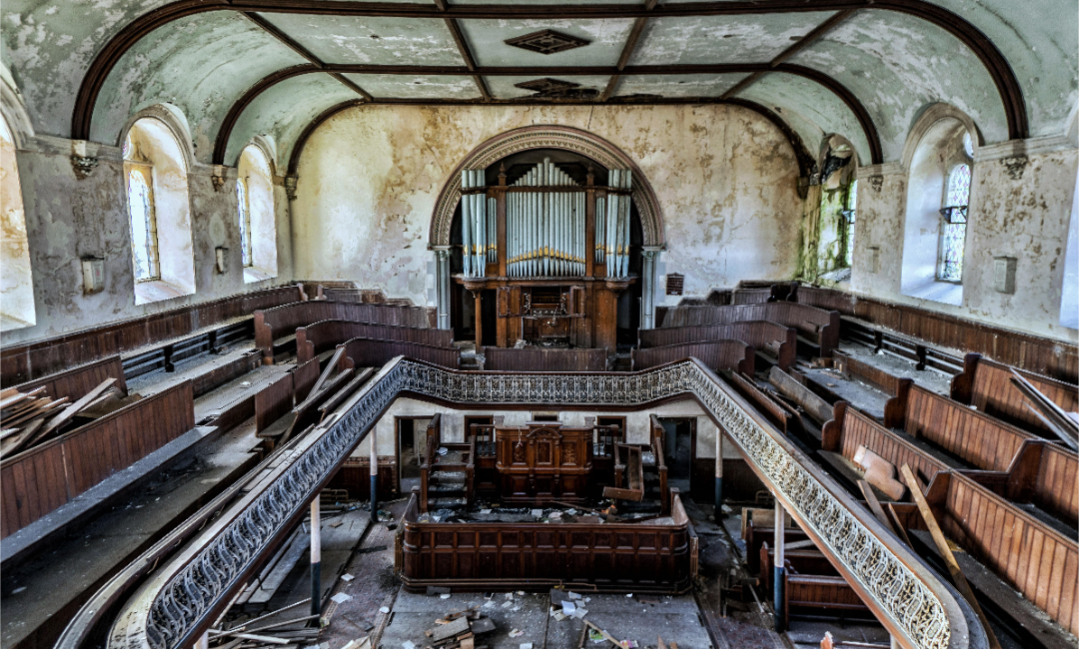
There are moments when the loss of history is dramatic. A building burns, a monument is demolished, or a collection is dispersed at auction. More often, however, the disappearance happens quietly.
A photograph album is placed in a skip after a house clearance. A chapel ledger remains in a damp vestry after the final service. Farm account books are left beneath a leaking roof. The last person able to identify the faces in a wedding photograph dies before anyone thinks to ask.
Nothing announces the loss. No public body necessarily knows that the material existed. Yet another part of the historical memory of Wales has disappeared.
Across the country, from the sheep farms of Montgomeryshire to the slate communities of Gwynedd and the chapel villages of Ceredigion, irreplaceable records remain in private homes, redundant buildings, farm outbuildings and institutional cupboards. Some will eventually reach an archive. Many will not.
We should not mistake their modest appearance for a lack of historical value. These records contain the lives of people who rarely appeared in official correspondence or public biography. They document work, worship, migration, kinship, education and mutual aid. Taken together, they preserve the social memory of Wales. Time is running out to save them.
The Archive in the Sideboard
Historians naturally think of archives as public institutions, places of catalogues, acid-free boxes and carefully regulated strongrooms. Yet much of the historical record has never entered such a building. It remains dispersed among families.
A drawer of funeral cards may reveal the emotional and religious connections of an entire community. A photograph of a farm sale can identify neighbours, labourers and relatives who appear nowhere else. A bundle of letters may explain why a family left rural Wales for Liverpool, London, Patagonia or the industrial valleys. A notebook recording milk yields or livestock sales can illuminate the economy of a farm more intimately than any government report.
These objects are not always recognised as archives by the people who possess them. They are simply “old papers”, inherited with the furniture and retained because nobody has decided what else to do with them.
Their survival can depend upon chance. When a house changes hands, the emotional connection that protected them may be broken. Photographs without names become anonymous faces. Documents written in Welsh may be discarded by descendants unable to read them. Executors and house-clearance firms, working under pressure, may have neither the time nor the knowledge required to separate material of historical value from ordinary household paper.
By the time an archivist or local historian hears about the collection, it may already have gone.
When Abandoned Homes Become Entertainment
This danger is visible in the growing online fascination with abandoned buildings.
Videos produced by so-called urban explorers sometimes show people entering empty Welsh farmhouses and cottages. They open drawers, examine cupboards and film the possessions left behind. Wedding portraits, school certificates, funeral cards, letters and family Bibles are presented as atmospheric discoveries.
The appeal is understandable. An abandoned house, apparently frozen at the moment of departure, creates an immediate sense of mystery. But there is an ethical line between documenting a threatened building and turning another family’s private remains into entertainment.
These objects are not props in a ghost story. They concern real people, some of whom may have living relatives. Their appearance on camera does not mean that they are ownerless, nor does physical access confer a moral right to handle, remove or publish them.
The videos reveal a larger failure. Material capable of attracting thousands of viewers has often attracted no organised historical intervention. The documents remain where they were found, exposed to damp, vermin, theft and further disturbance.
We need a recognised way for members of the public to report endangered collections without encouraging trespass or disclosing vulnerable locations. The purpose should be rescue, not spectacle.
The Fragile Archive of Nonconformist Wales
Nowhere is the problem more significant than in the records of Welsh Nonconformity.
For generations, chapels stood at the centre of Welsh social and cultural life. They were places of worship, but they were also schools, debating chambers, welfare networks, musical institutions and centres of political education. Their records can include baptism and burial registers, membership rolls, minute books, subscription lists, Sunday School records, financial accounts, correspondence and printed annual reports.
A chapel membership book can trace the rise and decline of a congregation. A contribution ledger may show who could afford to give, who struggled and how responsibility was distributed across a community. Sunday School records can recover the names of children whose educational lives were otherwise scarcely documented. These are not marginal ecclesiastical papers. They are records of Welsh society.
Their survival, however, is uneven. The National Library of Wales acknowledges that Nonconformist records were generally not stored as consistently as those of the Established Church, and that registers dating from before the nineteenth century are unusual.
The position before civil registration began in 1837 requires careful explanation. Chapels sometimes kept their own baptismal and burial registers, but practices varied between congregations and denominations. Some early registers were later deposited and survive through The National Archives, the National Library of Wales or local record offices. Others were never created, were maintained irregularly or have disappeared.
What has been lost cannot now be reconstructed simply by legislation or public funding. That is precisely why the records still in existence require urgent attention.
Three-Quarters of Chapels Have Closed
The physical decline of the chapel estate makes the danger immediate. In 2025, the Royal Commission on the Ancient and Historical Monuments of Wales estimated that approximately three-quarters of Welsh chapels had already closed for worship. Every closure creates questions about the building, its contents and its accumulated memory. Who takes responsibility for the registers? Where do the deacons’ minute books go?
Who records the memorials, inscriptions, plaques, pulpit, organ, library and surviving objects? What happens to photographs of chapel outings, temperance societies, Sunday School classes and local eisteddfodau?
Some denominations and congregations act responsibly, consulting archivists before a building is sold. Important collections have reached the National Library of Wales and county archives through precisely this kind of foresight. The Royal Commission has also undertaken remarkable work recording threatened chapels, including detailed photography, architectural surveys, laser scanning and three-dimensional modelling.
But there has never been complete coverage. The fate of records can still depend upon whether one person recognises their importance during the final weeks of a congregation.
A chapel may have served its community for 150 years and yet possess no orderly plan for what happens after the last service.
Progress That Must Become Permanent
It would be wrong to suggest that Wales has done nothing. Archives Wales has developed a Records at Risk programme, originally established during the disruption of the Covid-19 pandemic. Its work surveyed endangered records, developed rescue procedures and created guidance for businesses, charities and archive services.
People’s Collection Wales provides a free national platform through which individuals and community organisations can share photographs, documents, oral histories and recordings. It also offers training and support to contributors.
Most significantly, the Royal Commission launched the Capeli Cymru development project in 2025. Working with denominations, congregations, archives, museums and local communities, it aims to assess the condition of chapel heritage across Wales. Its programme includes a national survey of active, closed and converted chapels, together with consideration of archives, objects and intangible traditions.
This is welcome and important work. It demonstrates that the danger is officially recognised. It also changes what we should now demand.
Wales does not need another short-lived initiative that duplicates existing expertise. It needs the present projects to become the foundation of a permanent national system for identifying and rescuing vulnerable community archives.
What a National Rescue Service Should Do
The Welsh Government should establish sustained funding for a Welsh Community Archives and Memory Service, working through the Royal Commission, Archives Wales, the National Library of Wales, People’s Collection Wales, local archive services and relevant museums. Its role should be practical.
It should maintain a confidential reporting system through which families, ministers, chapel officers, businesses, local historians and members of the public can report records believed to be at risk.
It should provide rapid professional advice when chapels, farms, businesses or voluntary organisations close. In urgent cases, trained staff should be able to assess material before buildings are sold, cleared or demolished.
It should support local archives with the cost of surveying, transporting, cleaning, cataloguing and digitising collections. Rescue creates work, and it is unreasonable to expect already stretched county services to absorb unlimited new responsibilities without additional resources.
The service should also train community volunteers in basic archival practice. People need clear advice on labelling photographs, handling fragile documents, recording oral testimony, managing mould and preserving digital files.
Its work must be bilingual. Welsh-language records require cataloguers and volunteers who can understand their content, names, abbreviations and cultural setting. A ledger written in Welsh should not be treated as inaccessible simply because the person clearing a property cannot read it.
Finally, it should establish protocols for material found in unsafe or abandoned buildings. Rescue must respect ownership, copyright, privacy and the law. Historical enthusiasm is not permission to trespass or remove property.
The Limits of the Public Archive
The responsibilities of local authorities must also be described accurately. Welsh councils have statutory duties concerning the care and management of their own administrative records. Local archive services also collect private records of enduring historical value according to their collecting policies.
They cannot, however, preserve records they do not know exist. Nor can they automatically seize private family papers, chapel records or business archives merely because historians consider them important. Deposits and donations normally depend upon the cooperation of owners, trustees, congregations or organisations.
Archives Wales advises people holding significant records to contact their local archive service. Material may sometimes be donated outright or deposited on loan, allowing ownership to be retained while the records receive professional care.
The central problem is therefore not simply one of institutional negligence. It is the gap between the records scattered throughout Wales and the public services capable of protecting them. That gap requires outreach.
An archive that waits for people to arrive at its door will inevitably receive only a fraction of what survives.
Beyond the Chapel
The same urgency applies to the records of Welsh industry.
The Slate Landscape of Northwest Wales received UNESCO World Heritage status in 2021, recognising an industry that transformed communities and supplied roofing materials across the world. The physical landscape of quarries, inclines, railways, workshops and settlements is now internationally recognised.
But industrial history does not reside in landscape alone. It survives in pay books, accident registers, correspondence, maps, contracts, medical records, workers’ institutes, union papers and family photographs. A quarry ledger may reveal fluctuations in employment. A wage book may recover the working lives of men known to history only through census returns. Letters may expose the relationship between owners, managers and communities.
Some major collections have been preserved. Others may remain in offices, stores or private hands. The UNESCO designation is an achievement, but it should not encourage complacency. Protecting the visible landscape while allowing its paper memory to disappear would leave future generations with the stage but not the people who inhabited it.
The same applies to agriculture, metalworking, shipping, small businesses and the voluntary organisations that sustained Welsh communities. Everyday records often seem insignificant until the institution that created them has vanished.
Oral History Cannot Wait
Documents are only part of the threatened inheritance. Across Wales, older people retain detailed knowledge that has never been written down. They remember the names of farm fields, the allocation of chapel pews, the routes of livestock droves, the characters who worked in local shops, the rhythms of quarry shifts and the unofficial networks through which communities cared for their own.
When that generation dies, much of this knowledge will die with it. Oral-history work cannot be postponed indefinitely. A photograph can survive for another decade. The identity of the people depicted may not.
Families can begin with simple questions: Who are these people? Where was the photograph taken? What was the occasion?
Who lived at that farm? Which chapel did the family attend? Why did they leave? The answers should be recorded in the speaker’s own language whenever possible. A mobile telephone can capture a voice, but the recording should be copied, dated, described and stored in more than one place. A recording without names or context can become almost as mysterious as an unlabelled photograph.
What Families Can Do Now
Not every family collection belongs in a public archive, and preservation does not always require surrendering original material. The first duty is to identify what exists.
Gather photographs, letters, certificates, diaries, family Bibles and recordings into a dry, stable place. Remove damaging metal clips, elastic bands and unsuitable plastic sleeves where this can be done safely. Do not laminate original documents. Record names and locations using a separate note or an archival-quality pencil, rather than writing heavily across the original photograph.
Scan important items at a good resolution and keep copies in at least two locations. Digital files should have meaningful names, not merely strings of numbers automatically generated by a telephone or scanner.
Speak to the oldest relatives before making assumptions. Record uncertainty honestly. “Possibly Mary Davies of Caeadda, about 1910” is more useful than turning a guess into an apparent fact.
If the collection has wider local or national significance, contact the relevant county archive, the National Library of Wales or another suitable repository before disposing of anything.
People’s Collection Wales also allows individuals to upload and describe photographs, documents, audio and video relating to the history of Wales. Contributors must ensure that they own the material or have the necessary permission, and should consider the privacy of living people before publication.
Digitisation is not a substitute for caring for an original document, but it can prevent the information it contains from being lost completely.
The Responsibility of Our Generation
My own research into the families of rural Wales has repeatedly depended upon survival by chance.
A newspaper report preserves the character of a farmer otherwise known only from a census. A chapel obituary reveals decades of service absent from official records. A family photograph restores faces to names. An account book explains how a household survived the agricultural depression. A remembered story leads towards evidence that no catalogue could have supplied unaided.
My work, including Voices from the Uplands: The Davies Family and the Soul of Rural Wales, is an attempt to preserve part of that inheritance. But no individual historian, book or website can undertake the work Wales now requires. This must be a shared effort.
Families must recognise that the contents of their sideboards and attics may possess value beyond sentiment. Chapels and voluntary organisations must plan for their records before closure becomes unavoidable. Local authorities and national institutions must be given the resources to conduct active outreach. The Welsh Government must treat community archives as part of the nation’s essential cultural infrastructure.
The point is not simply to preserve paper for its own sake. These records are evidence of how ordinary Welsh people understood work, kinship, faith and belonging. Every photograph that is identified, voice that is recorded and ledger that reaches safe custody makes future historical work more possible. The opportunity still exists, but in many families and congregations it will not exist indefinitely.
Related Books
Voices from the Uplands: The Davies Family and the Soul of Rural Wales
This book demonstrates what can be recovered when family papers, chapel records, photographs and oral memory are preserved and brought together around one rural Welsh family.
Kindle · Paperback
Old Llyfnant Valley Farming Families
A complementary example of reconstructing rural Welsh communities from scattered genealogical, archival and local evidence before that material is lost.
Kindle · Paperback
Related Essays
- From Spa Town to Administrative Capital: Civic Government and the Making of Llandrindod Wells
- Llandrindod Wells Hospital: From Cottage Hospital to County War Memorial
- Board and Lodging: The Boarding Houses of Llandrindod Wells
- Bowling in Llandrindod Wells: From the Spa Greens to Rock Park and the Indoor Game
Explore more Welsh history
Browse more research in Essays and Notable People of Mid Wales.
Receive new historical essays by email
For new essays on Welsh history, biography, genealogy and rural community life, subscribe on the homepage.
Sources and Further Reading
- National Library of Wales, Nonconformist Records
- Royal Commission, Capeli Cymru project
- Royal Commission, Digital Dissent: The Story of Welsh Chapels
- Archives Wales, Records at Risk
- Archives Wales, Depositing Records
- People’s Collection Wales, Contribute
- People’s Collection Wales, Copyright Guidance
- Cadw, The Slate Landscape of Northwest Wales
- Royal Commission, National Monuments Record of Wales