
Tag: Nonconformist Wales
-
Arthur Charles Humphreys-Owen (1836–1905): A Liberal Landowner in a Changing Wales
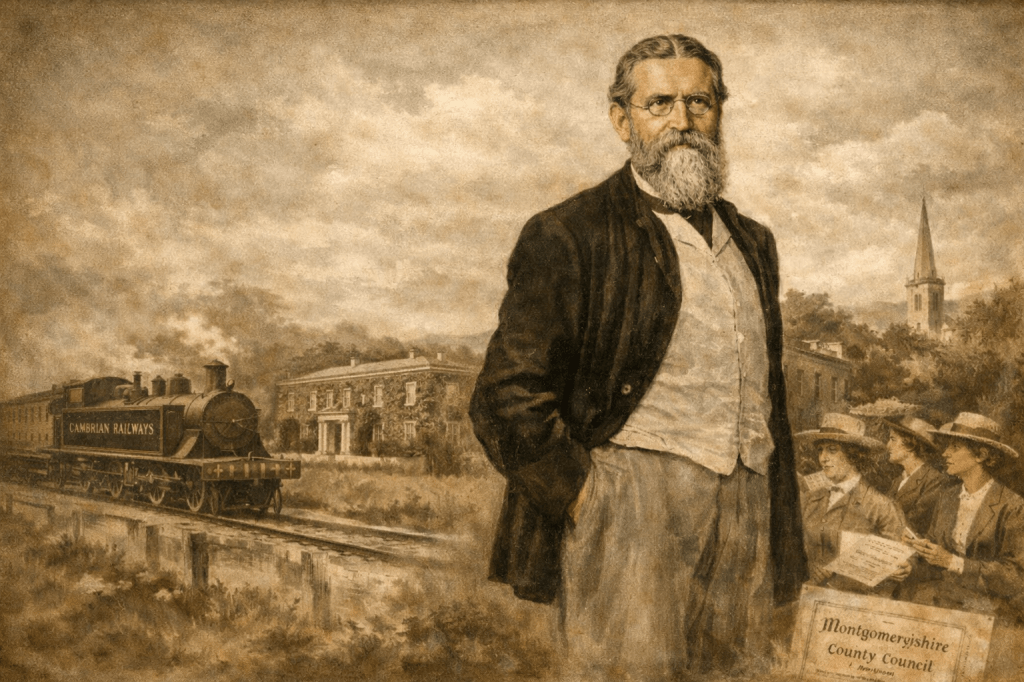
In the political and civic history of Montgomeryshire during the late nineteenth century, Arthur Charles Humphreys‑Owen stands as a representative figure of a transitional generation. Born into the professional middle ranks of Victorian society but elevated through inheritance into the ranks of the county gentry, Humphreys-Owen embodied the gradual adaptation of the traditional landowning class…
Antony David Davies
Arthur Humphreys-Owen, Berriew history, books, Cambrian Railways, Central Welsh Board for Intermediate Education, David Lloyd George, Education Act 1902 Wales, Edwardian Wales, Glansevern Hall, History, Liberal MP Montgomeryshire, Mid Wales history, Mid Wales railways, Montgomeryshire County Council history, Montgomeryshire gentry, Montgomeryshire history, Nonconformist Wales, Oswestry railway works, Powys history, Rural Wales history, Stuart Rendel, Victorian landowners Wales, Victorian Montgomeryshire, Victorian Wales, Wales, Welsh county gentry, Welsh education history, Welsh Intermediate Education Act 1889, Welsh Liberal Party, Welsh Liberalism, Welsh local government history, Welsh parliamentary history, Welsh political history, writing -
Thomas Charles of Bala (1755–1814): Scripture, Education, and the Institutionalisation of the Welsh Revival
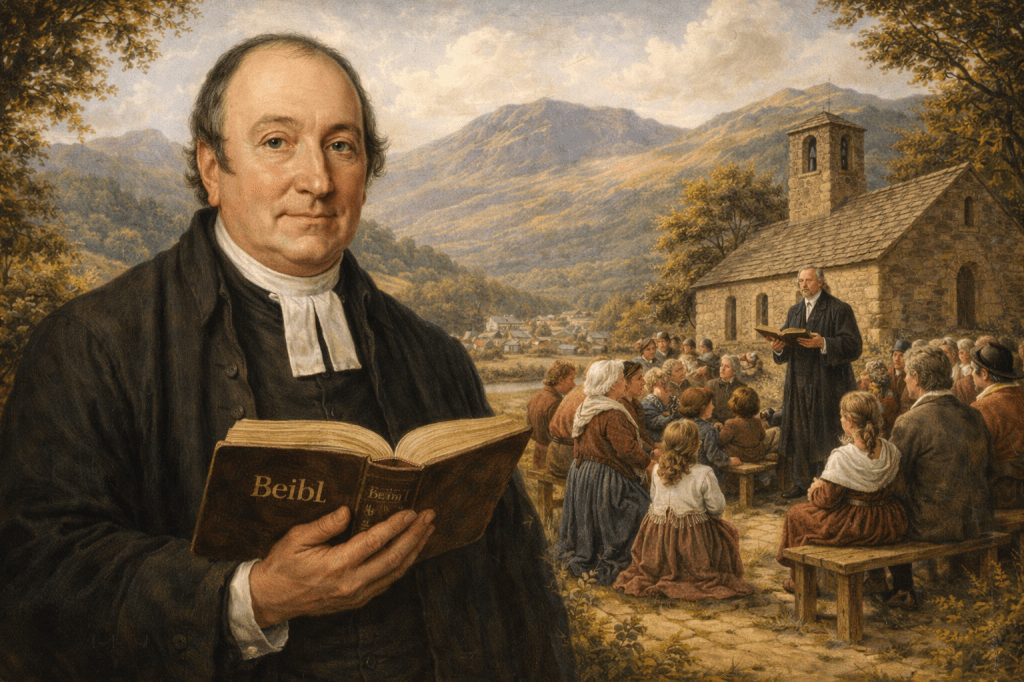
Among the architects of modern Welsh religious culture, few figures exercised an influence comparable to Thomas Charles of Bala. A Calvinistic Methodist minister, educational reformer, and promoter of biblical literacy, Charles played a decisive role in transforming the evangelical revival of eighteenth-century Wales into the structured Nonconformist culture that would dominate Welsh society throughout the…
Antony David Davies
18th century Wales, 19th-century-wales, Bala Merionethshire history, Bala Wales history, bible, British and Foreign Bible Society, Calvinistic Methodism, christianity, Daniel Rowland, faith, Griffith Jones Llanddowror, History, history of education in Wales, history of Sunday schools Wales, Howell Harris, jesus, Mary Jones Welsh Bible story, Merionethshire history, Nonconformist Wales, Presbyterian Church of Wales history, religion in Wales history, Snowdonia history, Thomas Charles, Thomas Charles of Bala, Welsh Bible history, Welsh biography, Welsh chapel culture, Welsh cultural history, Welsh evangelical revival, Welsh historical figures, Welsh language and religion, Welsh literacy history, Welsh Methodist Revival, Welsh Nonconformity, Welsh Protestant history, Welsh religious history, Welsh Social History, Welsh Sunday schools -
Robert Owen (1771-1858) of Newtown, Montgomeryshire
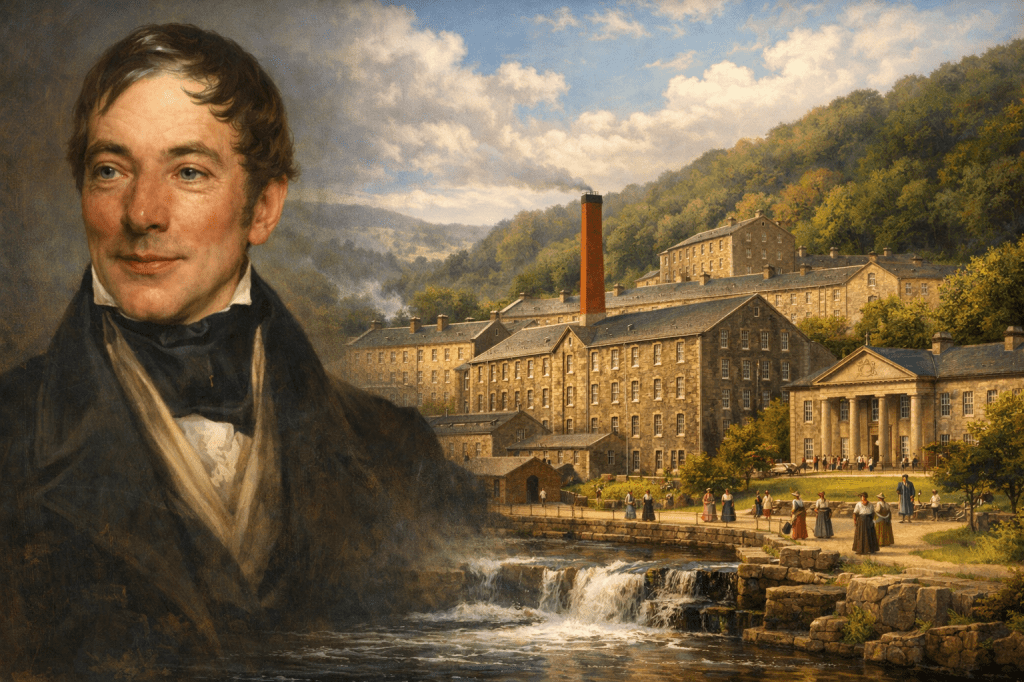
Industry, Community, and the Moral Reconstruction of Society Few individuals produced by rural Wales exercised an influence so disproportionate to their origins as Robert Owen (1771–1858) of Newtown. Born in a modest Montgomeryshire market town at the edge of upland Wales, Owen became one of the most consequential social thinkers of the Industrial Revolution, a…
Antony David Davies
books, British Industrial History, Cooperative Movement, Cooperative Movement History, Early Cooperative Societies, Economic History, Education Reform History, History, History of Education, History of Socialism, History of Work, Industrial Britain, Industrial Revolution, Labour History Britain, marxism, Montgomeryshire Figures, montgomeryshire-history, New Harmony Indiana, New Lanark, Newtown, Nonconformist Wales, philosophy, Politics, Robert Owen, Social History Britain, social reform, Utopian Socialism, Welsh biography, Welsh heritage, Welsh history, Welsh Industrialists, Welsh intellectual history, Welsh Reformers, Welsh Social Reformers, Welsh Thinkers -
William Williams Pantycelyn (1717–1791), The Voice of the Welsh Revival and the Making of a Singing Nation
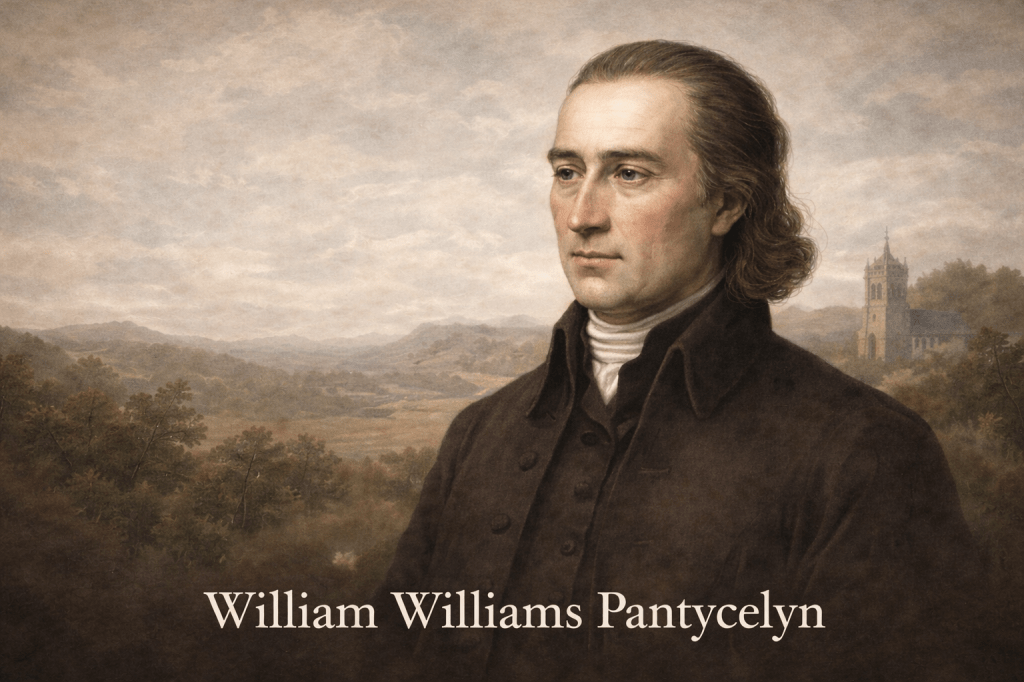
In my earlier essays on Daniel Rowland, the great evangelist of the Welsh Methodist Revival, and Howell Harris, the organiser and engine who turned revival into a disciplined movement, I explored two forms of power that shaped modern Wales. The first was the power of the pulpit, preaching as national event, the sermon as moral…
Antony David Davies
18th century Wales, bible, Calvinistic Methodists, Carmarthenshire, Chapel culture, christianity, congregational singing, Daniel Rowland, evangelical revival, faith, History, Howell Harris, jesus, Llandovery, Llangeitho, Methodist Revival, Nonconformist Wales, Pantycelyn, revival hymns, Sunday schools, Trefeca, Welsh Calvinistic Methodism, Welsh chapel history, Welsh culture and identity, Welsh devotional literature, Welsh evangelicalism, Welsh hymnody, Welsh hymns, Welsh language, Welsh literature, Welsh Methodist Revival, Welsh national identity, Welsh Nonconformity, Welsh poets, Welsh preaching, Welsh religious history, Welsh singing tradition, Welsh Social History, Welsh spirituality, William Williams, William Williams Pantycelyn -
Howell Harris (1714–1773), The Engine of the Welsh Revival and the Birth of an Evangelical Wales
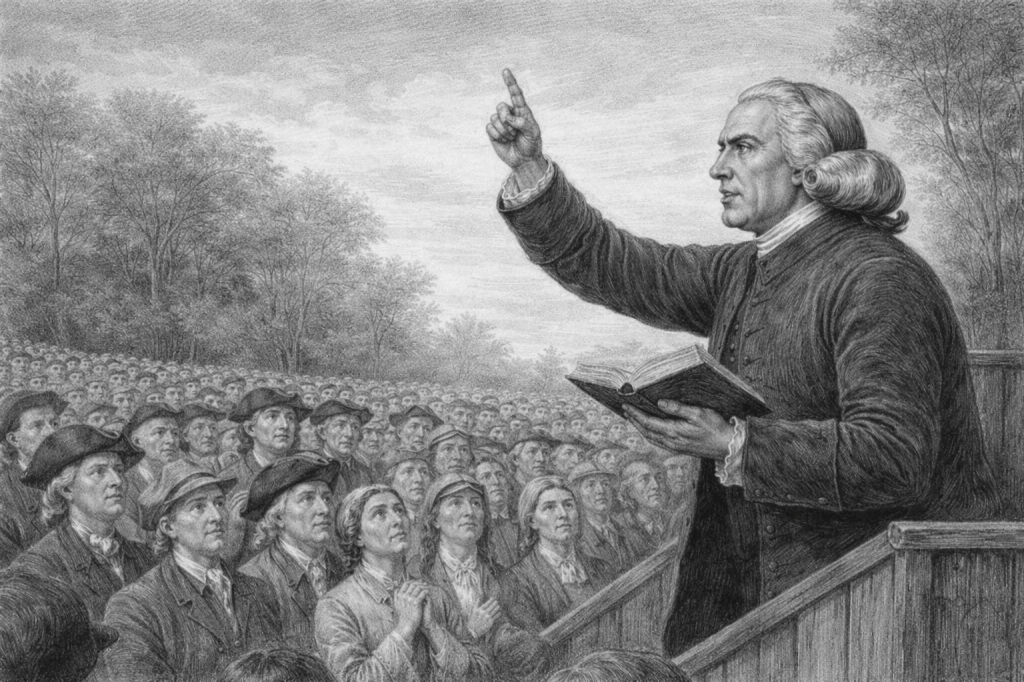
This article follows my recent study of Daniel Rowland (1713–1790), the great evangelist of the Welsh Methodist Revival and one of the defining architects of modern Welsh Nonconformity. If Rowland represents the revival at its most visible, the pulpit phenomenon, the national preacher, the man whose sermons drew thousands, then Howell Harris must be understood…
Antony David Davies
18th century Wales, bible, Brecknockshire, Breconshire, Calvinistic Methodists, chapel societies, christianity, church, Church of England in Wales, Daniel Rowland, evangelical revival, History, Howell Harris, jesus, lay preaching, Llangeitho, Methodist Revival, Nonconformist Wales, religious societies, revival preaching, Sunday School Movement, Talgarth, Trefeca, Welsh Calvinistic Methodism, Welsh chapel history, Welsh culture and identity, Welsh evangelicalism, Welsh hymnody, Welsh language and religion, Welsh Methodist Revival, Welsh moral culture, Welsh Nonconformity, Welsh preaching, Welsh Protestantism, Welsh religious history, Welsh Social History, Welsh spirituality, William Williams Pantycelyn -
A Christmas in the Victorian Welsh Uplands
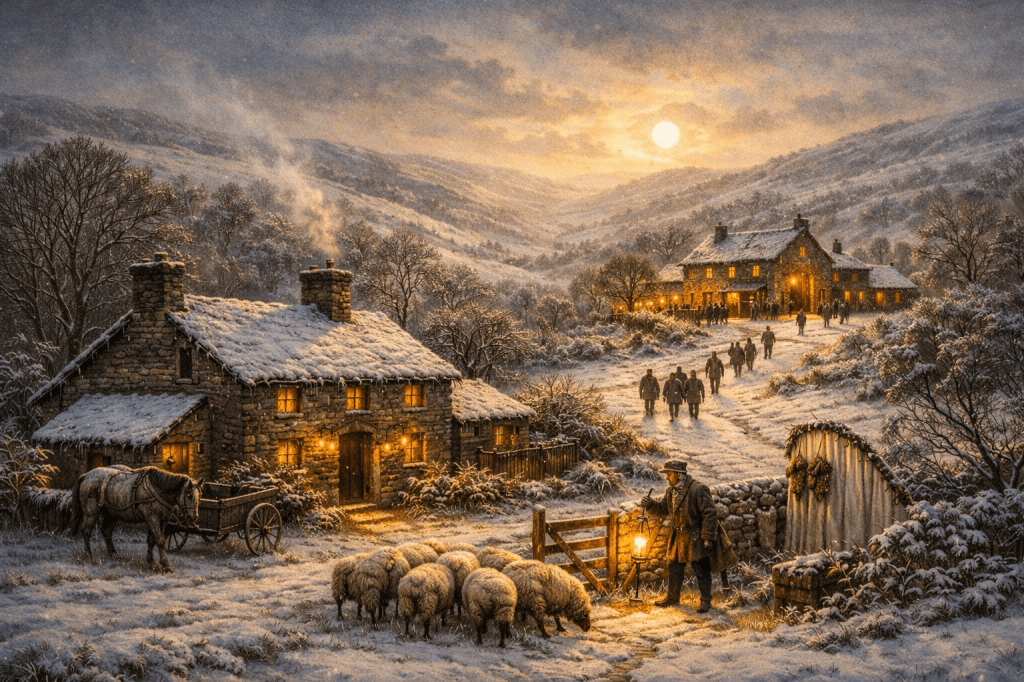
In the high country of mid and north Wales, where the hills folded into one another like great, weathered blankets and the lanes were little more than tracks worn by generations of hooves and boots, Christmas in the Victorian era arrived quietly. There was no sense of sudden abundance, no dramatic break from the rhythm…
Antony David Davies
19th-century-wales, Agrarian Wales, books, Calennig, christmas, Christmas in Wales, Cultural memory, fiction, History, Mari Lwyd, Mid Wales, Nonconformist Wales, North Wales, Noson Gyflaith, Plygain, Rural communities, Rural winter life, Upland farming, Victorian Christmas, Victorian domestic life, victorian-wales, Welsh Chapels, Welsh Christmas traditions, Welsh countryside, Welsh farmhouse life, Welsh folk traditions, Welsh rural life, Welsh Social History, Welsh uplands, writing -
The Uncrowned Kings: How the Preacher Ruled Victorian Wales
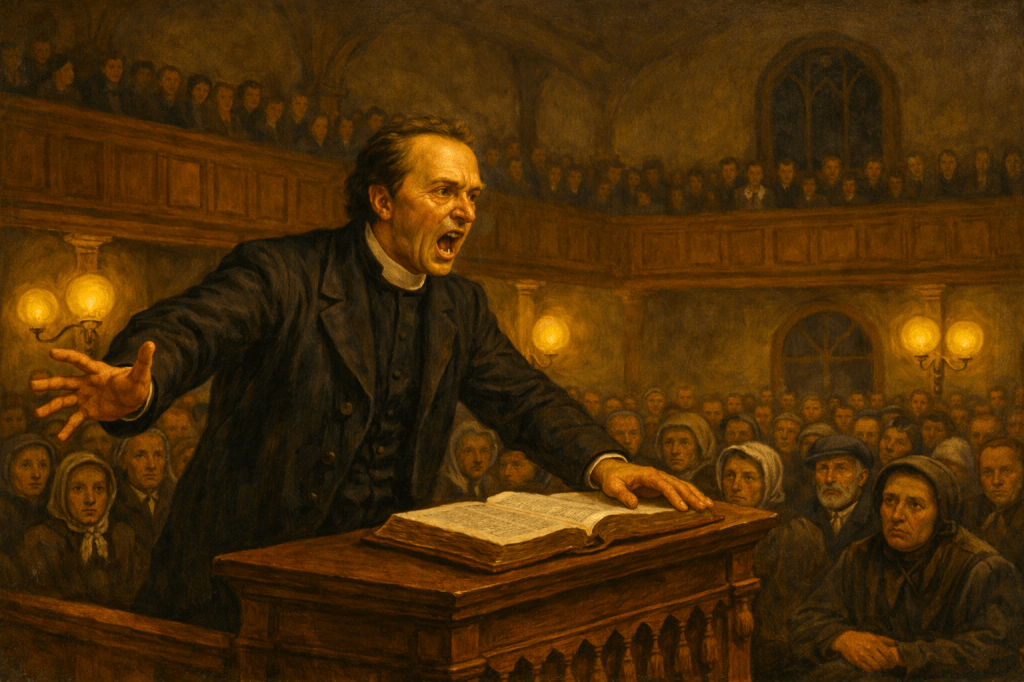
Imagine a Sunday evening in November 1880. Outside, the valley is pitch black, hammered by rain sweeping down from the mountains. But inside the gas-lit chapel, the air is thick with damp wool, peppermint, and anticipation. Five hundred people sit shoulder to shoulder in a silence so taut it hums. They are not waiting for…
Antony David Davies
19th-century-wales, Blue Books, Chapel Revival, Christmas Evans, Coalfield History Wales, Cymraeg, Hwyl, Liberal Wales, Methodist History, Nonconformist Wales, Rural Wales, Slate Quarrying Wales, victorian-wales, Wales Social Change, Welsh Chapels, Welsh Communities, Welsh culture, Welsh heritage, Welsh history, Welsh identity, Welsh Language History, Welsh Literacy, Welsh Nonconformity, Welsh politics, Welsh Preachers, Welsh Pulpit Tradition, Welsh Radicalism, Welsh Religion, Welsh Revivalism, Welsh Social History, Welsh Theology -
When the Last Prince Hid in Our Hills: A Family Legend That Still Haunts Wales
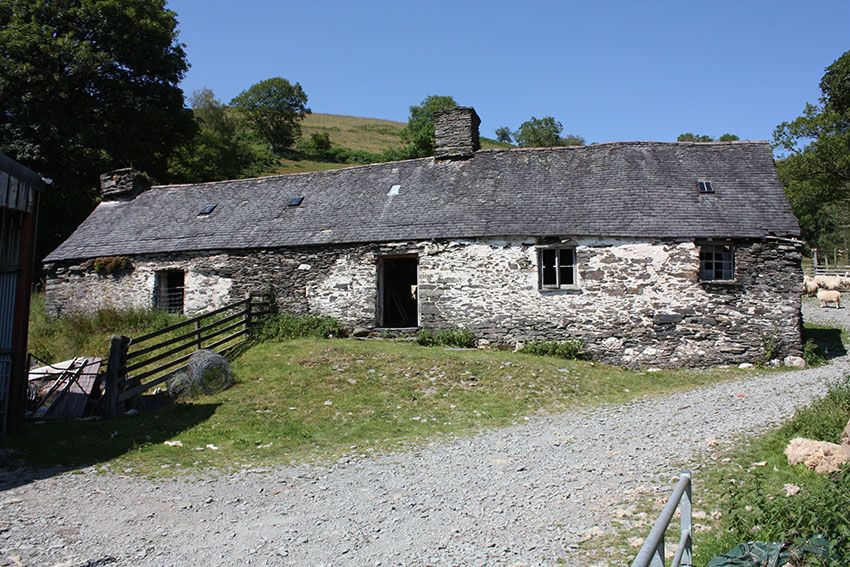
High in the forgotten uplands of Montgomeryshire, where bracken folds over ancient sheep paths and the hills roll unbroken into silence, there stands a farmhouse my family still speaks of in reverent tones. Its name is Esgair Llywelyn — Llywelyn’s Ridge. Even now, the place endures. Weathered, empty, but defiantly upright. Whitewashed stone walls streaked…
Antony David Davies
Aberedw, Antony David Davies, Builth, Cilmeri 1282, Cultural survival, Dulas Valley, Dyfi Valley, Edward I, Elinor Bennett, Esgair Llywelyn, family history, Family legend, Forgotten voices, FRSA, Heritage preservation, Hidden history, Historical memory, Historical storytelling, Identity and place, Legacy of the past, Llanwrin, Llywelyn ap Gruffudd, Lost Wales, Machynlleth, Medieval Wales, Mid Wales, Montgomeryshire, National memory, Nonconformist Wales, Owain Glyndŵr, Powys heritage, Prince of Wales, Resistance and survival, Rural Wales, Welsh ancestry, Welsh culture, Welsh diaspora, Welsh history, Welsh identity, Welsh legends, Welsh nationalism, Welsh rebellion, Welsh storytelling
