Tag: Welsh Nonconformity
-
Ann Griffiths (1776–1805): The Mystic Voice of Welsh Methodism
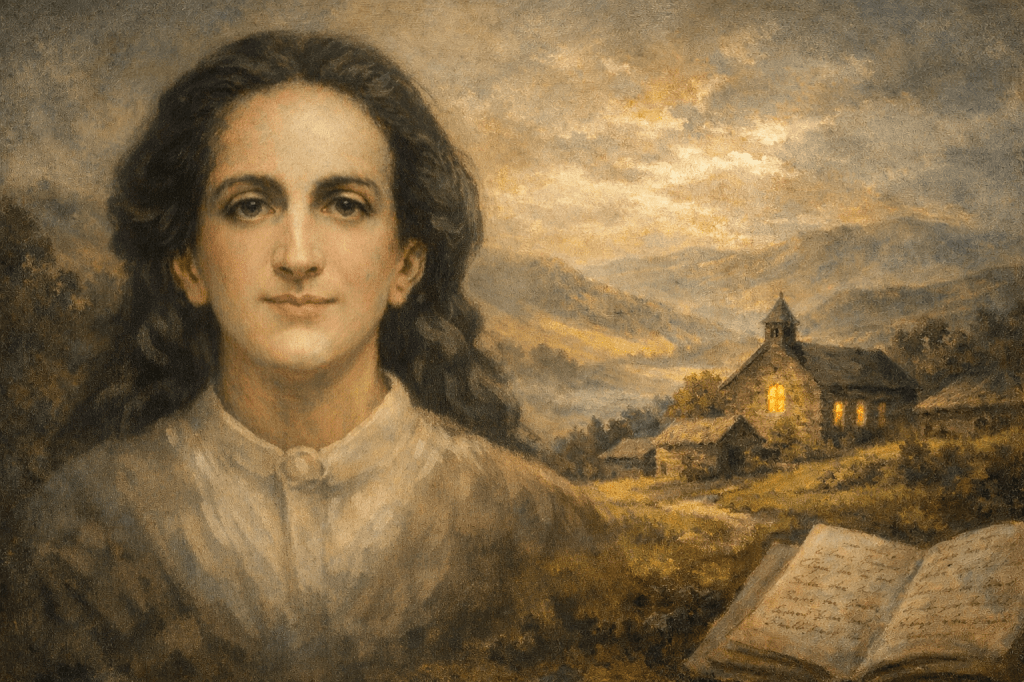
Within the religious and cultural history of Wales, few figures possess the quiet yet enduring authority of Ann Griffiths, the celebrated hymn writer of Montgomeryshire. Though her life was tragically short, ending at the age of only twenty-nine, her influence on Welsh Nonconformist spirituality has been profound and lasting. In an era when women rarely…
Antony David Davies
Ann Griffiths, books, Calvinistic Methodists, christianity, Daniel Rowland, Dolwar Fach, faith, history of Welsh chapels, Howell Harris, Llanfihangel-yng-Ngwynfa, Methodist revival Wales, Mid Wales history, Montgomeryshire culture, montgomeryshire-history, Rural Wales history, Seiadau, spirituality, Thomas Charles of Bala, Welsh chapel culture, Welsh cultural history, Welsh devotional literature, Welsh evangelical revival, Welsh heritage, Welsh historical biography, Welsh hymn tradition, Welsh hymn writer, Welsh hymnody, Welsh language literature, Welsh literary figures, Welsh Methodism, Welsh Methodist theology, Welsh mysticism, Welsh Nonconformity, Welsh poetry, Welsh Protestant history, Welsh religious history, Welsh religious revival, Welsh spiritual poetry, Welsh women in history, William Williams Pantycelyn, women in Welsh religion, writing -
Thomas Charles of Bala (1755–1814): Scripture, Education, and the Institutionalisation of the Welsh Revival
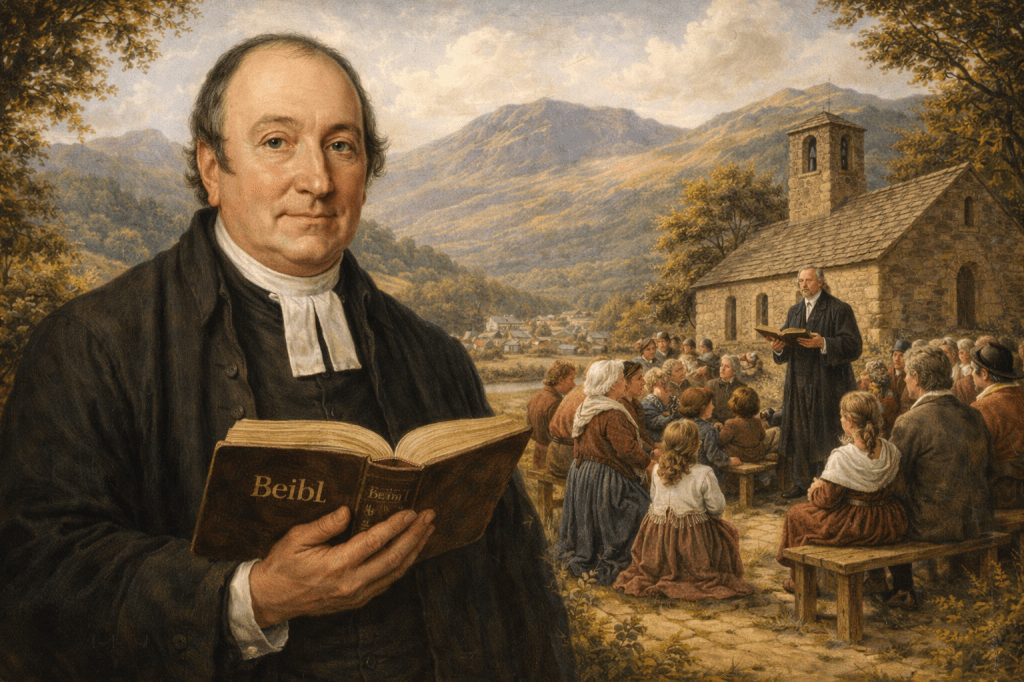
Among the architects of modern Welsh religious culture, few figures exercised an influence comparable to Thomas Charles of Bala. A Calvinistic Methodist minister, educational reformer, and promoter of biblical literacy, Charles played a decisive role in transforming the evangelical revival of eighteenth-century Wales into the structured Nonconformist culture that would dominate Welsh society throughout the…
Antony David Davies
18th century Wales, 19th-century-wales, Bala Merionethshire history, Bala Wales history, bible, British and Foreign Bible Society, Calvinistic Methodism, christianity, Daniel Rowland, faith, Griffith Jones Llanddowror, History, history of education in Wales, history of Sunday schools Wales, Howell Harris, jesus, Mary Jones Welsh Bible story, Merionethshire history, Nonconformist Wales, Presbyterian Church of Wales history, religion in Wales history, Snowdonia history, Thomas Charles, Thomas Charles of Bala, Welsh Bible history, Welsh biography, Welsh chapel culture, Welsh cultural history, Welsh evangelical revival, Welsh historical figures, Welsh language and religion, Welsh literacy history, Welsh Methodist Revival, Welsh Nonconformity, Welsh Protestant history, Welsh religious history, Welsh Social History, Welsh Sunday schools -
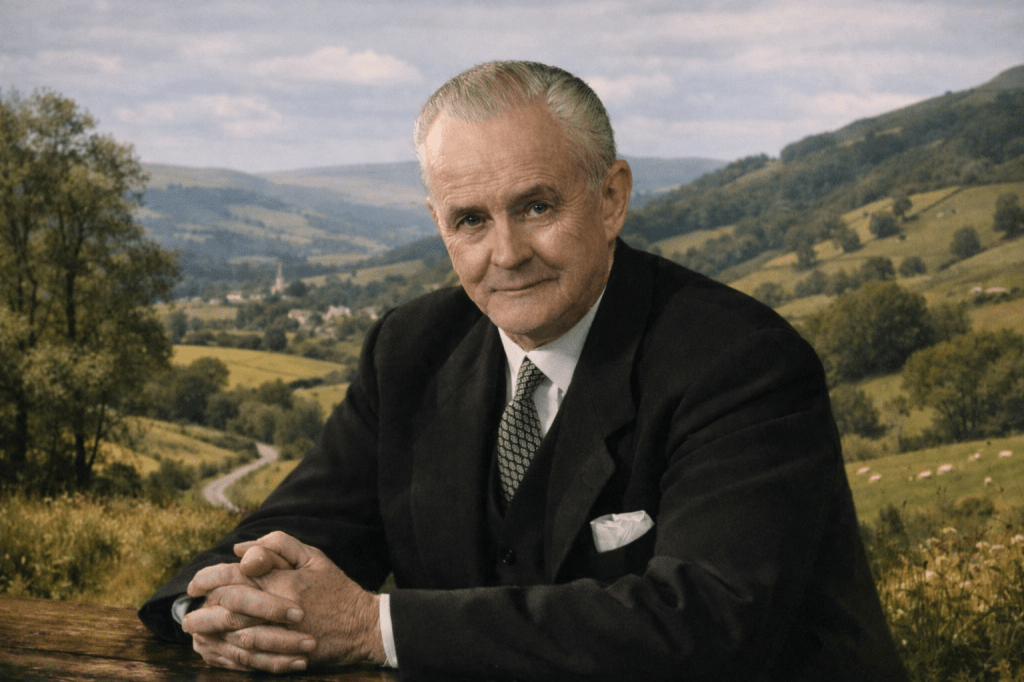
Clement Davies (1884-1962)

Montgomeryshire’s Last Liberal Statesman In the political history of rural Wales, certain figures stand not merely as representatives of constituencies but as embodiments of an older political culture. Clement Edward Davies, born 14 February 1884 and died 23 July 1962, belongs unmistakably to that tradition. Lawyer, parliamentarian, wartime critic, and ultimately leader of the British…
Antony David Davies
British Liberal Party, British political leadership, Clement Davies, History, History of Liberalism UK, History of Montgomeryshire MPs, Labour Party, Liberal Democrats origins, Liberal Party history, Liberal tradition Wales, Llanfyllin history, Mid Wales history, Montgomeryshire Liberal tradition, Montgomeryshire politics, montgomeryshire-history, news, Norway Debate 1940, Political history Wales, Politics, Post-war British politics, Rural Wales history, Twentieth century Wales, UK politics, Wales and Westminster, Welsh chapel culture, Welsh constitutional history, Welsh historical biography, Welsh Liberalism, Welsh MPs, Welsh Nonconformity, Welsh parliamentary history, Welsh political heritage, Welsh political history, Welsh rural society, Winston Churchill era -
Owen Owen (1847-1910) of Machynlleth
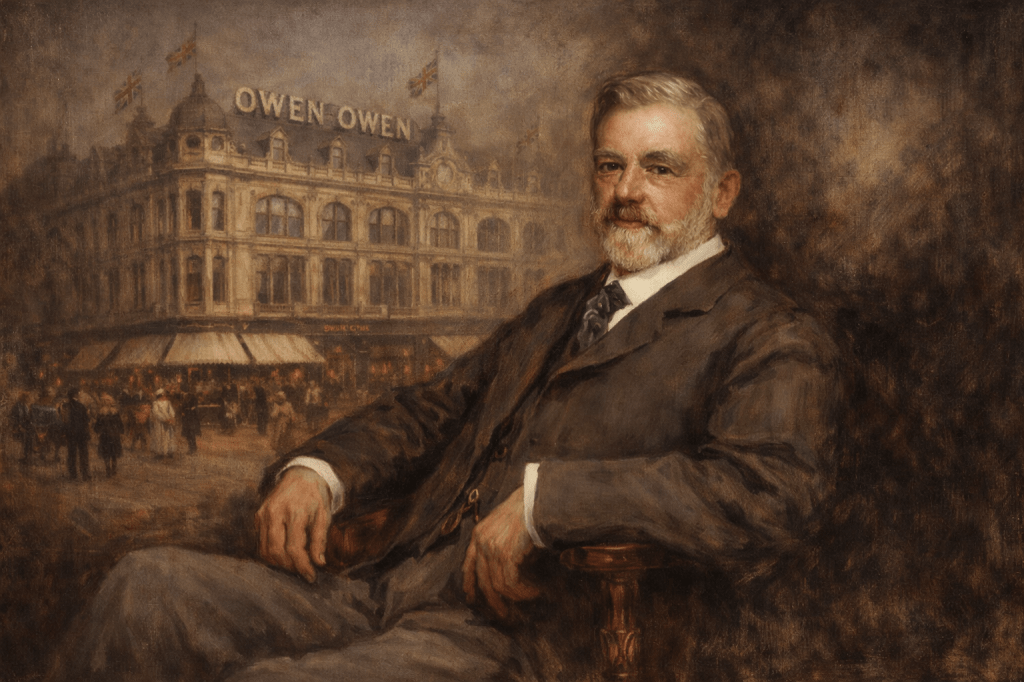
Retail, Respectability, and the Democratization of the High Street There is a recognisable Montgomeryshire pattern in the nineteenth century. Men formed in small, chapel-centred communities along the Dyfi valley stepped into the expanding commercial world of Britain and quietly reshaped it. Coal and rail have long dominated our understanding of Welsh industrial influence, yet modern…
Antony David Davies
19th-century-wales, 20th century retail, books, British commercial history, British retail history, Chapel culture Wales, Department stores, Economic history Wales, Edwardian Britain, High street history, History, Liverpool history, Lost department stores, Machynlleth, Montgomeryshire, nature, Owen Owen, Oxford Street history, Retail modernisation, Rural Wales, Self-made industrialists, Shrewsbury history, Town centre heritage, travel, Victorian retail, Wales, Welsh business history, Welsh civic identity, Welsh entrepreneurs, Welsh history, Welsh industrial heritage, Welsh influence in Britain, Welsh migration, Welsh Nonconformity -
David Davies (1818-1890) of Llandinam
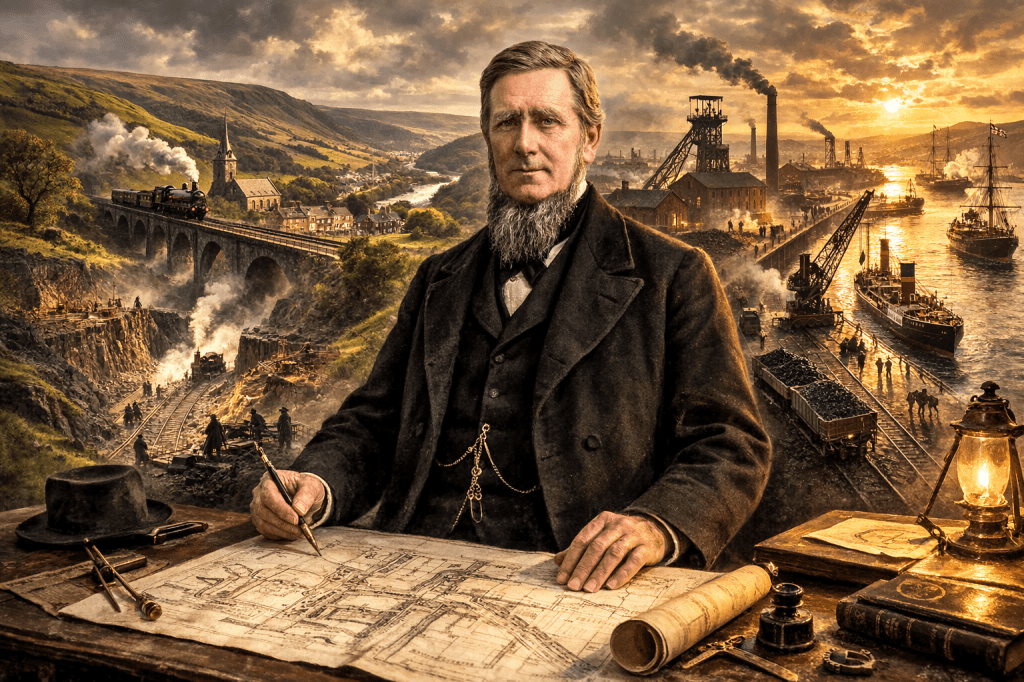
Industry, Faith, Infrastructure, and the Making of Modern Wales There are certain nineteenth-century Welshmen whose lives do more than illustrate personal success. They expose the structural transformation of a nation. David Davies of Llandinam belongs firmly in that category. Born in rural Montgomeryshire in 1818 and dying in 1890, Davies rose from sawyer and small…
Antony David Davies
Barry Docks history, Barry Railway Company, books, Broneirion, Calvinistic Methodism Wales, David Davies 1818–1890, David Davies 1st Baron Davies, David Davies of Llandinam, History, History of Welsh ports, Industrial Revolution in Wales, infrastructure and power, League of Nations Wales, Llandinam, Llanidloes and Newtown Railway, Mid Wales history, montgomeryshire-history, Newtown and Machynlleth Railway, Ocean Coal Company, Plas Dinam, South Wales coalfield, Talerddig cutting, Temple of Peace Cardiff, Victorian industrialists, victorian-wales, Wales, Welsh coal industry, Welsh economic history, Welsh entrepreneurs, Welsh identity and empire, Welsh industrial history, Welsh Liberalism 19th century, Welsh national development, Welsh Nonconformity, Welsh philanthropy, Welsh political history, Welsh railways history, writing -
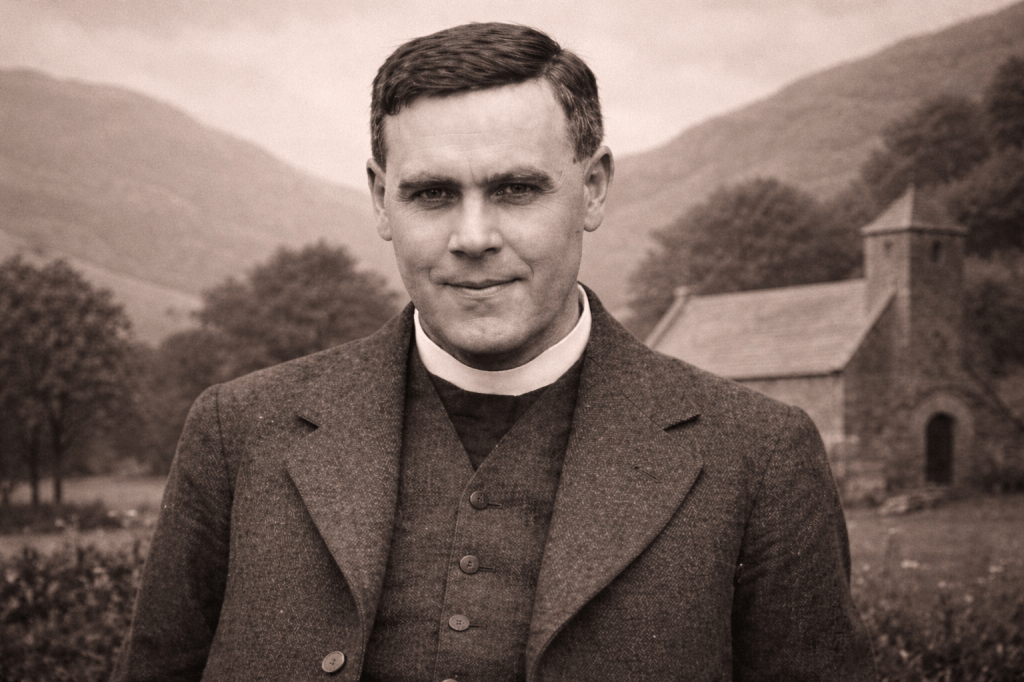
Trevor Owen Davies (1895–1966)

A Farm Boy at Christ Church, Oxford, A Welsh Scholar in Public Life In 1920s Oxford, the halls of Christ Church were filled with the sons of the English landed elite. Among them sat an unlikely figure: a farm labourer from the Dyfi Valley who had traded his plough for Augustine. Trevor Owen Davies was…
Antony David Davies
20th-century-wales, Augustine theology, BBC Religious Advisory Council, Brecknockshire history, Caeadda, Calvinistic Methodism, Christ Church Oxford, christianity, History, Justice of the Peace Wales, Llanwrin, llyfnant-valley, Machynlleth County School, Mid Wales history, Montgomeryshire, Oxford theology, Powys history, Presbyterian Church of Wales, Reformed theology, Rural Wales, Social history, Trefeca College, Trevecka College, Trevor O Davies, Trevor Owen Davies, University College Aberystwyth, Wales, Welsh biography, Welsh broadcasting history, Welsh chapel culture, Welsh clergy, Welsh education history, Welsh history, Welsh intellectual history, Welsh ministers, Welsh Nonconformity, Welsh Public Life, Welsh rural society -
When an English City Drowned a Welsh Village: Llanwyddyn and the Making of Lake Vyrnwy
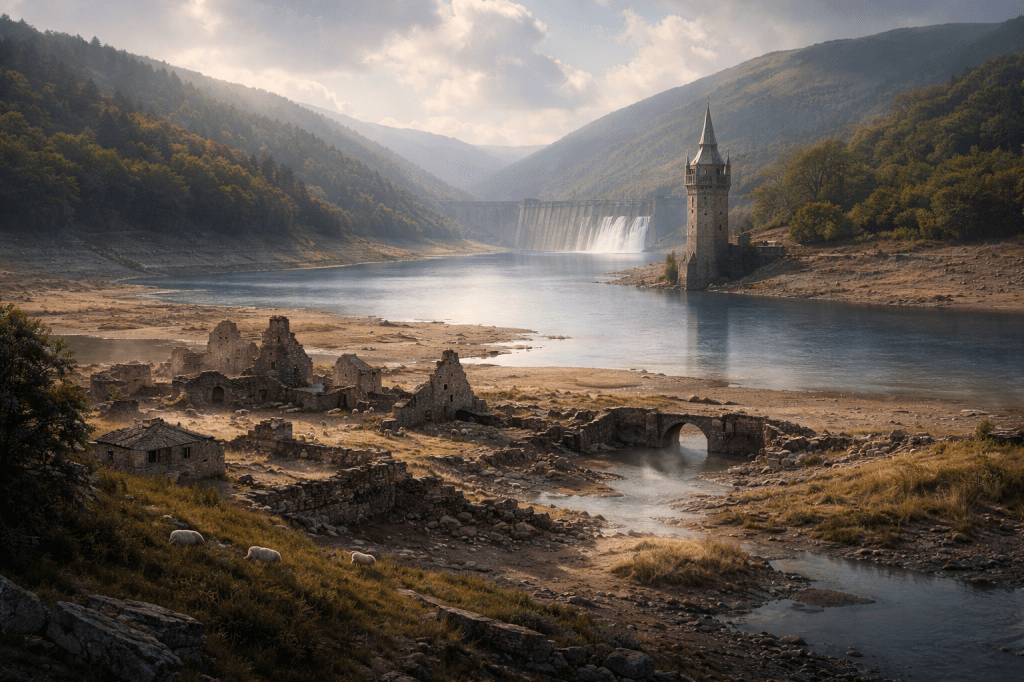
In the summer of 2018, after weeks of sustained heat, the waters of Lake Vyrnwy receded to levels rarely seen in recent decades (source 1). Along the exposed margins of the reservoir, fragments of masonry and faint outlines of foundations emerged from the silt, traces of lanes and walls briefly visible once more (source 1).…
Antony David Davies
adventure, books, Capel Celyn, drowned villages, extractive economy, Gothic Revival architecture, History, infrastructure and power, Lake Vyrnwy, Liverpool Corporation Waterworks Act 1880, Liverpool waterworks, Llanwyddyn, lost villages UK, montgomeryshire-history, nineteenth century Wales, Powys history, public health reform, resource extraction Wales, rural parish life, social history of Wales, St Wyddelan, submerged communities, travel, Tryweryn, upland communities, Victorian engineering, victorian-wales, Wales, water politics, Welsh Chapels, Welsh heritage, Welsh industrial history, Welsh landscape history, Welsh Nonconformity, Welsh-English relations, welsh-rural-history -
William Williams Pantycelyn (1717–1791), The Voice of the Welsh Revival and the Making of a Singing Nation
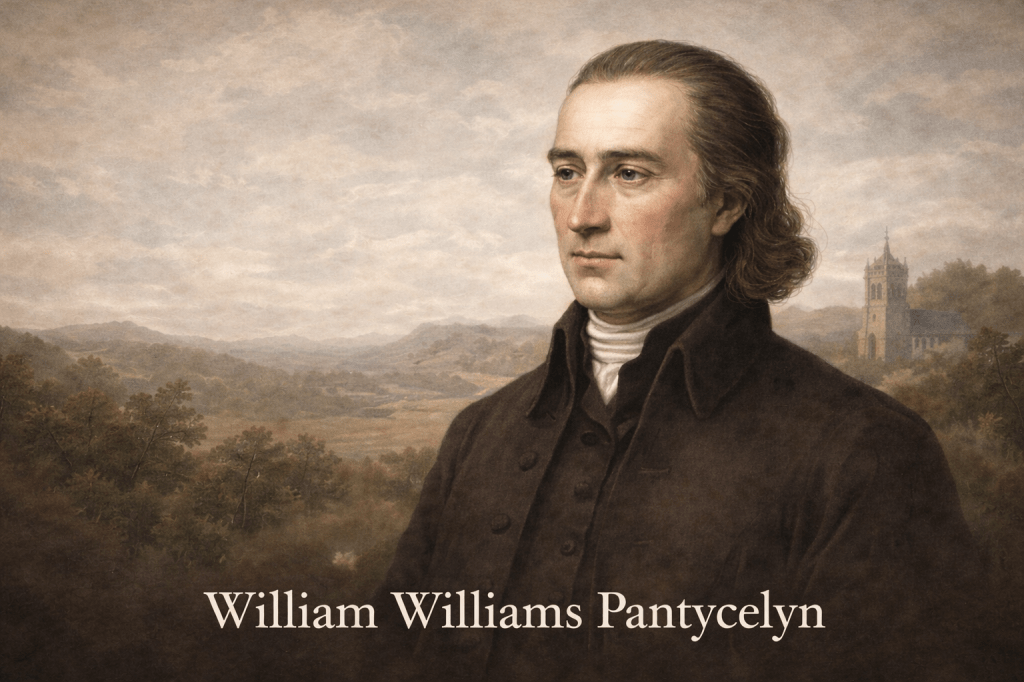
In my earlier essays on Daniel Rowland, the great evangelist of the Welsh Methodist Revival, and Howell Harris, the organiser and engine who turned revival into a disciplined movement, I explored two forms of power that shaped modern Wales. The first was the power of the pulpit, preaching as national event, the sermon as moral…
Antony David Davies
18th century Wales, bible, Calvinistic Methodists, Carmarthenshire, Chapel culture, christianity, congregational singing, Daniel Rowland, evangelical revival, faith, History, Howell Harris, jesus, Llandovery, Llangeitho, Methodist Revival, Nonconformist Wales, Pantycelyn, revival hymns, Sunday schools, Trefeca, Welsh Calvinistic Methodism, Welsh chapel history, Welsh culture and identity, Welsh devotional literature, Welsh evangelicalism, Welsh hymnody, Welsh hymns, Welsh language, Welsh literature, Welsh Methodist Revival, Welsh national identity, Welsh Nonconformity, Welsh poets, Welsh preaching, Welsh religious history, Welsh singing tradition, Welsh Social History, Welsh spirituality, William Williams, William Williams Pantycelyn -
Howell Harris (1714–1773), The Engine of the Welsh Revival and the Birth of an Evangelical Wales
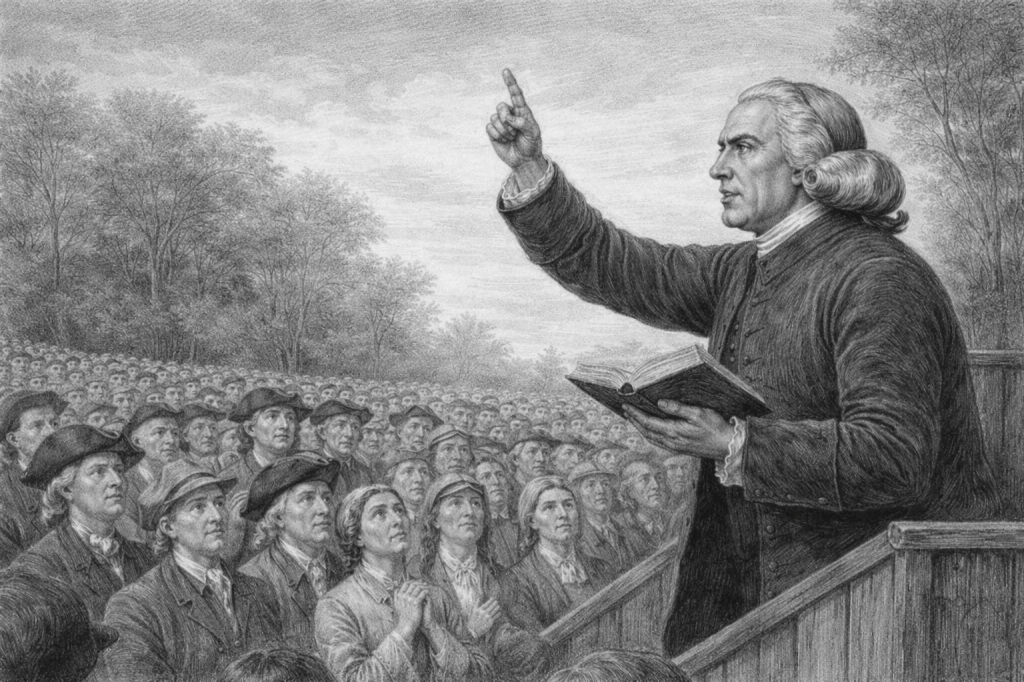
This article follows my recent study of Daniel Rowland (1713–1790), the great evangelist of the Welsh Methodist Revival and one of the defining architects of modern Welsh Nonconformity. If Rowland represents the revival at its most visible, the pulpit phenomenon, the national preacher, the man whose sermons drew thousands, then Howell Harris must be understood…
Antony David Davies
18th century Wales, bible, Brecknockshire, Breconshire, Calvinistic Methodists, chapel societies, christianity, church, Church of England in Wales, Daniel Rowland, evangelical revival, History, Howell Harris, jesus, lay preaching, Llangeitho, Methodist Revival, Nonconformist Wales, religious societies, revival preaching, Sunday School Movement, Talgarth, Trefeca, Welsh Calvinistic Methodism, Welsh chapel history, Welsh culture and identity, Welsh evangelicalism, Welsh hymnody, Welsh language and religion, Welsh Methodist Revival, Welsh moral culture, Welsh Nonconformity, Welsh preaching, Welsh Protestantism, Welsh religious history, Welsh Social History, Welsh spirituality, William Williams Pantycelyn -
Daniel Rowland (1713–1790), The Great Evangelist of Wales, and the Making of Modern Welsh Nonconformity
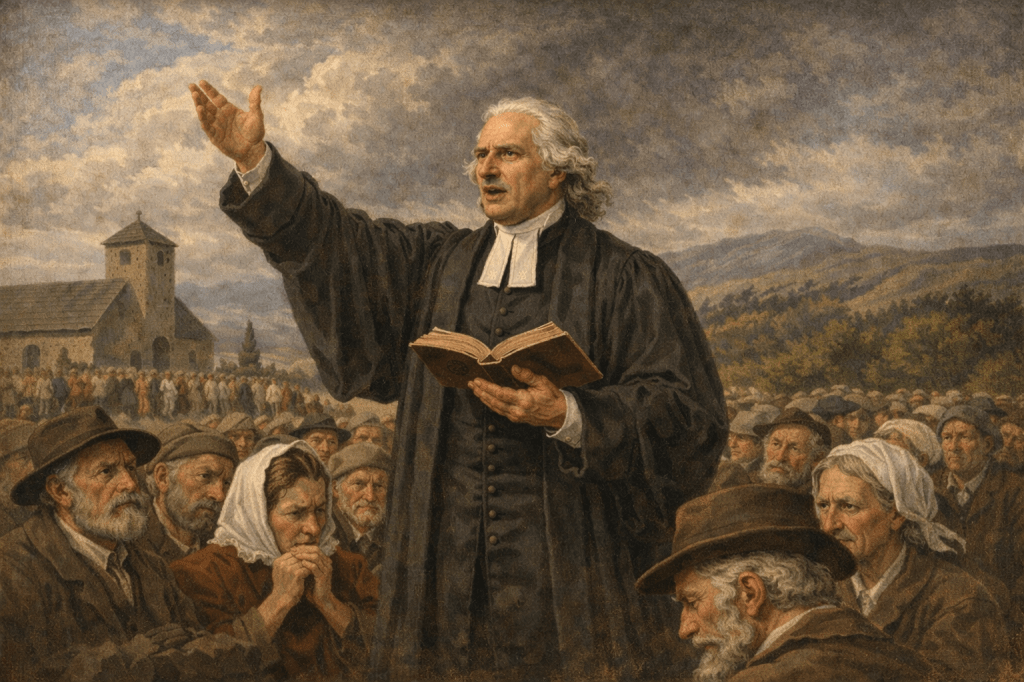
There are certain names in Welsh religious history which do not merely belong to their century, they reshape the centuries that follow. Daniel Rowland of Llangeitho is one of those figures. In the eighteenth century, when Wales was still largely rural, linguistically distinct, and socially conservative, Rowland became the most powerful preacher the nation had…
Antony David Davies
18th century Wales, bible, Calvinism in Wales, Cardiganshire history, Ceredigion history, christianity, Daniel Rowland, evangelical revival, faith, History, history of Christianity in Wales, Howell Harris, jesus, Llangeitho, Methodist History, religion and society, Rural Wales, social history of Wales, the Welsh pulpit, Trevecca, Wales in the eighteenth century, Welsh Calvinistic Methodism, Welsh Chapels, Welsh Communities, Welsh culture, Welsh history, Welsh hymnody, Welsh identity, Welsh language, Welsh Methodist Revival, Welsh ministers, Welsh Nonconformity, Welsh preaching, Welsh religious history, Welsh spirituality, William Williams Pantycelyn