
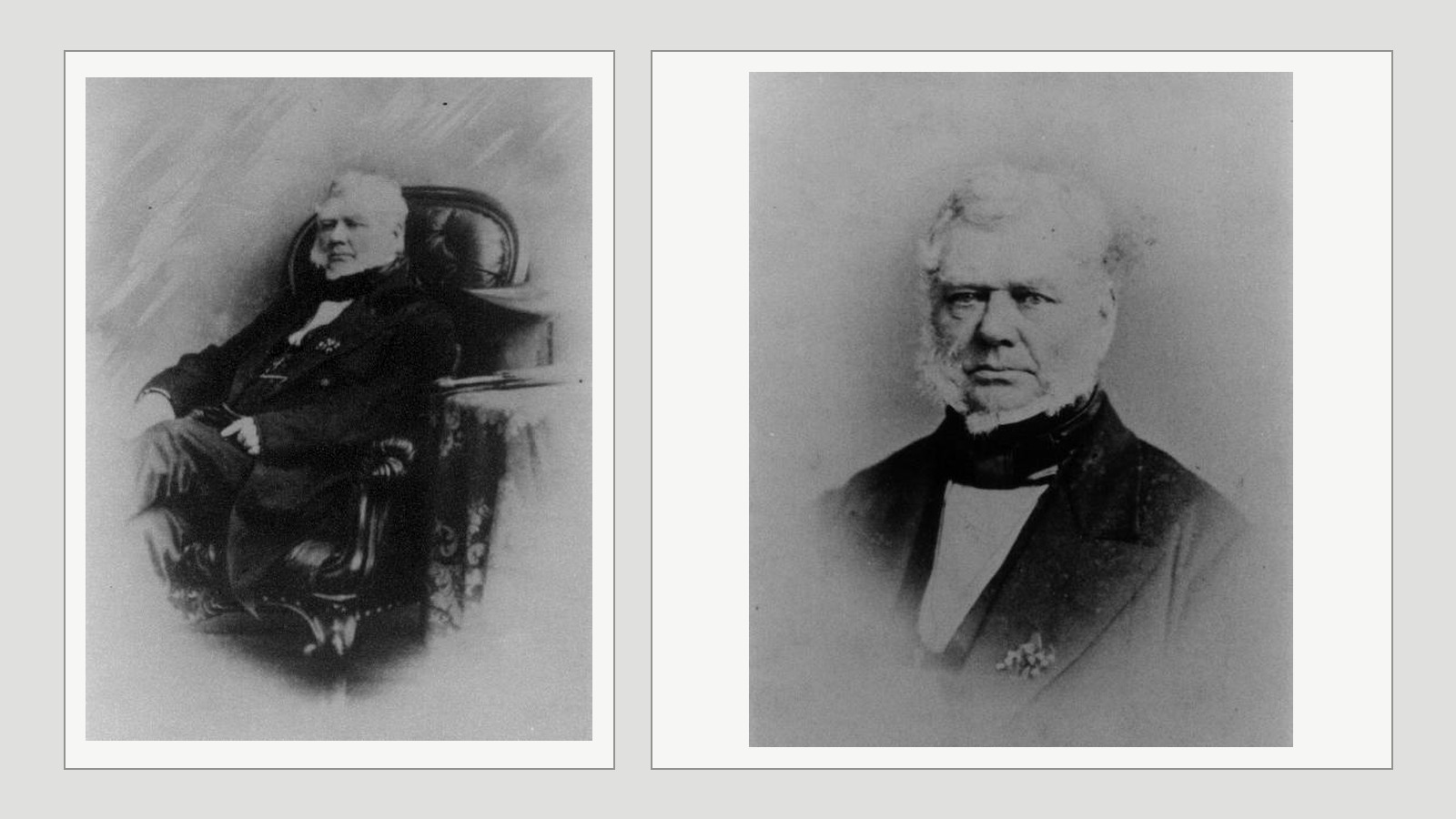
The Jones Family of Glandwr Hall, Barmouth
The history of the Jones family of Glandwr Hall is a story of Welsh social mobility, professional ambition, landownership, inheritance and dispersal. It begins before Glandwr itself, with John Howel, a Dolgellau wool and web manufacturer whose children moved into law, skilled trades, commerce and rural society. His son William Jones transformed that commercial foundation into a successful legal career in the City of London and, from the 1830s, into the landed estate at Glandwr above the Mawddach.
This developing family history brings together the essays on Glandwr and its many branches within a single framework. It treats the Hall not as an isolated country house, but as the centre of a much wider network of kinship stretching through Wales, London, Australia, India and the United States. Taken together, the biographies show how professional success became land and status, how women and collateral relatives carried family identity beyond the direct line, and how war, economics and migration reshaped the family across the nineteenth and twentieth centuries.
The Glandwr family in brief
The family story is easiest to follow as a sequence of expansion, inheritance and dispersal.
- c.1765–1835: John Howel establishes the commercial foundation from which the later Jones family of Glandwr emerged.
- 1792–1882: William Jones builds a successful legal career in London and acquires the land from which Glandwr Hall and its estate were created.
- Mid nineteenth century: William’s children enter the Church, the Army, colonial law and wider professional society, carrying the family far beyond Merionethshire.
- 1882–1897: William Halse Gatty Jones returns from Australia and becomes the family member most closely associated with Glandwr as a lived country estate.
- 1897–1942: William Wilding Jones rationalises the estate, selling outlying property and adapting Glandwr to the economic pressures of the twentieth century.
- 1914–1918: the First World War alters the expected line of inheritance through the death of Hugh Wynn Wilding-Jones.
- 1942–1955: the deaths of William Wilding Jones and Eric Vaughan Wilding-Jones leave Sylvia May Wilding-Jones as the surviving child of the direct line.
- 1955–1956: Glandwr and then Islwyn are sold, ending the direct family association with the Mawddach landscape after more than a century.
Where to begin
For the clearest route through the family story, begin with the origins of the dynasty, then follow the creation of Glandwr, the women of the family and the two generations who inherited and reshaped the estate.
- John Howel, c.1765–1835, the woollen manufacturer whose family formed the foundations from which the later Glandwr dynasty emerged.
- William Jones of Glandwr Hall, 1792–1882, the solicitor whose London career was converted into property, status and a Welsh landed estate.
- The Women of Glandwr, restoring the mothers, daughters, wives and sisters whose kinship and household labour were essential to the family’s continuity.
- William Halse Gatty Jones, 1825–1897, tracing gold-rush Melbourne, return to Wales and the development of Glandwr as a lived estate.
- William Wilding Jones of Glandwr, 1855–1942, examining the legal, economic and family decisions which reshaped the estate for the twentieth century.
Origins and the making of Glandwr

John Howel, c.1765–1835 provides the true starting point for the family story. A wool and web manufacturer in Dolgellau, he belonged to the commercial world from which the next generation emerged. His son William Jones of Glandwr Hall, born in 1792, carried that foundation into London law, civic life and property ownership. During the 1830s William acquired land near Barmouth and created Glandwr Hall as the visible centre of a new family estate.
Glandwr was therefore not an ancient ancestral estate inherited unchanged across centuries. It was a nineteenth-century creation, rooted in Welsh identity but financed by professional success in London. That distinction is central to understanding the later family history, because the estate itself was an achievement of social mobility before it became an inheritance.
The second generation: Church, empire and law
William Jones’s children followed strikingly different paths, and together they show how rapidly the Glandwr family became part of a wider Victorian professional world.
- William Halse Gatty Jones, 1825–1897, whose career took him to gold-rush Melbourne, colonial law and the Victorian Legislative Assembly before his return to Wales.
- John Cartwright Jones, 1831–1875, whose clerical career reveals the education and expectations of a prosperous Victorian family.
- Major-General Howel Locke Jones, 1835–1907, who entered the Bengal Artillery, served during the Indian Rebellion of 1857 and later retired as a Major-General of the Royal Artillery.
- The Women of Glandwr, tracing the daughters, wives and widows whose marriages, households and kinship networks carried the family into new branches and professions.

Gatty Jones and the return to Wales
After succeeding to Glandwr in 1882, Gatty Jones became the family member most closely associated with the estate as a lived country-house world. He involved himself in local society, farming and the public life of the Barmouth district. Yet the financial position inherited by his son in 1897 was much weaker than the appearance of the estate suggested.
The long agricultural depression of the late nineteenth century, the cost of maintaining landed property and the growing burden of taxation had changed the economics of estates across Britain. Glandwr was not immune, and the next generation would have to choose adaptation over simple continuity.
William Wilding Jones and the reinvention of the estate

William Wilding Jones inherited Glandwr in 1897. A solicitor, playwright, theatre critic and senior figure in the Worshipful Company of Skinners, he approached the estate with the instincts of a professional adviser rather than those of a traditional squire.
He sold outlying farms, property and mineral interests, concentrated the remaining estate around Glandwr, let the Hall to tenants and built the smaller house of Islwyn nearby for family use. The result was not the preservation of the Victorian estate unchanged, but its adaptation to a new economic reality. The core of Glandwr remained in family ownership until 1955, almost sixty years after Wilding inherited it.
War, inheritance and the final generation
War profoundly altered the expected future of the direct line. Wilding’s eldest son, Hugh Wynn Wilding-Jones, 1896–1918, was the son originally expected to inherit the family position. Educated at Tonbridge School and Corpus Christi College, Oxford, he volunteered for military service and died from wounds in the Balkans in September 1918.
His younger brother, Eric Vaughan Wilding-Jones, 1899–1942, then became the last surviving son in the direct Glandwr line. Eric trained at Woolwich, served in the Royal Artillery and in India, but was dismissed from the Army following a court-martial in 1931. He later rebuilt his working life in Kent as the proprietor of a breeding and boarding kennel. His death in 1942 left his sister Sylvia as the surviving child through whom the final future of Glandwr would be determined.
Sylvia May Wilding-Jones retained Glandwr for another thirteen years. In January 1955 she sold the Hall and most of the remaining estate. After the death of her second husband, Charles Robert Hughes, in 1956, she sold Islwyn and left the district. That departure ended a direct family association with the Mawddach landscape which had begun in the 1830s.
Collateral branches: sport, medicine, science and migration
The Glandwr story did not end with the direct estate-owning line. Collateral branches carried the family into sport, medicine, science, music, performance and international migration, demonstrating how widely the descendants of one Welsh family could disperse within only a few generations.
- John Pugh of Glyncaerig (1834–1912): From Farm Labourer’s Son to Montgomeryshire Landowner, the marriage of William Jones of Glandwr’s niece Ann Elizabeth Jones to John Pugh, and the family’s connections with the Montgomeryshire uplands.
- Arthur Owen Jones, 1872–1914, the cricketer who captained Nottinghamshire and England and became one of the outstanding players of the Edwardian era.
- Athelstan Jasper Blaxland, 1880–1963, a leading Norwich surgeon whose career spanned the First and Second World Wars.
- Herbert George Flaxman Spurrell, 1877–1918, physician, physiologist, zoological collector and Royal Army Medical Corps officer.
- Gatty Wynne Jones, 1859–1913, born in Australia and later an American musician, composer and teacher.
- Gattison Jones, 1895–1955, whose career carried the family into vaudeville and Broadway.
What the Glandwr story reveals
The Jones family is historically valuable because it cannot be reduced to a simple story of landed privilege. Glandwr was created by professional success rather than inherited from medieval ancestry, and even after the estate had been established the wider family continued to occupy very different social worlds. Law, the Church, military service, colonial careers, farming, medicine, science, sport and performance all appear within the same extended kinship network.
It is equally important that the family is not organised solely around successive male owners. Women, daughters, marriages and collateral relatives carried relationships into new households and preserved lines of kinship which a conventional estate history could easily overlook. The wider family therefore provides a particularly useful case study in how genealogy can illuminate class, mobility, empire, inheritance and social change.
About this Glandwr family project
This is also my own family history. I descend from a collateral branch of the wider Jones family of Glandwr, through relatives whose lives connected the estate to farming families and households beyond the direct line of inheritance. That relationship was one of the reasons I first began trying to understand how the various Jones branches fitted together.
The connection changes the way I approach Glandwr. I do not treat the Hall as an isolated country house or the estate-owning line as the whole family. The marriages, sisters, daughters, nieces and collateral relatives matter equally because they carried kinship outward into other communities and preserved relationships easily lost when a family history is organised only around successive owners.
For me, Glandwr is therefore both a family reconstruction and a case study in social history. It shows how professional success became landed status, how inheritance and war altered family expectations, and how collateral branches can illuminate the social history of the nineteenth and early twentieth centuries just as clearly as the people who remained at the centre of the estate.
Further reading in book form
William Jones of Glandwr Hall is the fullest biographical treatment of the founder of the estate, following his life from Dolgellau through the City of London and the creation of Glandwr.
Old Llyfnant Valley Farming Families places the Jones family within the wider farming, kinship and community history of the Llyfnant and Mawddach region.
Arthur Owen Jones explores the life, family background and sporting world of one of the best-known descendants associated with the wider Glandwr family story.
A developing history of the Jones family of Glandwr Hall
Taken together, these essays now form a substantial and developing history of the Glandwr family across several generations. The project follows not only succession to the estate, but the wider networks of women, collateral relatives, migration, profession, war and inheritance through which the family spread far beyond Barmouth.
For the wider context of landed society, inheritance and estate life, see Country Houses & Estates. For the genealogical approach behind these studies, see Family History & Genealogy.
For family-history, archive or research enquiries relating to Glandwr, please use the Contact page.