
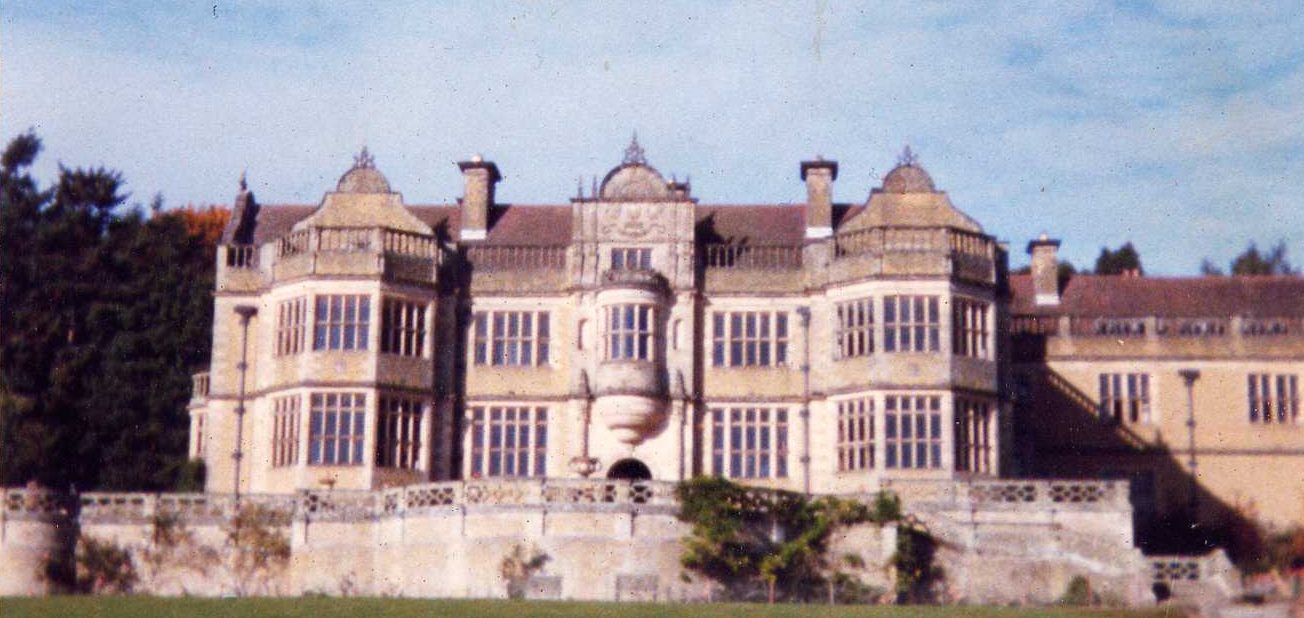
Country Houses & Estates
Country houses were not only buildings occupied by prominent families. They were social communities, sustained by servants, gardeners, tenants, tradesmen, neighbouring families and inherited expectations of duty, hierarchy and service.
This developing guide brings together my writing on country houses and estates as working social systems rather than architecture alone. It draws on lived experience, family history and archival research to examine the relationships between owners, servants, gardeners, tenants and neighbouring families, and to explore how duty, hierarchy, paternalism, inheritance, work and adaptation shaped the world around the house.
Jump to: Where to begin · Houses and families · Estate workers · Inheritance and change · Estate landscapes · Communities and memory
Country-house history in brief

The history of an estate is best understood through the interaction of several overlapping worlds.
- The house: architecture and display expressed wealth and authority, but the formal rooms reveal only part of the story.
- The household: servants, gardeners, chauffeurs and domestic workers made the daily life of the house possible.
- The estate: tenants, farms, woodland, roads, service buildings and local employment tied the country house to a much wider community.
- Inheritance: succession, marriage, taxation, debt and family expectations determined whether estates expanded, contracted or disappeared.
- Adaptation: twentieth-century country houses survived by changing how land, property and labour were managed.
- Memory: oral testimony and lived experience can preserve the routines and relationships which formal estate papers rarely record.
Where to begin

These nine essays provide the clearest introduction to country-house and estate history as a history of households, labour, land, inheritance and adaptation rather than architecture alone.
- Beyond the Country House, the broadest introduction to the estate as a social and economic system sustained by servants, tenants and labour.
- Growing Up at Stokesay Court, a first-hand account of household routine, domestic service, estate work and a surviving late twentieth-century country-house world.
- Doldowlod Hall, for the conversion of industrial wealth into land, landscape, inheritance and estate society.
- Howey Hall, for the transformation of a modest early nineteenth-century property through land agency, banking, tenancy, village hospitality and long adaptation.
- Penybont Hall: The Rise and Fall of a Radnorshire Estate, for servants, succession, estate sales and the contraction of landed wealth.
- Sir Powlett Milbank (1852–1918): Norton Manor and Public Life in Radnorshire, Sir Powlett Milbank, estate owner and Lord-Lieutenant, and his work in Radnorshire farming and county government.
- Arthur Henry John Walsh (1859–1937): Radnorshire, the Royal Court and the Decline of the Ormathwaite Estates, the Walsh family’s extensive estates, indebtedness, farming tenancies and eventual dispersal of their Radnorshire land.
- Norton Manor, for the Green-Price and Milbank families, railway investment, the breakup of landed property and the mansion’s changing twentieth-century uses.
- The Jones Family of Glandwr Hall, Barmouth, for the creation, inheritance, adaptation and eventual dispersal of a Welsh landed family and estate.
Houses, estates and landed families

Country houses were created and sustained by very different kinds of wealth. Commercial fortunes, professional careers, industrial capital and inherited land could all be converted into estate ownership. The resulting houses often appeared permanent, yet their survival depended on family decisions, agricultural income, taxation and the ability to adapt.
- Bryntirion, Rhayader, tracing a c.1860 country house through marriage, estate sale, the Lewis Lloyd succession, wartime loss and its conversion from private residence to public school.
- Rhydoldog House, tracing an eighteenth-century estate, the Oliver and Sladen families, the Birmingham water scheme and modern adaptation.
- William Jones of Glandwr Hall, 1792–1882, examining law, wealth, family ambition and the acquisition of social position through property.
- William Wilding Jones of Glandwr, 1855–1942, a revealing study of estate rationalisation, letting, property sales and adaptation.
- Doldowlod Hall, following an estate through industrial wealth, landscape, inheritance and the Gibson-Watt family.
- David Gibson-Watt (1918–2002) of Doldowlod, exploring landownership, war, politics and public life in twentieth-century Radnorshire.
- Diana Hambro, Lady Gibson-Watt, tracing wartime service, marriage, horticulture, estate life and remembered influence across nearly six decades at Doldowlod.
- Charles Venables-Llewelyn and Llysdinam, using politics, inheritance, estate duty and county service to examine the changing position of a landed Radnorshire family across the first half of the twentieth century.
- Arthur Charles Humphreys-Owen (1836–1905), showing how landed authority adapted to the democratic and institutional changes of late Victorian Wales.
- Penybont Hall: The Rise and Fall of a Radnorshire Estate, servants, succession, estate sales and the gradual contraction of a country house and its landed world.
- Norton Manor, Presteigne, the 1838 building campaign, Green-Price family, estate workers, Milbank succession, 1919 dispersal and later hotel and park.
- The Jones Family of Glandwr Hall, Barmouth, the creation, inheritance, adaptation and eventual dispersal of a Welsh landed family and estate.
Servants, workers and estate society
The estate was a workplace as much as a seat of privilege. Domestic servants, gardeners, farm workers, chauffeurs, gamekeepers, tenants and tradespeople sustained the house and land, often within relationships shaped by hierarchy, paternalism and dependence. Recovering these lives changes the focus of country-house history from ownership alone to the larger community that made the estate function.
- The Ceniarth Farm Dispute of 1900, the conflict between Evan Owen of Ceniarth Farm and his landlord at Ceniarth Hall, illustrating practical disputes over rent, improvements and estate management.
- Beyond the Country House: The Workers, Tenants and Families Who Made the Welsh Estate, examining domestic service, estate labour, tied housing, tenant dependence and work hierarchies.
- Growing Up at Stokesay Court, recalling a surviving late twentieth-century household from within its everyday routines.
- Nancy Laurie (1840–1915): The Governess Behind a Shrewsbury Photograph, reconstructing the life of a governess and the domestic households in which educated women could occupy an ambiguous place between family and service.
- Teenage Years on the Doldowlod Hall Estate, 1995–1997, a first-hand record of work, routine and estate life.
Inheritance, war and changing authority

Inheritance gave country houses an appearance of continuity, but succession could be fragile. Premature death, war, taxation, agricultural depression and changing expectations of public duty repeatedly altered the future of landed families.
- John Cartwright Jones (1831–1875), following a Victorian clergyman whose family position was closely bound to the expectations surrounding Glandwr.
- Hugh Wynn Wilding-Jones (1896–1918), tracing inheritance, military service and the destruction of a young landed future during the First World War.
- William Wilding Jones, showing how an estate could be preserved only through contraction and practical reorganisation.
- David Gibson-Watt, linking landed identity with military service, politics and public duty in the twentieth century.
- The Women of Glandwr, kinship, marriage, household influence and inheritance within a landed family.
- Eric Vaughan Wilding-Jones (1899–1942), the final male heir and the end of the direct Jones era at Glandwr.
- Sir Francis Edwards (1852–1927): Knighton, Welsh Liberalism and the Politics of Radnorshire, on The Cottage at Knighton and its use for Red Cross convalescent care during the First World War.
Estate landscapes and adaptation
An estate extended far beyond the main house. Parkland, farms, woodland, lodges, service buildings and tenant holdings formed a working landscape whose survival depended on continual management. The twentieth century forced many estates to sell land, reduce staff, let property or find new sources of income, making adaptation as important a part of their history as inheritance.
- Doldowlod Hall, for the relationship between house, industry, parkland and estate formation.
- Abbeycwmhir: Abbey, Princes and Estate in the Long Valley, for the transformation of a medieval monastic landscape into a post-Dissolution and Victorian estate village.
- The Jones Family of Glandwr Hall, for the contraction of a Victorian estate and the economic decisions required to preserve its core.
- Teenage Years on the Doldowlod Hall Estate, for the practical realities of estate work at the end of the twentieth century.
- A Valley Remade: The Lost Families, Navvies and Changing Language of Elan, for Cwm Elan House and the way a landed valley was absorbed into a municipal water estate.
- Rhydoldog House, showing how the reservoir undertaking affected a surviving country house, its farms and its upland sheepwalks.
Country-house communities and memory

Some of the most revealing evidence for country-house life survives in memory rather than estate accounts. Personal recollection can preserve the atmosphere of a household, patterns of speech, informal relationships and the small routines through which hierarchy was experienced. Used carefully alongside documentary evidence, such memories help recover a social world that has largely disappeared.
- Growing Up at Stokesay Court, recalling domestic service, childhood freedom and the changing social world of Stokesay Court between 1985 and 1994.
- Sir Philip Magnus-Allcroft of Stokesay Court: A Memory That Stayed, a personal study of memory, mentorship and the surviving culture of the twentieth-century country house.
- Teenage Years on the Doldowlod Hall Estate, preserving the working routines and relationships of another estate world during the 1990s.
About this country-house and estate project

My interest in country houses and estates is not simply academic. From the age of four I grew up within the working world of Stokesay Court in Shropshire, where my family lived at the Lodge between 1985 and 1994. My father was head gardener and chauffeur to Sir Philip Magnus-Allcroft, while my mother also worked within the household and later helped care for Lady Jewell. The house, gardens, service buildings, staff and routines of the estate were therefore part of ordinary childhood rather than something encountered as a visitor.
My teenage years brought a second and rather different experience of estate life. From 1995 to 1997 my father was the resident gardener on the Doldowlod Hall estate in Radnorshire. During school holidays I helped with practical work around the house and grounds, and Lady Gibson-Watt gave me my first paid employment. Through Lord and Lady Gibson-Watt I encountered an estate which was still a family home and a working landscape, but one already adapted to the economic and social realities of the late twentieth century.
A third strand came later through family history. I am a descendant of the wider Jones family of Glandwr Hall, Barmouth, and my research into that family led into questions of professional success, landownership, inheritance, social mobility, war and the gradual contraction of a Victorian Welsh estate.
These three connections have shaped the way I approach country-house history. Stokesay Court taught me about memory, domestic hierarchy and the survival of an older household culture; Doldowlod about work, stewardship and adaptation; Glandwr about inheritance, status and the economic pressures which could reshape a landed family over generations. Together they explain why my work concentrates as much on servants, gardeners, estate workers, tenants and neighbouring families as on owners and architecture.
Further reading in book form
The House of Allcroft is my fullest study of a country-house world, tracing commercial wealth, landed authority, paternalism, household relationships and the long decline of inherited social structures at Stokesay Court.
The Allcroft Family: From Worcester to Stokesay traces the family’s earlier history and provides genealogical context for the studies of Stokesay Court and Sir Philip Magnus-Allcroft.
William Jones of Glandwr Hall examines how professional success in Victorian London was converted into land, local authority and a lasting position within Merionethshire society.
A developing guide to country houses and estates

These essays examine country houses as communities, shaped as much by servants, gardeners and tenants as by their owners. They also follow the effects of inheritance, war and changing economic circumstances on the estates and those who depended upon them.
For a detailed family case study, see The Jones Family of Glandwr Hall. For the wider rural context, see Welsh Rural History and Radnorshire History.
For country-house, estate-history or research enquiries, Contact Antony.