
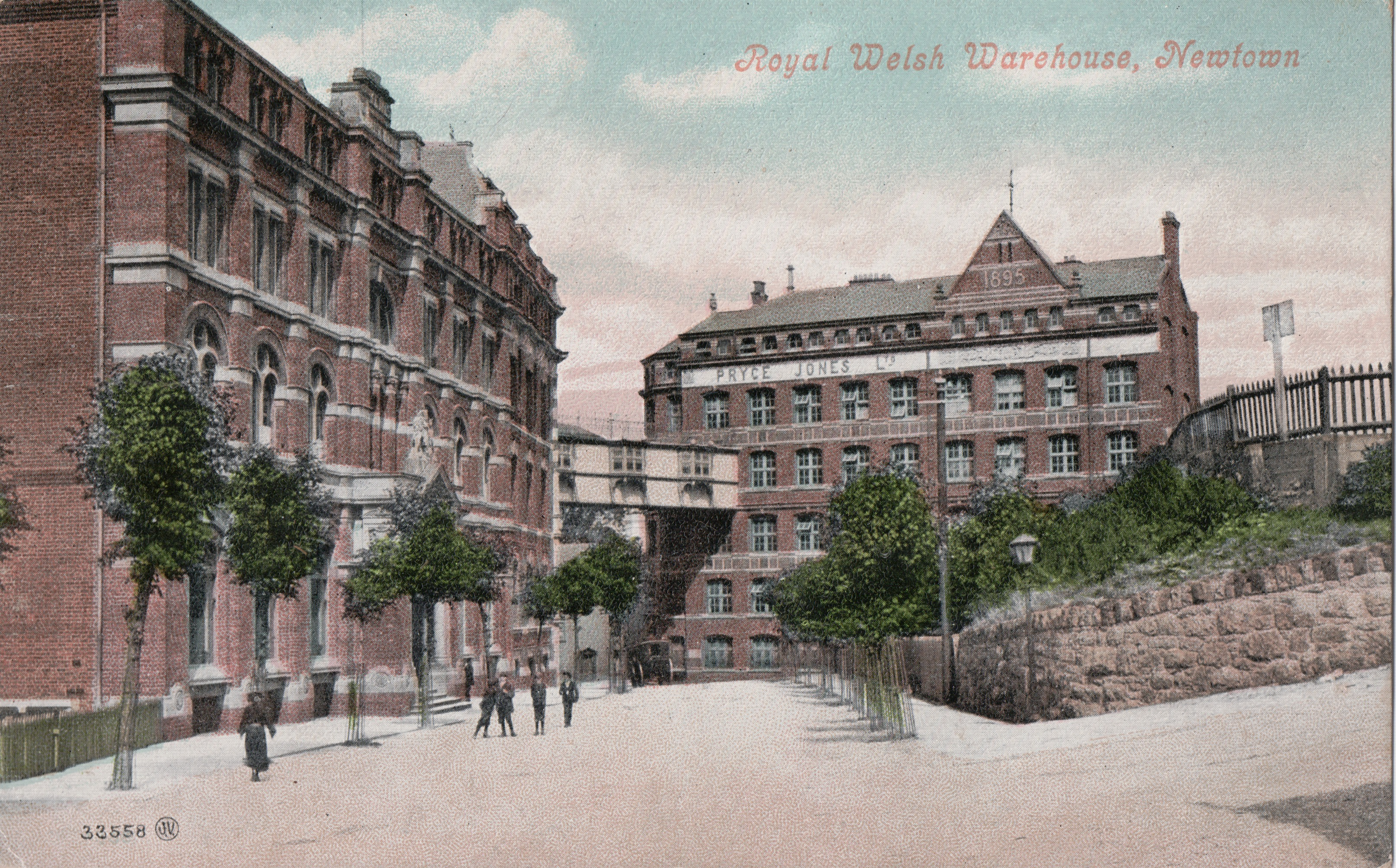
Victorian & Edwardian Wales
The nineteenth and early twentieth centuries transformed Wales. Railways and industry altered landscapes and patterns of work, Nonconformity reshaped public life, new towns and institutions emerged, country estates adapted to economic change, and rural communities negotiated the pressures of migration, modernisation and expanding state authority.
This guide brings together essays which examine that transformation through individual lives, communities, buildings and landscapes. Rather than treating Victorian and Edwardian Wales as a single national story, the pieces explore the different ways change was experienced in mid Wales and beyond, from industrial entrepreneurship and the growth of Llandrindod Wells to religious authority, rural labour, landed society and the displacement of Llanwddyn.
Jump to: Where to begin · Industry and enterprise · Towns and tourism · Faith and public life · Land and rural society
Where to begin

These five essays provide contrasting routes into Victorian and Edwardian Wales, through industry, tourism, rural society, landed power and the social costs of modernisation.
- David Davies of Llandinam, for railways, coal, docks, Nonconformity and the infrastructure of modern Wales.
- The Waters That Built a Town, for tourism, health, investment and the creation of a purpose-built Victorian spa.
- Esgair Llewelyn, for farming, family, religion, women’s work and continuity in rural Montgomeryshire.
- Beyond the Country House, for servants, tenants, estate labour and the social relationships beneath landed authority.
- When an English City Drowned a Welsh Village, for engineering, displacement, municipal power and the unequal costs of Victorian progress.
Industry, enterprise and modern Wales

David Davies of Llandinam, 1818–1890
From sawyer to industrialist, Davies’s life connects railway construction, coal, docks, Nonconformity and the infrastructure of modern Wales.
Sir Pryce Pryce-Jones, 1834–1920
The story of the Newtown draper whose mail-order business used the railway and postal systems to connect Montgomeryshire with customers across Britain and the wider world.
Owen Owen, 1847–1910
How a Montgomeryshire draper from Machynlleth built one of the best-known retail businesses of the late Victorian and Edwardian period.
Tom Norton of Llandrindod Wells
Motor pioneer, civic figure, sports promoter and entrepreneur, Norton represents the transition from the railway age to the motor age in early twentieth-century Wales.
The Welsh Shopping Centre: The Central Wales Emporium
A study of retail ambition, staff life, advertising and the commercial networks that allowed a mid-Wales business to serve customers far beyond its immediate town.
The Mid-Wales Railway
A study of the railway network that tied inland communities to wider markets, tourism and the industrial economy.
Doldowlod Railway Station
A close study of a rural station on the Mid-Wales line, linking estate society, passenger travel, timber traffic, railway labour and the changing economy of the upper Wye.
Rhayader Railway Station
The surviving station at Cwmdauddwr, explored through the opening of the Mid-Wales Railway, the Elan Valley royal visit, later closure and the remaining station building, platform and goods shed.
Signal at Danger: The Tylwch Railway Disaster of 1899
A reconstruction of a fatal collision that opens onto signalling, railway labour, safety and responsibility at the end of the Victorian period.
Towns, tourism and civic life

The White Horse Hotel, Machynlleth: Fire, Farming Families and Life on Maengwyn Street
The White Horse’s 1911 fire and rebuilding, Edwardian licensing, and the story of Evan and Elizabeth Owen, whose careers linked a rural farming household to the town’s licensed trade.
Machynlleth Fairs and Markets: Trade, Farming and Rural Life in Victorian and Edwardian Montgomeryshire
The historic fairs, livestock trading, market tolls, railway links and civic institutions which connected a Victorian Welsh market town with the farming communities of its hinterland.
The Waters That Built a Town
A study of how mineral springs, railway access, investment and Victorian ideas about health created Llandrindod Wells as a modern spa town.
Llandrindod Grammar School: The County School and Its Lost Alexandra Road Building
The Victorian campaign for a Radnorshire intermediate school, its 1898 opening and the educational and civic life of a growing Welsh town.
Dr William Bowen Davies: The Doctor Who Helped Build Llandrindod Wells
A biography of Llandrindod’s first resident doctor, showing how medicine, public health, the spa, education and local government became part of the making of a Victorian town.
Llandrindod Wells Railway Station
The railway that turned a rural watering place into a national spa, explored through William Killan, the 1888 fire, Victorian expansion and the station’s later contraction.
The Pump House Hotel
The rise of one of Llandrindod Wells’s defining institutions, examined through architecture, tourism, investment and the changing culture of the Victorian spa.
The Hotel Metropole, Llandrindod Wells
From Coleman’s Hotel and the Wilding family to Elizabeth Miles, hydrotherapy, motor tourism and the Metropole name, a study of how one hotel adapted to the changing economy of the Welsh spa.
Plas Winton and the Hotel Commodore, Llandrindod Wells
From a Victorian rectory to Jane Sheen’s private hotel and the post-war Commodore, a study of architecture, hospitality, leisure and adaptation across the changing spa town.
The Grand Pavilion, Llandrindod Wells
Edwardian entertainment, civic ambition, politics and public life, showing how the mature spa created institutions for visitors and residents alike.
Llandrindod Wells Market Hall
From the 1872 market and Assembly Rooms to Tom Norton, the High Street Baths and municipal ownership, a study of how one building followed the changing life of the Victorian and Edwardian spa.
The Post Office in Llandrindod Wells: From High Street to Station Crescent
From John Evans’s Victorian High Street office to telegraphs, telephones and the 1937 Station Crescent building, a study of how communications developed alongside the growth of the spa town.
The Radnorshire County Club, Llandrindod Wells
An Edwardian county club whose later life as a wartime hospital, hotel and public library traces the changing social and civic world of twentieth-century Radnorshire.
A Town Marked Out on the Common: The Making of Llandrindod Wells
How enclosure, railway expansion, landed interests, surveyors and speculative building transformed common land into a Victorian and Edwardian town.
From Spa Town to Administrative Capital
A study of municipal government, county administration and the civic institutions through which a Victorian resort became the administrative centre of Radnorshire and later Powys.
Rhayader: The Making of a Radnorshire Market Town
Markets, railway development, the Elan Valley works and urban change in a small town serving a large rural hinterland.
Knighton: A Border Town on the Dyke
Markets, wool, livestock, railway expansion and Victorian rebuilding in a border town whose economy crossed the Welsh Marches.
For the wider collection on the spa town, including its hotels, retail life, sport, walks, public buildings and civic institutions, see the Llandrindod Wells History guide.
The Montpellier Hotel, Llandrindod Wells
Two sisters, a Victorian boarding house and a century of hospitality, showing how domestic enterprise helped sustain the wider spa economy.
The Gwalia Hotel, Llandrindod Wells
A family hotel history showing the scale and organisation of the mature Victorian and Edwardian spa economy.
Bryn Awel and the Glen Usk Hotel
A hotel story spanning Victorian expansion, war and the changing economics of resort accommodation.
The Rock Park Hotel
A long-running spa hotel whose nineteenth-century reinvention reflects the development of Llandrindod Wells.
Ye Wells
An Edwardian hotel and a useful study of the architecture, hospitality and later adaptation of the spa town.
Board and Lodging: The Boarding Houses of Llandrindod Wells
The smaller establishments that housed much of the seasonal population and made mass resort tourism possible.
“We Don’t Like This Place at All”
One surviving postcard used to recover the experience and expectations of an Edwardian visitor.
The Old Walks of Llandrindod Wells
The designed and semi-wild landscape through which Victorian and Edwardian visitors experienced the resort.
Llandrindod Lake and the Lakeside Boathouse
Boating, regattas and public recreation in the social life of a developing spa town.
A History of Golf in Llandrindod Wells
The growth of golf alongside resort culture, hotels and the leisure economy.
Bowling in Llandrindod Wells
The spa greens, Recreation Ground and Rock Park within the organised leisure culture of the resort.
The Ddole, Llandrindod Wells
Racing, polo, military spectacle and public events on a riverside field used by visitors and townspeople alike.
Aston Villa and Llandrindod Wells
Football tourism and George Ramsay’s connection with the town in the Edwardian sporting world.
Mary Anne Wilkins Lucas, Later Middleton Evans
Philanthropy, female organisation and the creation of a civic institution in Victorian Llandrindod.
Rhayader’s Lost Market Hall
Market life and civic administration in a small Welsh town during the nineteenth and early twentieth centuries.
Newbridge-on-Wye: A Village Made by Movement
How bridge, droving and railway connections reshaped a rural settlement during the nineteenth century.
Llandrindod Wells Hospital
The development of a Victorian cottage hospital into a major civic institution, linking philanthropy, public health and the changing responsibilities of the spa town.
Faith, authority and public culture

The Uncrowned Kings: How the Preacher Ruled Victorian Wales
An examination of the authority, influence and social power exercised by Nonconformist ministers in communities where chapel life shaped education, politics, reputation and moral expectations.
Arthur Charles Humphreys-Owen, 1836–1905
A life at the intersection of landownership, Liberal politics, public duty and the changing social order of Victorian Montgomeryshire.
Sir Francis Edwards (1852–1927): Knighton, Welsh Liberalism and the Politics of Radnorshire
A Radnorshire Liberal whose career brings together Welsh Church disestablishment, rural elections, county public service and the political changes of the Edwardian years.
‘Vote and Interest’: Charles Venables-Llewelyn and the Radnorshire Elections of 1910
An Edwardian political biography using a surviving election card to explore the restricted franchise, landed influence, the constitutional crisis of 1910 and the longer public life of Llysdinam.
The Treachery of 1847
The Blue Books, education, language, morality and the creation of a powerful Victorian discourse about Welsh society.
John Davies of Erglodd (1821–1887)
A farmer and chapel elder whose local authority illustrates the quieter social power of Victorian Nonconformity.
Land, estates and rural society

Rhydoldog House: The Oliver and Sladen Families, the Elan Valley and a Changing Radnorshire Estate
A Radnorshire country-house history tracing the Oliver and Sladen families, nineteenth-century estate management, the Birmingham reservoir scheme and the later Ashley years.
Owen Jones Davies (1875–1958): From Caeadda to the Welsh Settlement of Wood River
A Montgomeryshire farmer who emigrated to North America in the Edwardian period and became part of the Welsh agricultural and chapel community of Alberta.
John Pugh of Glyncaerig (1834–1912): From Farm Labourer’s Son to Montgomeryshire Landowner
From an agricultural labourer’s family to ownership of a substantial Montgomeryshire farm, a study of rural mobility, marriage, property, kinship and the Victorian farming economy.
Thomas Davies of Penlan and Gwernstablau (1864–1930): Farming, Family and Public Life in Montgomeryshire
A biography of a substantial sheep farmer, parish councillor and Overseer of the Poor whose family history connects Victorian and Edwardian farming at Caeadda, Penlan and Gwernstablau.
Llanwrin: A Montgomeryshire Village, Its People and My Family’s History
A village history concentrating on the Victorian and Edwardian parish, farming, education, religion and the surviving churchyard memorials of the author’s ancestors.
Caeadda, Llanwrin: Three Centuries of Farming in the Montgomeryshire Uplands
The history of a tenant farm near Machynlleth, from Victorian agriculture, servants and the agricultural depression to family ownership and the Pughe succession.
Tuberculosis at Ceniarth: The Disease That Devastated a Montgomeryshire Farming Family, 1888–1894
A documented account of how consumption claimed five members of one Montgomeryshire farming family, exploring rural medicine, bereavement, inheritance and the subsequent campaign against tuberculosis.
The Ceniarth Farm Dispute of 1900: A Montgomeryshire Farmer Challenges His Landlord
How a tenant farmer’s departure from Ceniarth near Machynlleth led to a Welshpool court case over rent, timber damage, agricultural improvements and the rights of rural tenants.
The Tragedy of Maescelyn: The Jenkins Family and the Loss of an Upland Farming Home, 1906–1913
The deaths of a farmer’s wife and newborn daughter, the loss of a Montgomeryshire upland farm and the changing fortunes of a rural family in Edwardian Wales.
Beyond the Country House: The Workers, Tenants and Families Who Made the Welsh Estate
A broad social history of landed Wales through domestic servants, tenant farmers, gardeners, labourers, estate cottages, paternalism, political influence and the changing relationship between landownership and rural life.
Doldowlod Hall
A country-house history showing how industrial wealth became land, architecture, estate employment and inherited social position in rural Radnorshire.
Howey Hall
A small Radnorshire country house followed from the Crummer and Watt circle through Victorian tenants, Edwardian county society and the twentieth-century reshaping of the estate.
Arthur Henry John Walsh (1859–1937): Radnorshire, the Royal Court and the Decline of the Ormathwaite Estates
Arthur Henry John Walsh, 3rd Baron Ormathwaite, and the changing fortunes of Radnorshire’s landed society, from Victorian politics and royal service to estate insolvency.
Sir Powlett Milbank (1852–1918): Norton Manor and Public Life in Radnorshire
Sir Powlett Milbank (1852–1918), examining landed authority, Welsh farmers and county administration through a Radnorshire political biography.
Norton Manor: The Rise and Changing Fortunes of a Radnorshire Country Estate
A major Radnorshire estate traced through Victorian enlargement, railway investment, family and tenant life, the 1919 dispersal and twentieth-century adaptation.
When an English City Drowned a Welsh Village
The making of Lake Vyrnwy examined through engineering, public health, land, labour, displacement and the unequal relationship between an expanding English city and a Welsh rural community.
The Llyfnant Valley: Farming, Waterfalls, Tourism and the Waters Family
A social history of a secluded Montgomeryshire valley, tracing tenant farming, chapel culture, railway tourism, rural enterprise and migration through the story of Tymawr and the Waters family.
The Jones Family of Glandwr Hall, Barmouth
The Glandwr sequence provides a concentrated case study of Victorian and Edwardian mobility, showing how professional success became landed status, how family branches spread through Britain, India, Australia and the United States, and how war and changing estate economics reshaped inheritance across the generations.
A Valley Remade: The Lost Families, Navvies and Changing Language of Elan
A social history of the Elan Valley reservoir scheme, concentrating on displaced rural families, the temporary navvy community, Cwm Elan House and the linguistic change which accompanied one of late Victorian Wales’s largest engineering projects.
Penybont: The Radnorshire Village Where the Countryside Came Together
A small rural settlement transformed by turnpikes, railway, chapel, policing, agricultural shows, livestock markets and racing, showing how Victorian and Edwardian institutions concentrated activity in the countryside.
Penybont Hall: The Rise and Fall of a Radnorshire Estate
A country-house history reconstructed through architecture, servants, inheritance and estate sales, showing how landed wealth could contract across the late Victorian and twentieth-century periods.
Esgair Llewelyn
A long rural family history used to reconstruct farming, work, women, religion and continuity in Victorian Montgomeryshire.
Gwen Jones of Caeadda, 1841–1926: A Welsh Farming Matriarch
A close biography of a Welsh farming woman whose life spans agricultural depression, widowhood, changing property rights, family labour and the practical authority women could exercise within Victorian and Edwardian rural society.
The Women of Glandwr
Kinship, marriage, household influence and inheritance within a Victorian Welsh landed family.
William Jones of Glandwr Hall (1792–1882)
Law, migration, wealth and the creation of landed status across the early and mid-Victorian period.
John Cartwright Jones (1831–1875)
Clerical life, family ambition and inheritance within the social world of a Victorian estate family.
Major-General Howel Locke Jones (1835–1907)
A Welsh landed family carried into the military and imperial world of British India.
William Halse Gatty Jones (1825–1897)
Gold-rush migration, return to Wales and the international reach of a Victorian Welsh family.
William Wilding Jones of Glandwr (1855–1942)
Estate rationalisation and adaptation as Victorian landed society moved into the twentieth century.
Arthur Owen Jones
Welsh family origins, class and leadership in the elite sporting culture of Edwardian Britain.
Gatty Wynne Jones (1859–1913)
A transnational Victorian life linking Melbourne, Glandwr and the world of popular entertainment.
Hugh Wynn Wilding-Jones (1896–1918)
Edwardian inheritance and the destruction of a young landed future in the First World War.
David Jenkins (1850–1891)
The insecurity and physical demands of ordinary agricultural labour in Victorian rural Wales.
Bryntirion, Rhayader
A country house built c.1860, tracing landed society, family inheritance and the later adaptation of a Victorian residence to educational use.
When Rebecca Came to Rhayader
The 1843 Rebecca disturbances seen through toll gates, salmon, rural protest and the tensions surrounding authority in a Radnorshire market town.
A period of transition

Taken together, these essays show a Wales which was neither simply traditional nor simply modern. Industrial wealth could be converted into landed status, rural communities remained deeply rooted while participating in national markets, chapel culture could be both democratic and socially restrictive, and technological progress could create opportunity while also displacing people and reshaping landscapes.
The Victorian and Edwardian periods are therefore most useful when approached not as a procession of famous names and institutions, but as a long negotiation between continuity and change. The history of Wales in these decades was made in railway stations, chapels, farms, hotels, council rooms, country houses, workshops and family homes, as well as in Parliament and industry.
Continue exploring: The Jones Family of Glandwr Hall · Welsh Rural History · Llandrindod Wells History · Welsh Nonconformity · Country Houses & Estates · Notable People of Mid Wales
For historical, heritage or research enquiries, Contact Antony.